

GEAR
A few tips and insights on gear and accessories I use and recommend.
Using the right gear is obviously essential and whilst things like bags are very personal I can at least give a few pointers in what to look for, you may get a few tips or see something you haven’t considered. There are tips for tripods, macro lights and a few accessories you may find useful too. These are all items I own and use so I feel qualified being able to recommend them. Please do note any Olympus gear I recommend is entirely my own opinion, I get no benefit whatsoever from it and you are free to purchase from wherever you like.
LANDSCAPE LENSES
The OM5ii is best suited to more compact lenses because it is so small, but it doesn’t mean you cannot use them. The three main lenses I use for landscapes are the m.Zuiko 40-150mm Pro, 12-100mm Pro and 8-25mm Pro. Although I do have other lenses, the 100-400mm, 60mm Macro, 17mm 1.8 and 45mm 1.8 to name a few, the three below are the lenses I use most.
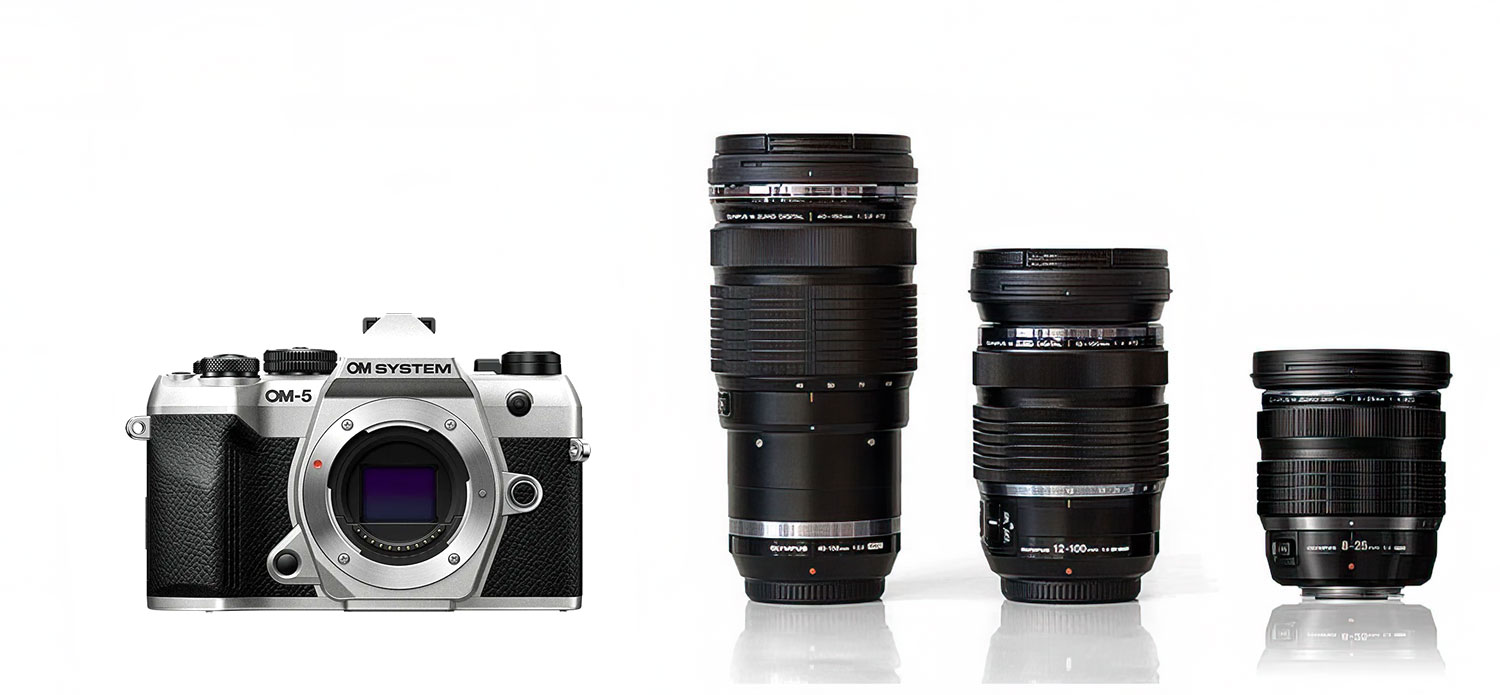
40-150mm f2.8 Pro, 12-100mm Pro, 8-25mm Pro
1) 40-150mm f2.8 Pro
The ideal lens for long landscape images, it has a great range and is not too long for landscape work and it can be used for wildlife. Other lenses like the 300mm Pro are I find too long and better served for wildlife. The 40-150 is razor sharp and is already firmly raised on a pedestal for being one of the great Olympus lenses. It’s also good for wildlife and combined with the 1.4 teleconverter it has additional flexibility.
The recent addition of the 40-150 f4 Pro may be more suitable. It really is a space saver at almost half the size of the f2.8. It is a little slow for wildlife and it cannot be used with teleconverters. I was tempted because saving space and weight is good, but not being able to use teleconverters was the deal breaker.
2) 12-100mm f4 Pro
One of the best all rounder lenses in the Olympus lens line-up, it has for me replaced the 12-40 because of the range, making it ultra flexible. Not the fastest lens at f4, but it is a general purpose lens and with an additional stop of stabilisation built in it makes up for the slower aperture. For landscapes it doesn’t need to be faster. For someone like me who loves wide angle lenses they do not suit every location. The Lake District for example I find the 12-100 much more suitable, images are in general less about close foregrounds and wide lenses will push background fells further away.
3) 8-25mm f4 Pro
Although I also have the 7-14 f2.8 Pro the 8-25mm has largely replaced it for landscapes. The 7-14 is now reserved for low light and night photography, not that I do a great deal. The 8-25mm has a better range, and for someone who loves wide lenses the slightly longer reach is useful. Wide lenses need a good foreground, a location like the Peak District is perfect for wide lenses, and without a good foreground a wide lens is wasted. The main reasons for swapping to the 8-25 is the filter thread, much more convenient for using filters than the 7-14 though of course it is possible, and the reduced lens flare. I do find the 7-14 flares easily because of the convex front element, and is prone to sensor flare which is a devil to remove. The 8-24 is very sharp, not quite as sharp as the 12-100, but a little sharpening in post makes up for it. It is slower that the 7-14 obviously, but its a landscape lens; they tend not to move too fast.
WALKABOUT LENSES
The OM5ii is ideally suited for smaller lenses, and one of the very best is the 12-40, or the 12-45 f4. I would always go for the 12-40 because it is f2.8.
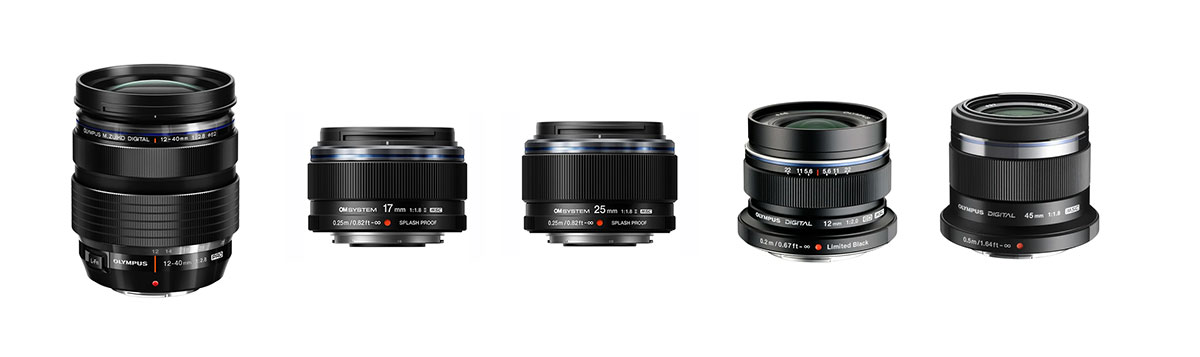
12-40 f2.8 Pro / 17mm and 25mm f1.8 / 12mm f2 / 45mm f1.8
1) 12-40mm f2.8 Pro II
This is a workhorse lens and is ideal as a walkabout compact zoom, with a constant fast f2.8 aperture and so sharp you could cut yourself. It stays in the top group of the three sharpest lenses Olympus have ever made along with the 40-150 Pro and the 300 Pro. I do not use it too much now because I use the 12-100, but it has now found a new home on my OM5ii. The range is perfect, not too wide and just enough reach at 40mm, and it has an Lnf button which I assign x2 Digital Zoom for when I want more reach and I know I can resample the crop back up with Topaz Gigapixel if needed. Build quality, everything is sublime. The original version was weather sealed, the Mark II had weather sealing improved.
Don’t forget the 12-45 f4 Pro. Every bit as good as the 12-40, it is slightly more compact too and whilst you get an extra 5mm reach you sacrifice f2.8. The 12-40 is better I think.
2) Primes
There is a great range of primes ideally suited for being light and discreet and for getting background bokeh. All are f1.8 apart from the 45mm which is f2, still fast enough. Build quality is very good and the 17mm and 25mm now have the same weather sealing as the OM1-MKII and OM3. I already have the 12mm and 45m and will be picking up the 25mm too.
9-18mm f4-5.6
One lens often overlooked and not shown here is the 9-18mm. The MarkII was just cosmetic updates. It is a tiny lens and is good for if you need a very small compact wide angle. Negatives are that it does feel quite plasticky, and it is not weather sealed. The corners can be a little soft and do suffer from distortion due to the lens corrections necessary from such a small element, but it is not bad, I do sometimes use it for travel. The elephant in the room with this is the price at around £600 new. Ouch. Look for a used one.
VINTAGE LENSES
Fancy trying something different, like a vintage lens?. There are alot around too, some like the Helios below can be found for as little as £30, or £300 for a good Jupiter. There are the original OM lenses too. Do research, find out what is unique about a lens and what adapter will be needed. They will be manual focus which is fine for some fun, and peaking can be used to make it easier. In the Menu>Settings.2 Lens Info Settings enter the details and stabilisation can be used too.
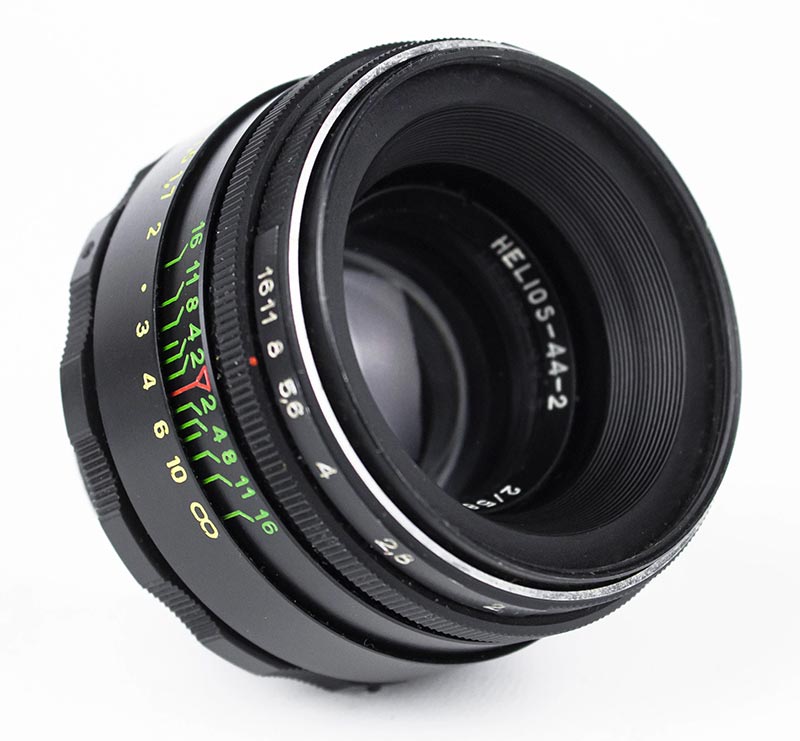
Helios 44-2 58mm
Helios 44-2 58mm
A very old Russian lens crafted from solid steel, or it feels like it, it really does feel like an old tank. They are not renowned for being sharp which is not the point of this lens; the point is the crazy background bokeh. See the Creative section for a couple of examples and search online too.
It is manual only including the aperture which is set from the lens ring. The Helios 44-4 is sharper but does not produce the same bokeh.
It is worth having a few vintage lenses for a bit of fun, I have both Helios lenses and an Olympus 50mm. And they look right at home on the OM3.
WILDLIFE LENSES
It needs to be said that the OM5ii is not a wildlife camera. Indeed Subject Detection has not been included so if wildlife is your genre you really need to look at the OM1. However it doesn’t mean you cannot use a long lens, you’ll just have to work harder and have some luck. Long lenses for wildlife gives us plenty of choice. For serious wildlife photographers the king is the 150-400, the big white beast. It has been called one of the best wildlife lenses ever made which I don’t doubt but if you only dabble like me and find it hard to justify what are the other choices? I use the 300 and the 150-600 and use the collar for hand held support which works just fine for me.
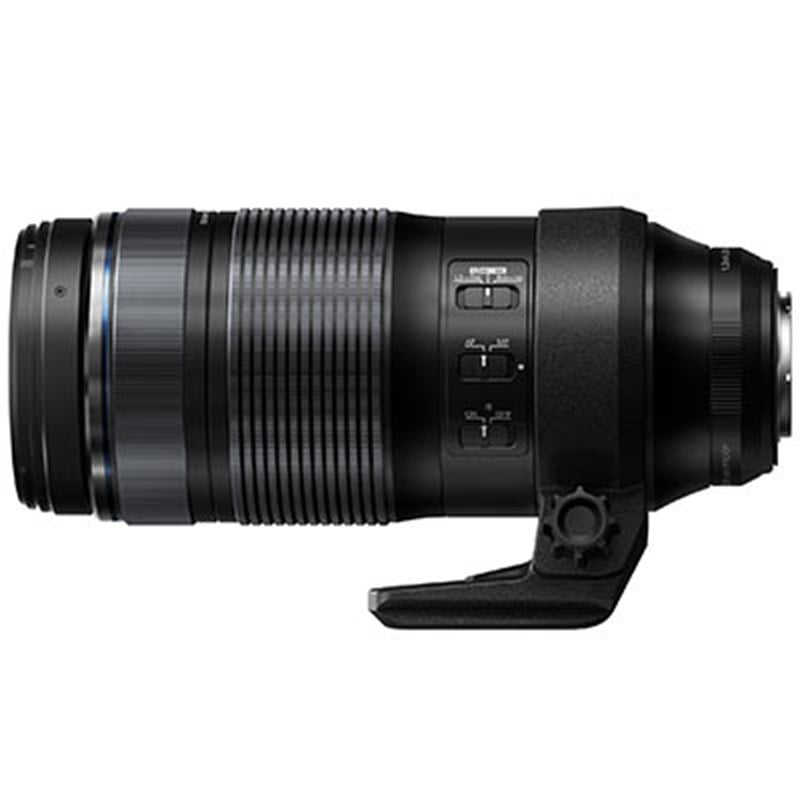
100-400mm f5-6.3 IS / II
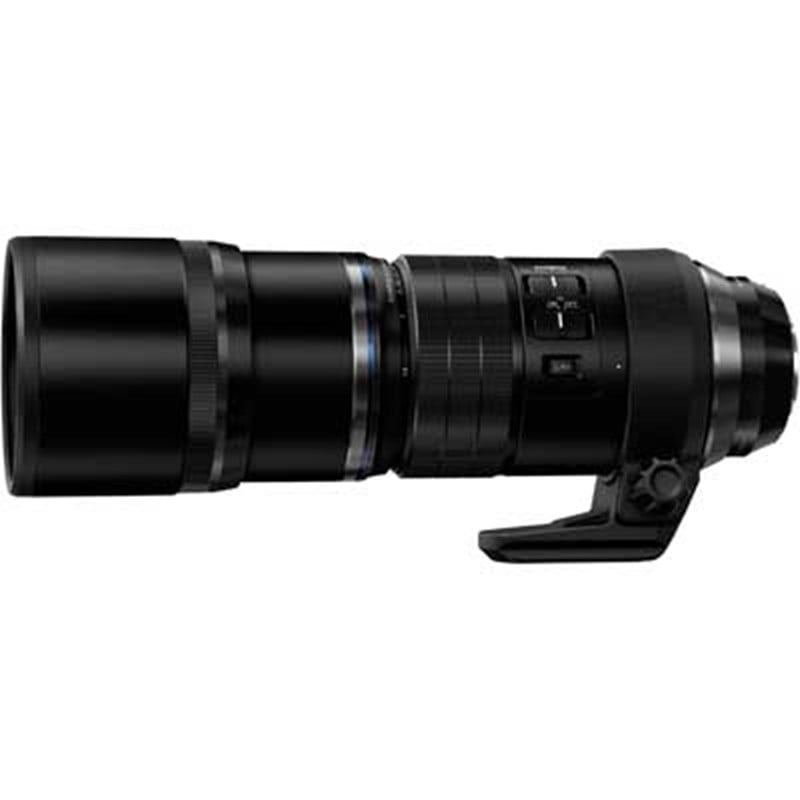
300mm f4 IS Pro
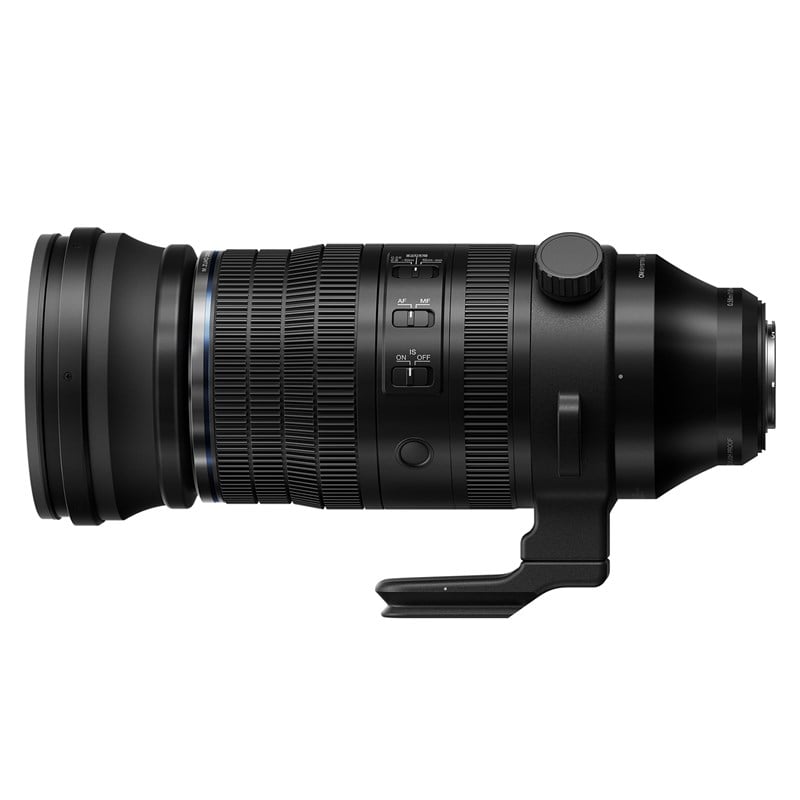
150-600mm f5-6.3 IS
1) 100-400mm f5-6.3 IS / II
The 100-400 lens is not a Pro lens, meaning it doesn’t have the same build quality or the sharpness of the Pro lenses. It is sturdy and very well built and it is dust and splash proof, it does feel the part, but I have to be honest it does lack in sharpness. Images can be sharpened, but at the long end that lack of sharpness is going to translate into less detail. It does have IS, but not full sync IS. For occasional use as a wildlife lens with very good light it is actually pretty good, and a bargain at around £1000, but you would be better with the 300mm for sharper wildlife images.
Updated for 2025 the new version now has full IS Sync. The tripod collar can be removed without removing the lens, a little redundant for me because I use the collar for hand holding support. Buttons remain the same and IQ has been improved, how much remains to be seen. It does make it a no-brainer if you are in the market for this range.
2) 300mm f4 IS Pro
Being a prime lens with a constant f4 it is also pretty fast. And as a Pro lens it is built like a tank with all the external buttons you need too. I find the image sharpness is spot on, it is razor sharp and is renowned for the sharpness. It also accepts teleconverters, although I would always say avoid the x2, image sharpness does degrade. The 1.4 is superior. The disadvantage with this lens is being a fixed prime, you lose the flexibility of a zoom. At twice the cost of the 100-400 you are getting better quality construction and image quality. I do love this lens, I just don’t use it enough.
3) 150-600mm f5-6.3 IS
This lens is a beast, make no mistake, it is big and heavy. But it also performs well and I find I can handle it all day long. At IPX1 weather-sealing it is robust enough. It is a Sigma lens, as is the 100-400, but it is not simply rebadged, it has been re-engineered with new elements and construction for the Olympus/OM System line. It is big, just 40mm shorter than the white 150-400 f4.5 Pro, and it is actually 200g heavier. It does have full IS sync and it is compatible with teleconverters. At around £2500 at introduction there have been many comments about why it is more expensive than the Sigma Full Frame version. Check reviews for yourself, my feeling is it has been introduced as a budget version of the white 150-400 f4.5 Pro. That lens is the lens to have for the serious wildlife shooter, it has a built in 1.25 converter, a fast constant aperture, all the controls you could with for, full IS, and stunning sharpness. It is also around £6500.
MACRO LENSES
Two of the very best lenses available for Macro, the 60mm f2.8 with x1 magnification and 90mm f3.5 with x2 magnification.
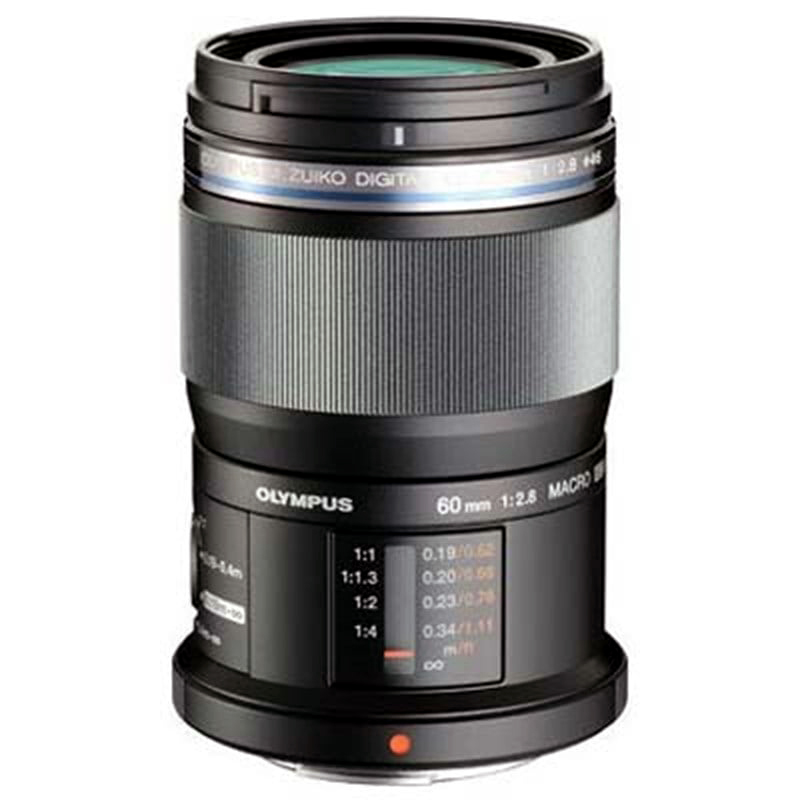
60mm f2.8 Macro
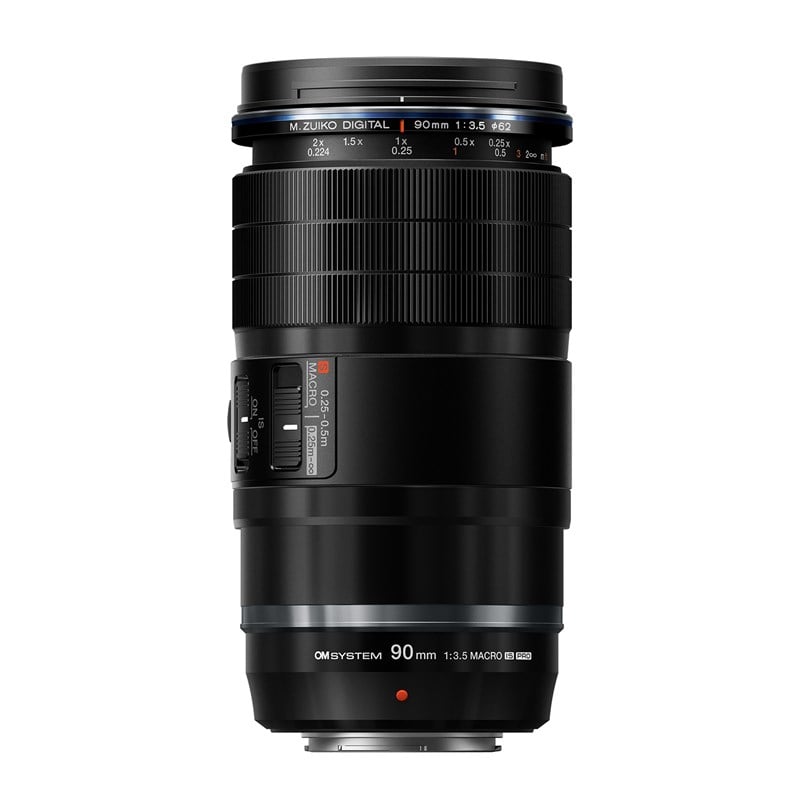
90mm f3.5 Macro IS Pro
1) 60mm f2.8 Macro
This is a great little lens, it is light, compact and very very sharp. In fact it does everything you could need for x1 life-size macro. It has a closest focus of 19cm and a lever for limiting the the focus making life easier. I use this a lot for my ‘Shrooms’ Images and it is also a great standard lens too. It is not a Pro lens and is a little plastic feeling, but there are some real bargains around for it. I had the 30mm Macro for a time but found it too wide for a macro lens and not suitable for my needs, so I parted company with it.
2) 90mm f3.5 Macro IS Pro
A fairly new addition to the lens lineup the 90mm is a true macro lens giving x2 magnification for larger than life macro images. If true macro is what you want the is the lens you should consider. Being a Pro lens it is built like a tank, it is weather sealed and it is also stabilised with an additional IS switch for hand holding capabilities. There is also a focus limiter as with the 60mm Macro. Being honest I have found x2 is a little more than I need, but it is fun to wander around the garden looking for bugs and tiny details. It is a Pro lens, meaning it is also three times the cost of the 60mm, so consider what your needs are.
CAMERA BAGS
My weakness, I love a good camera bag. Just like the cliche of women and shoes many photographers have far too many bags, I must have 10. Time to sell a few I think. The obvious pointers are storage and comfort, external pockets for sliding hats and gloves in, drinks bottle pockets and straps for attaching a coat or tripod. Personally I never strap a tripod on my backpack but I do often strap a jacket on for when it gets colder. What suits you will dictate the type of bag you go for, a backpack, shoulder bag or both depending on situation.
Obviously the OM5ii being such a travel/hiking centric camera you will want a small bag. The problem is there are so many, what should you choose? Key points to look for are size, how large or small do you need, how weather proof is it, and in the city how discreet is it? You do not want a bag that screams ‘camera inside’. Avoid bags that have obvious camera branding.
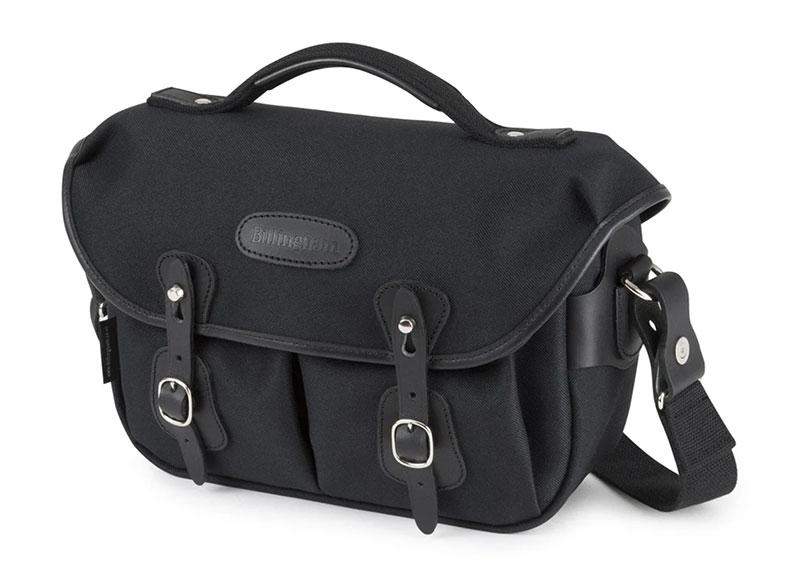
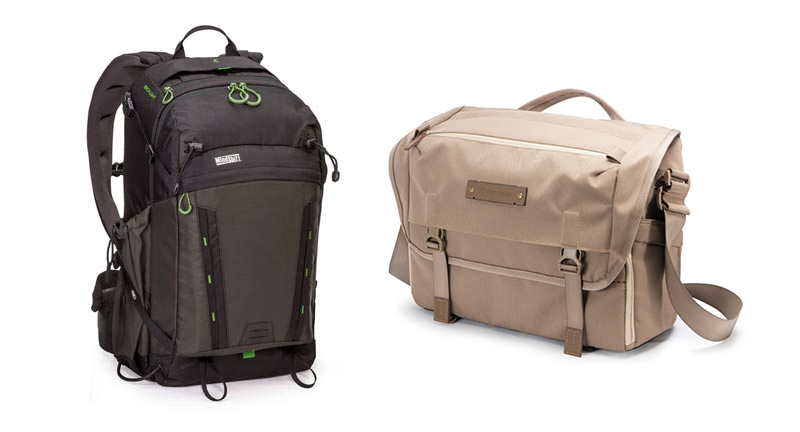
I have too many bags and I have a number of messenger bags too, one from Tenba and Vanguard. My favourite is below.
1) Billingham Hadley Pro
My favourite is the Billingham Hadley Pro. I am not a fashion victim and do not usually care for the aesthetics, but Billingham do make very nice vintage style bags. The small version is big enough with the removable padded insert for the camera and a few primes. The 40-150 just fits at a push, the 12-100 easily. There are larger sizes if needed. It is weather proof, it front pockets for a few accessories and it has a zipped access on the back when you want to avoid opening it fully. It is very classy looking without shouting too much. There are other traditional colours such as green and beige, I prefer just black. It comes at a cost though, this one cost me £200, but it will last forever.
2) Thinktank Mindshift Backlight 26L
For a relatively small backpack the Mindshift Backlight 26L is one of the best I have used and one of the comfiest and it is also available as an 18L, even smaller. My main backpacks are Shimoda and F-Stop, I use whatever I need for the amount of gear I carry but they are actually quite heavy, almost 2kg just for the bag. What I love about the Backlight is the 26L is 1kg, it weighs nothing and it is like a Tardis inside. The front pocket is huge and can just about accommodate a jacket or fleece which is what I look for in a backpack. There are dividers too to separate items. The interior of the main body can actually hold a huge amount of gear, easily two bodies four lenses and accessories. What it lacks is exterior zipped pockets other than the front, but it is still a great backpack. Rear access is a must for any backpack, when it is put down on wet ground it is the front that will get wet, avoid any that have front access or you get a wet dirty back. If you are looking for a backpack for the camera, a few prime and zoom lenses plus accessories I would probably go for the 18L.
3) Vanguard Neo Range 21M
The vanguard Neo Range messenger bags are actually very good, they have all the features you need, pockets on the front plus a slip pocket on each end and rear zipped access. They look quite retro and do not shout camera bag either. They are not waterproof but do come with a rain cover. It is just under £50 too! I have the dark blue colour way and find it to be a great bag to chuck in the car with the camera and a couple of lenses.
TRIPODS
This is a difficult category considering we are dealing with the OM5ii. I would expect most of you who have the OM5ii also have an EM1 or OM1 and will already be covered for a tripod. As someone who has owned and still owns too many tripods I’m pretty well qualified to advise. With the amount of image stabilisation in camera bodies these days including Olympus tripods seem less important, but they are. By all means enjoy the freedom of shooting hand held, I do more and more. But a tripod is still needed in many instances, especially long exposures. The main point of a tripod which is overlooked is to slow you down. Consider the scene and your composition, take your time, make adjustments and wait for the light.
There are hundreds to choose from, and an old addage still remains true today, tripods can be cheap, sturdy or light; pick two because you can’t have all three.
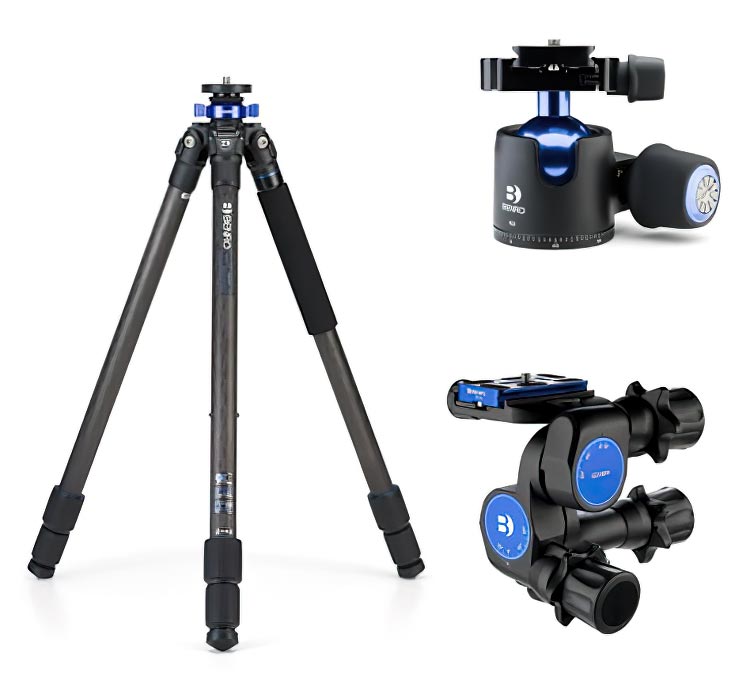
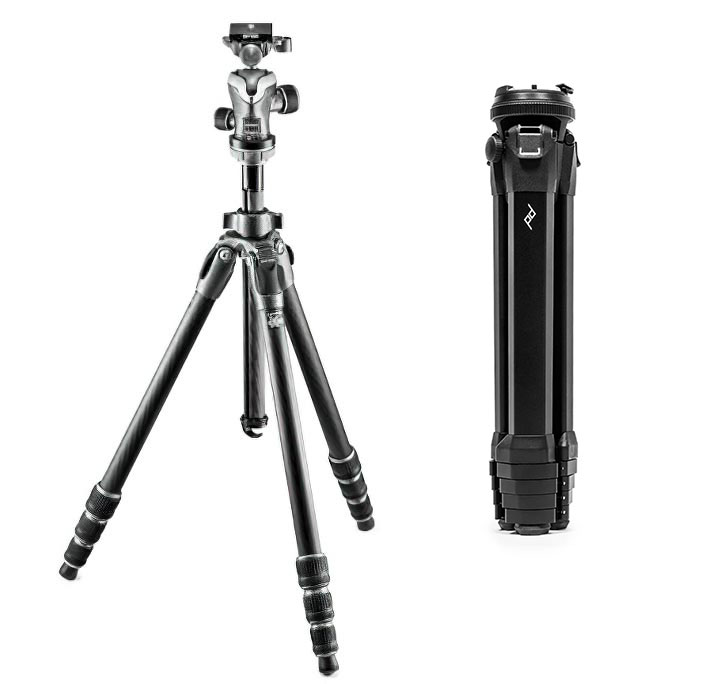
The main points to look for in a tripod are height, weight and sturdiness.
Height – Select a tripod with the greatest height excluding the centre column which should only be used as a last resort, it will introduce the most vibration. The higher the better without the centre column. It will also be more convenient when spanning across gaps.
Weight – The least weight is obviously better but selecting a tripod based just on this is false economy, it probably will not be sturdy enough and a tripod a few hundred grams more really isn’t a big deal yet will be stronger. Carbon Fibre is lighter but at a cost. More leg sections means a tripod is more compact but is also heavier, not a great deal more but it will add to it. Travel Tripods are usually exclusively just for that, travelling. I would not rely on a travel tripod as my every-day tripod unless it is of significant quality and quality comes at a price. Better I think to have a main tripod and get a cheap travel tripod on Amazon that will do the job of a long exposure in St Marks Square and last quite a while because it gets little use.
Strength – If is isn’t sturdy it isn’t fit for purpose and a waste of money. This really should be priority. Overall weight it will hold isn’t a good indicator either, a tripod that can hold 20kg may vibrate with just a breath of wind. Wind and running water are the enemy and legs that are not stiff will vibrate with the slightest movement transferring through to the camera. Number of leg sections also make it weaker, so less is better though it impacts the minimum length. When travelling ball heads and columns can be removed so the length never bothers me too much. Also the more leg sections the thinner the last leg section will be. I would avoid any tripod with leg sections less than 15mm diameter, they will vibrate like a guitar string.
Arca Swiss Compatible – The top plate should be Arca Swiss type, a wedge shape, which opens up availability of tripod plates and brackets. Some brands like Manfrotto make the plates generic to their accessories, so if you want an L Bracket you have to pay for one of theirs, and you do pay though the nose.
1) Benro Mach3 37C
Although I have a Gitzo Systematic I much prefer the Benro, in fact this is as near a perfect tripod for general use I have found. It has a height of 138cm and will extend 163cm with the column. The column can be replaced with a short column (included) for getting very low, it is very sturdy with the lower leg section being 25mm diameter, and Benro supply superb bags with their tripods. The Mach3 comes with tools and ground spikes too which I always use. At 1.7kg it really isn’t a great deal more than some travel tripods so for the strength and reliability of it I really cannot fault it. Leg locks too are a nice size and easy to grip, I can undo both on each leg at the same time with a short twist. Beware of some leg locks which have a rubber outer sleeve, they can slip when they get wet meaning you cannot grip them.
The Benro G2 Ball-head is one of the two very best engineered ball-heads I have ever used, the other being Gitzo. It is quality engineering. A large knob which has a friction control in the end is easy to grip and requires only very gentle pressure to lock solid unlike some which practically need a wrench. I avoid any that have right-angle levers, they are too easy to snag a coat sleeve on and undo. A knob at the back allows the base to rotate and it is Arca Swiss Compatible.
The GD3WH3 Geared Head is very good too with precise controls and a quick release function for making fast adjustments. Gear Heads are great for making very precise adjustments and I do use the geared head although I have to admit I am quite happy with a ball-head, it is lighter and less bulky.
There are quite a few options for sizes with the Mach3 so choose one that suits your needs. I list Benro because I honestly believe that for durability and price they are one of the best. Check out the Benro Bat too.
2) Gitzo S2 Mountaineer
A superb tripod and so it should be for the eye watering cost of it, but I found one believe it or not on Amazon with over a third off. This is a cross between a general purpose and a travel tripod. At only 1.6 kg including the very solid ball-head it is very good and has a max height of 176cm including the column. Despite being a 4 section tripod the last leg is 15mm diameter so it is strong and doesn’t flex. One of the best features is the quick release plate just under the ball-head; twist it and the centre column can be removed leaving a short column for very low level shooting. Whist this is a Rolls-Royce tripod with the price of the ball-head being around £300 I paid around £150 for the legs which was a bargain. Hunt around and you will be surprised what you may find. Benro also make very good travel tripods as do Three-Legged Thing, but those colours! Yuk. I only include the Mountaineer as an example of the quality to look for, just because a tripod is compact doesn’t mean it should be inferior. Compromise on quality and you may as well not bother. A good tripod should last a long long time.
The Gitzo GH1382QD Ball-Head is a marvel of engineering with similar qualities of the Benro G2, just to emphasise that the tripod head needs to be considered carefully. I’ve had cheap ball-heads fail on me or ended up having to tighten them so much they were a pain to use.
3) Peak Design Travel Tripod
I need to mention the Peak Design Tripod because for travel and for being compact it is a marvel, the innovation was the shape of the legs which collapse down into a smaller profile. It has a height of 152cm with the centre column and is quite robust considering how thin the lower legs are. The Carbon Fibre model is just 1.2kg and when extended it can be lifted with just one finger. True it has an eye watering price at over £500 for a travel tripod. I bought one a few years ago but I found one in pristine condition on Ebay for £300, less than the aluminium version new. Look around, and also look at copycat versions, there are quite a few now from Ulanzi, K and F and others.
K&F TRIPODS
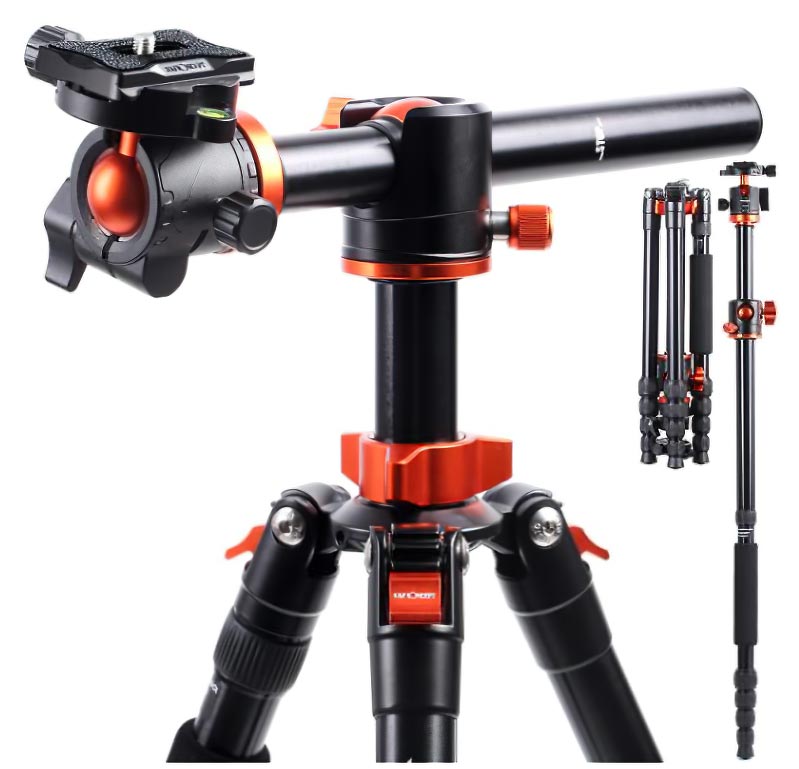
For more budget friendly tripods including aluminium and carbon fibre you really cannot beat K&F. I use this model the KF09 aluminium 170cm. It has centre column which rotates horizontally and it can be reversed making it great for getting low.
I use it for macro fungi images in the woods and use additional clamps to fit lights. For around £100 including the ball head it is very good value. Check out the carbon models too for something lighter.
L BRACKETS
I use tripods a lot, though OM System are marketing the OM5ii as the ultimate freedom camera for adventures and hiking, not all of us are running around mountain tops. Long Exposures really need a tripod, and for setting a composition and waiting for the light you really cannot beat using a tripod.
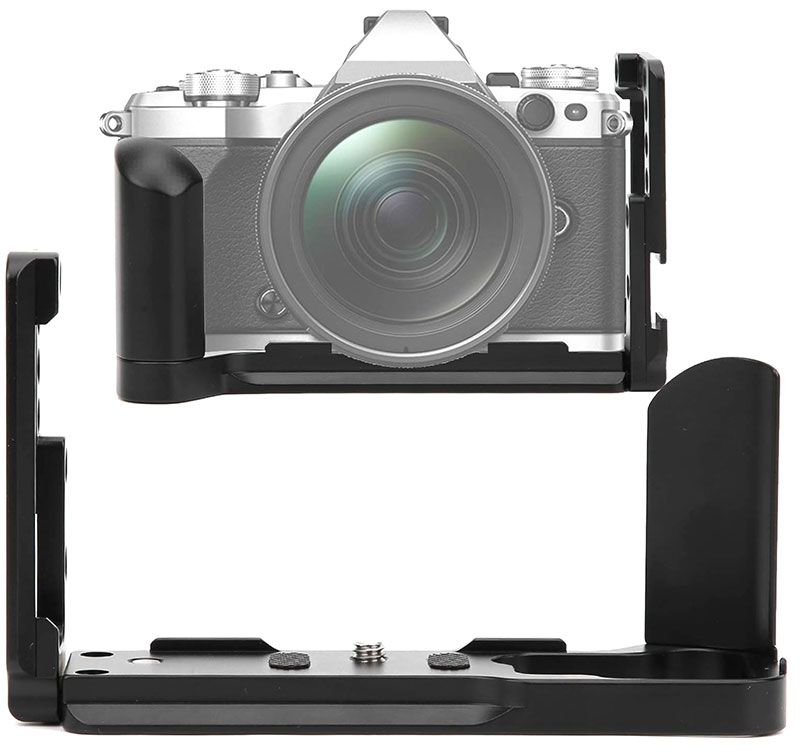
Now the grip on the OM5ii has changed it means my bracket for the OM5 (pictures) doesn’t fit. None are available yet so I will keep my eyes open for an L Bracket without a grip. Generic L brackets are always poor because they slip. Time will tell, for now I use the Hinged Plate below.
LEAPLUMIN HINGED PLATE
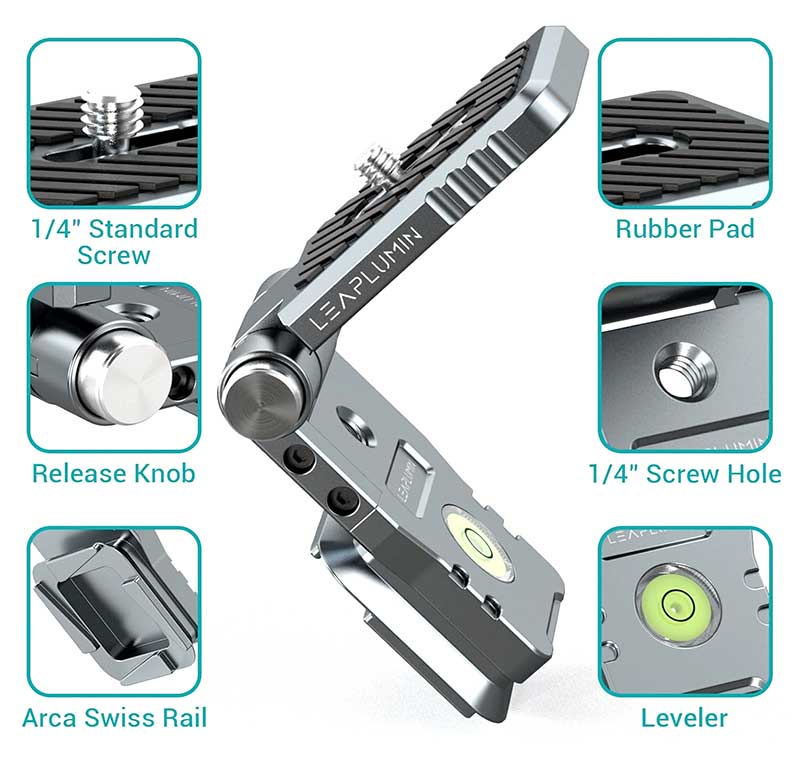
This has to be one of the best accessories I have bought in quite some time. No L Brackets are available right now so this fulfils a need until something better comes along.
I came across this hinged bracket on Amazon which solves the problem for now. There are quite a few available but this one has a silver button which allows it to lock when closed or open at 90 degrees. It is not exactly a button, rather the sprung hinge is pinched from the front and back to release the lock. It was not too expensive at £25 and it seems vey well engineered.
LONG LENS PALM PADS
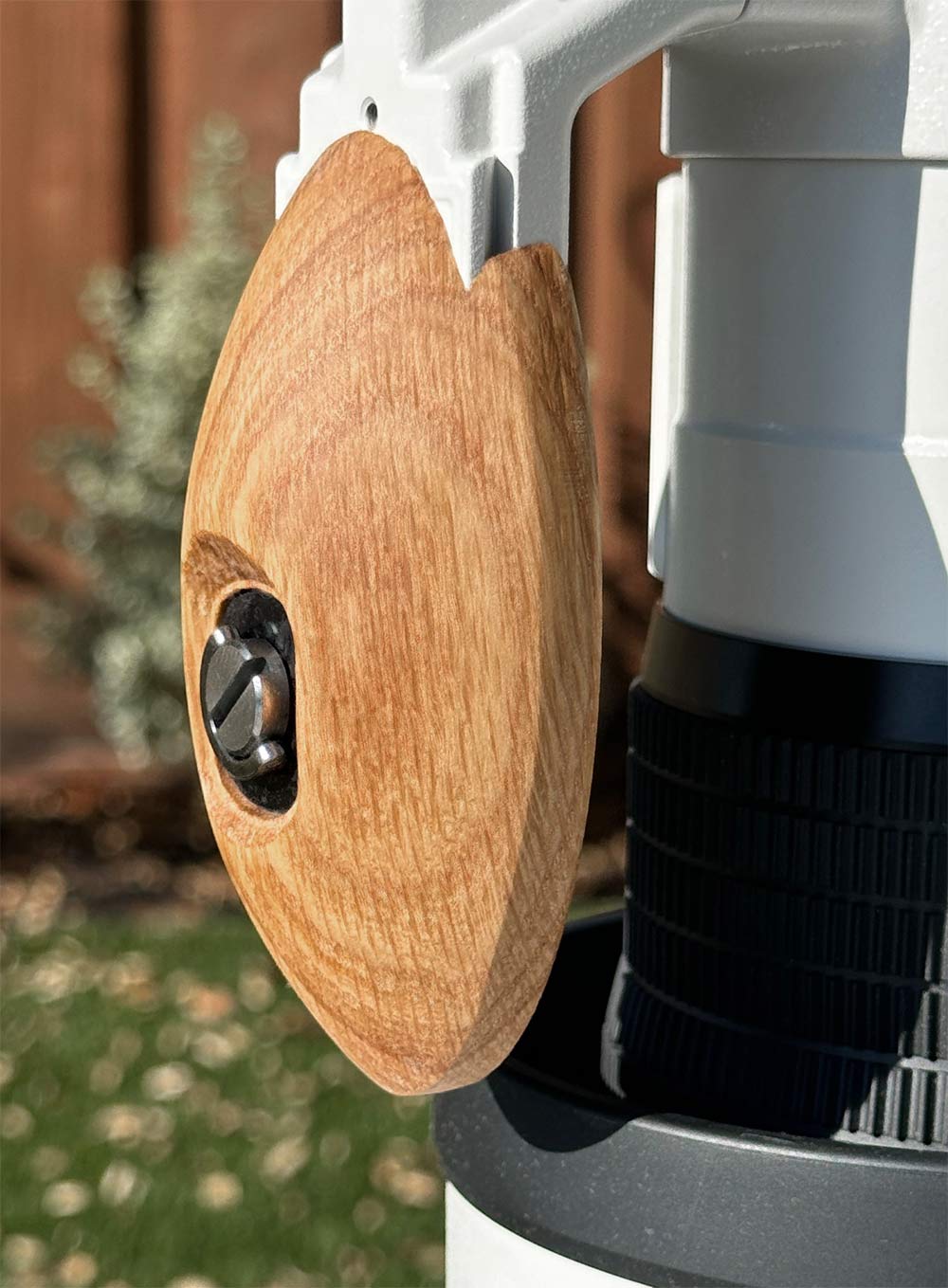
Produced by The Secret SignWriter in the UK, these are absolutely genius for long lens users. They help when hand holding long lenses being shaped ergonomically to fit comfortably in the palm of your hand. It also makes using the zoom and focus rings much more comfortable to operate.
Sanded smooth and finished with a natural wood oil finish to protect it, they also have a tripod bush screw for easy removal and a protective insert for strength.
The wood is hardwood, typically oak which makes it strong, and warmer to hold than steel or alloy, important for those cold winter days. And they make carrying easier with the foot being extended. I have one on my 100-400 and 300mm f4.
Available for all Olympus/OM System long lenses including the 40-150 Pro, 150-400 Pro, 300mm Pro, 100-400mm, and 150-600mm
Priced at £60 + shipping, they can also be sent overseas.
Contact The Secret SignWiter for more details below:
FILTERS
If you studied my website it will be no surprise that I use Nisi filters being an Ambassador and a stockist, and you will find a great deal of information about them on the relevant pages. But what are the benefit of using filters? Filters are used for two main purposes, balancing exposure and lengthening exposure. You will probably not use external filters on the OM3, maybe just an ND to supplement the in camera ND on bright days in which case a circular magnetic ND will be more suitable. K and F, Nisi and Kase all produce circular magnetic filters. Nevertheless less I will leave this here.
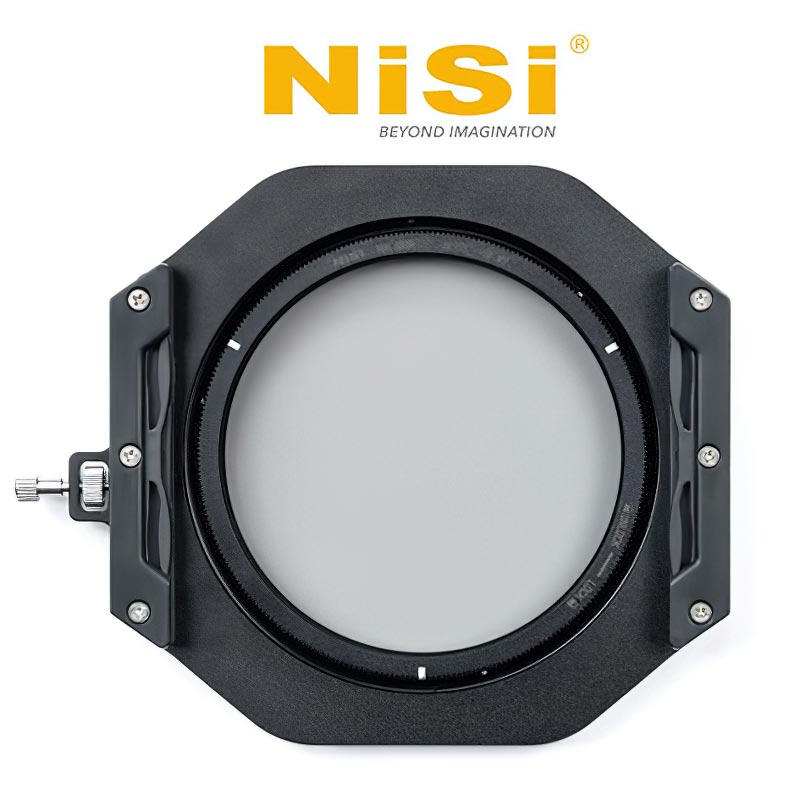
1) NISI V7 FILTER HOLDER
Comprising an adapter ring and step rings on the rear for different lens sizes the V7 includes a 100mm filter frame and a polariser. Polarisers are essential for landscape photography to remove reflected light from foliage and water, and for saturating colour although care must be used with wide lenses. Although some other filter sizes are available such as 75mm they will not suit wide lenses such as the 8-25 so you are better to use 100mm. The V7 is a great piece of equipment, and whilst circular filters are also available with less bulk you cannot use graduated filters. More flexibility is provided with a slot in system.
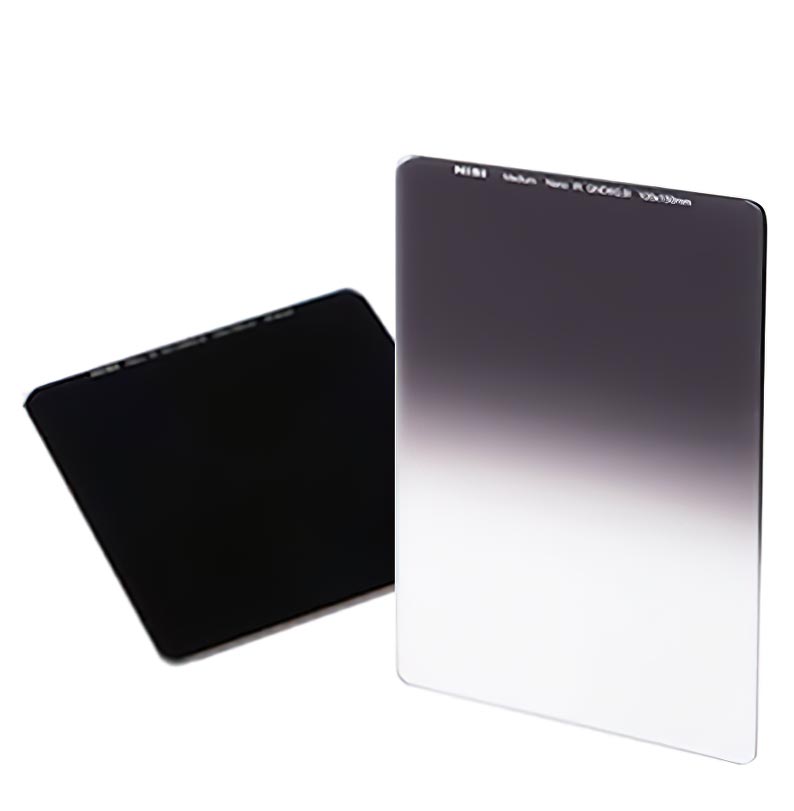
2) ND FILTERS
ND filters are a solid tone and reduce the light entering the lens, thus extending the shutter speed to create long exposure images. With the OM1-MKII having up to 7 stops built in a 10 stop is useful to have for longer exposures. A 3 or 6 stop is also useful to extend the built in ND, use an external 3 stop with the built in ND’s but remember when using Live ND the maximum shutter speed is 60 seconds.
3) GRADUATED FILTERS
A graduated filter will bring the exposure of bright skies down enabling the camera to better capture the dynamic range in a scene. At the same time as reducing the brightness of a sky the ground will also reveal more detail because the camera is not being dazzled, just as graduated sunglasses help us see the ground in front of use. Graduated filters are available in different strengths for 1 to 5 stops and different graduations, soft, hard, medium and reverse. The most useful filter to have I think is a 3 stop Medium Graduated, it will serve you well for just about all scenes and a kit of other filters such as a soft can be added as and when needed.
RELEASES & TRIGGERS
Thankfully, unlike on the OM3, OM System have retained the cable release port on the OM5ii. cable releases are essential in many situations. Just use self timer I hear you say. Self Timer is the answer, and having drive mode mapped to the Arrow Pad down button makes it easy to set. But there are times for me Self Timer will not do:
- Bracketing-Self Timer cannot be used. When shutters are slow we need another way of not touching the camera.
- Timing-Using Live ND and trying to get the shot just when water ripples and streaks are right is nigh-on useless when you have a 2s delay.
OI IMAGE SHARE
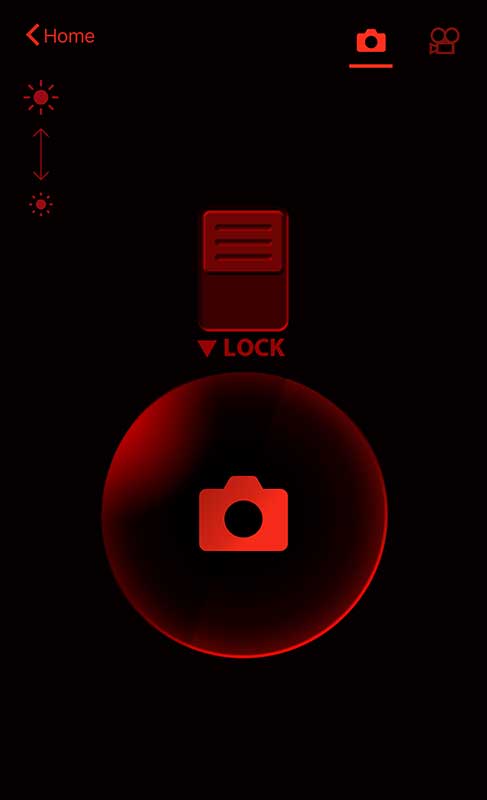
The Olympus Image Share App can be used as a wireless trigger and for downloading images to your mobile too. It pairs easily and as all it is doing is releasing the shutter the camera can be set to any mode, including CP Modes and Bracketing. The downside is it means using your phone, not good when standing in water. Sure mobiles are waterproof these days but that is no consolation when a wave has swept it out and it is on the way to the continent. When the camera sleeps the app is disconnected too, so switch off sleep temporarily.
The Live View can be very useful particularly when you want to see your screen from a short distance. Again sleep will disconnect it, and it is very limited in settings that can be applied, shooting mode, aperture, ISO and shutter and that’s about it. You cannot use computational modes. Still, it has its uses and it may be all you need.
WIRELESS RM-WR2
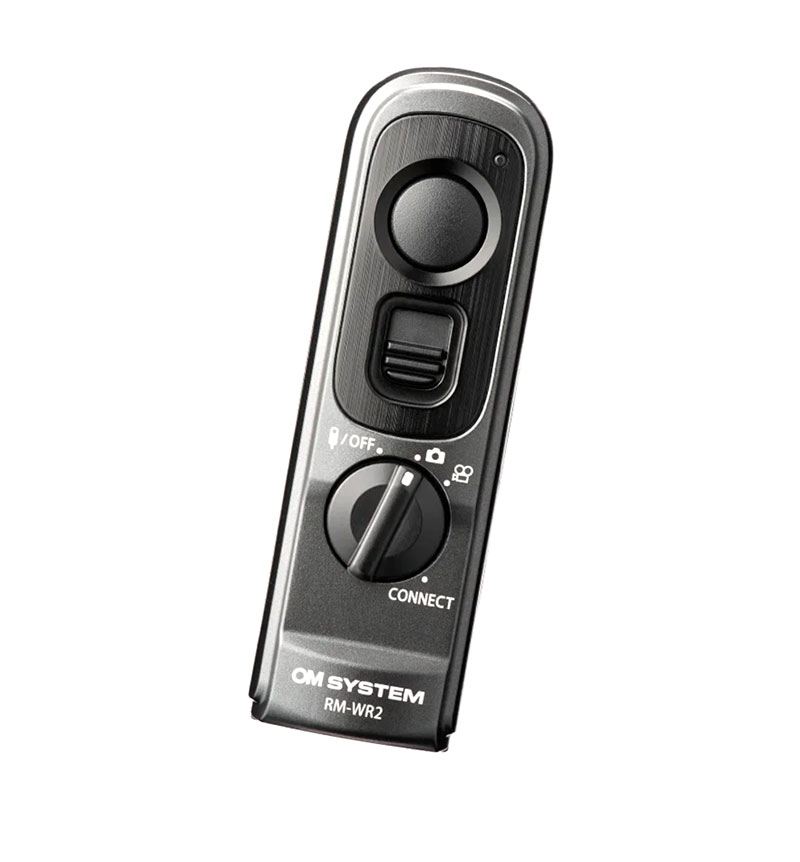
The wireless remote RM-WR2 replaces the RM-WR1 which is not compatible. Also provided with a plug-in cable it can be used with the OM-1 and OM5 as a cabled release too, but only wirelessly with the OM3 and OM5ii. It is also an eye-watering £90. Two good features, it is waterproof and unlike the OI App when connected the camera will not go into sleep mode so you will not have to faff about reconnecting. But it is small and there is no anti-gravity mode so it is easy to drop, I will make sure it is always attached to a lanyard around my neck. Again waterproofing is no consolation when it is sailing away on a wave.
CHEAP WIRED RELEASES
Thankfully as the OM5ii still has a port there are plenty of cable releases available, I have quite a few just in case, and they are only around £8 on Amazon. Look for one that is Canon compatible because they use the same pin connector.
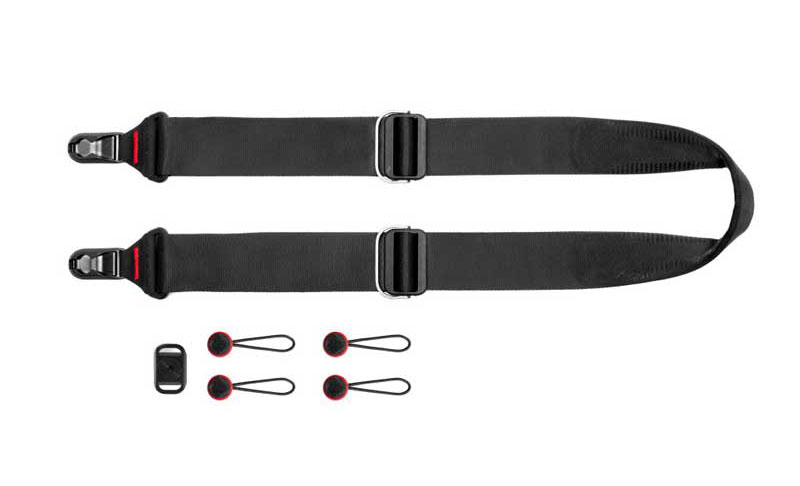
PEAK DESIGN CAMERA STRAP
Camera straps are a pain when using a tripod, they get in the way and flap about in the wind causing vibration.
The Peak Design Slide and Leash straps solve that with strong anchors that are attached to the body (they are strong!) and a strap with very easy to use quick release buckles. It may not be vintage looking, both other colours are available too.
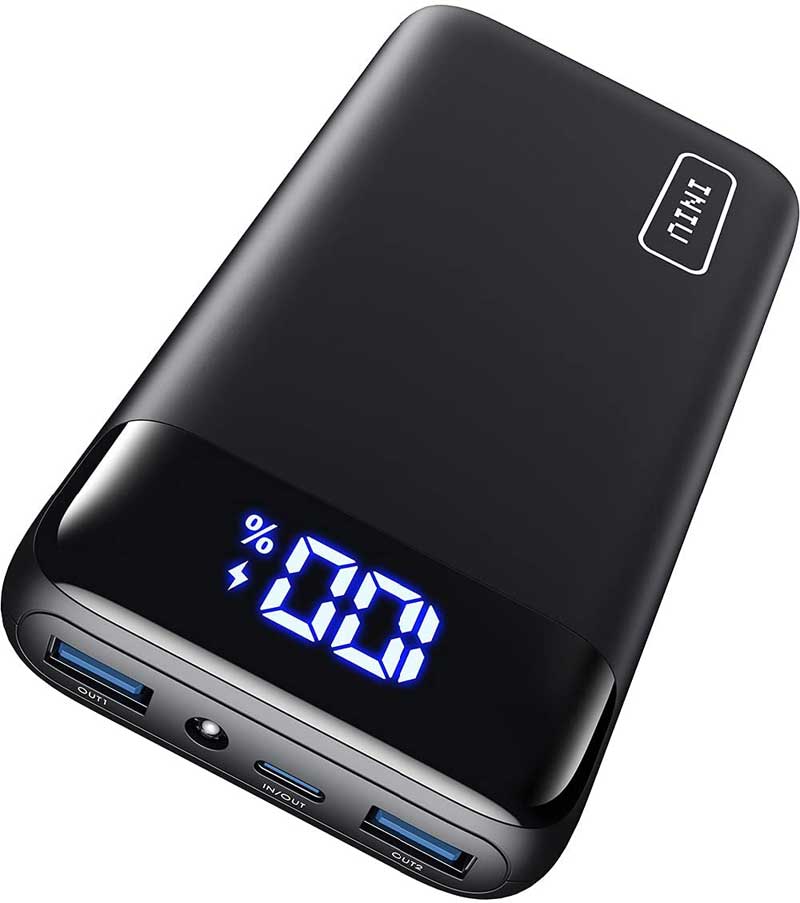
INIU POWER BANK
With the OM5ii having the ability to charge batteries in camera a power bank is a no brainer. The INIU is compact, 20,000mAh and 22.5w meaning it has plenty of capacity with x2 USB 3 and 1 USB C ports. The USB C port is in/out so it can be charged and also charge from the same port. An LCD screen shows power and it also has a torch too.
Power packs must be PD to power the camera which this is. There is another version which charges slightly faster but is lower capacity at 10,000mAh, so this is the better option. It charged a depleted battery in camera in about 2hrs, around the same as a mains charger.
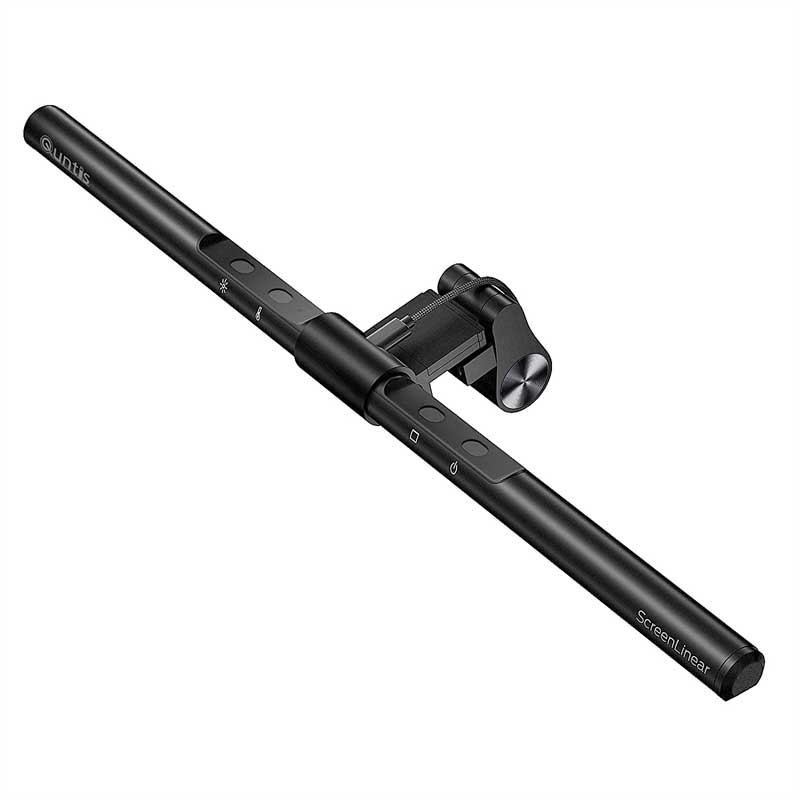
QUNTIS MONITOR LAMP
The best accessory I’ve ever bought for my computer, a 40cm LED strip light. It simply clamps to the top of my monitor and with directional light it illuminates the desk and not the screen so I can see my keyboard.
It uses no power being LED, it has manual brightness or auto sensors and colour temperature can be adjusted. At around £30 its also £100 less than the very similar BenQ monitor light.
TORCHES
It goes without saying being able to see at night is essential, these are my two favourite accessories for being able to light my way when out after dark.
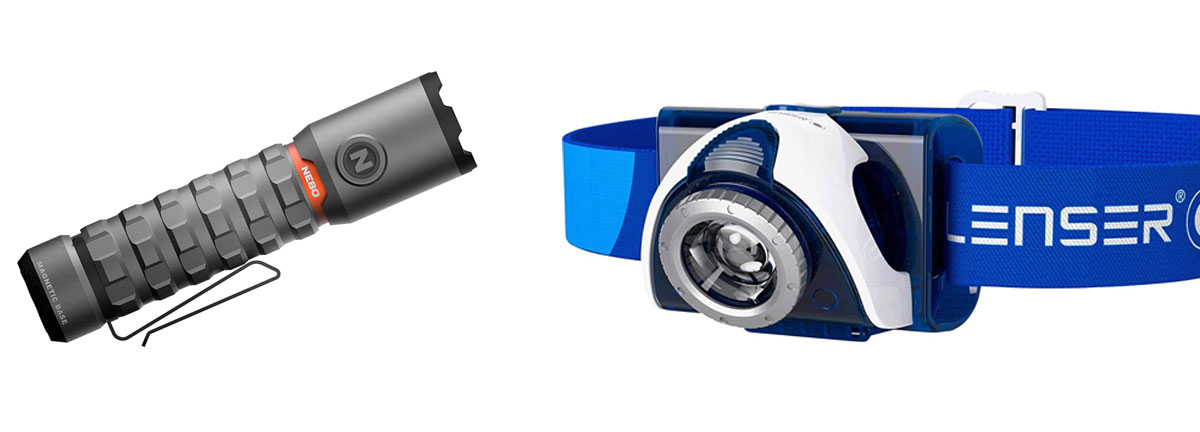
NEBO TORCHY 2K
My favourite LED torch because its so small at only 10cm long, and it packs power at 2000 lumens. Brightness is adjustable but it doesn’t have adjustable beam which for me doesn’t matter, I want something small to fit in a pocket without bulk with a wide bright beam. This does the job well and it is rechargeable so no more messing with batteries. Also weather sealed and still worked when I dropped it in a stream.
LED LENSER HEAD TORCH
LED and rechargeable, handy when you have a battery pack, it will last quite a few uses between charges and my experience is it has never lost charge when not in use. At 220 lumens its very bright for a head torch, light weight and has an adjustable beam width, adjustable angle and also adjustable brightness levels. For night photography it also has a red light mode to reduce glare. All pretty much standard these days but Lensers do have a good build quality and reputation.
GORILLAPOD & PANEL LIGHT
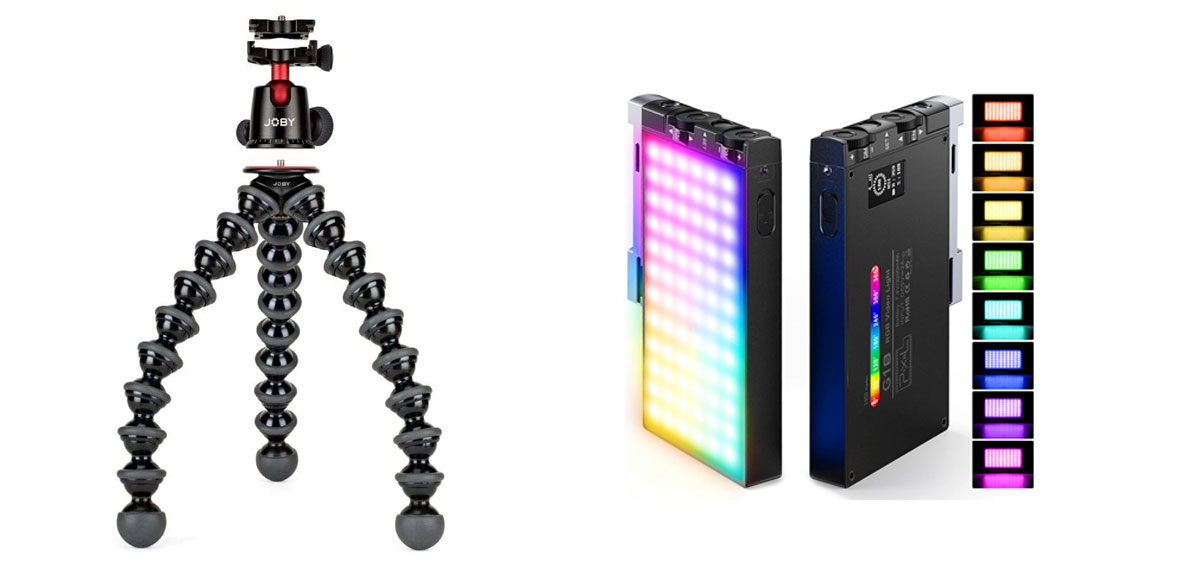
JOBY GORILLAPOD 5K
There are quite a few bendy tripods available these days but the Joby is still the original and best. Useful because they are so small and light and easily fit into a backpack side pocket, and they are great for getting really low or for wrapping around tree trunks, walls and fences etc. I use one for my ‘Glowing Shrooms’ series of images when I want an additional support for a panel light, torch or Macro lights like the Adaptalux below.
The 1K is around £30, the 3K £50 but it is worth going for the 5K for £20 more because the ball-head is far better and it is Arca Swiss so a standard tripod plate will fit as will an L Bracket. I had the 3K but ended up buying the ball-head separately for the Arca compatibility.
PIXEL G1S LED PANEL LIGHT
The Pixel Panel Light is a small unit about the same size as a mobile phone at 12cm. I use one when I want to add a little background ambient light to Macro images (‘Glowing Shrooms’ again). Along with white it has a full spectrum of RBG colours and brightness can be adjusted from the full 1500 lux to 0. The best feature of they unit is the build, with an aluminium case, easy to use wheel controls and a metal swivel base for angling it out. It also has a hotshot adapter and a small ball-head for more flexibility.
MACRO
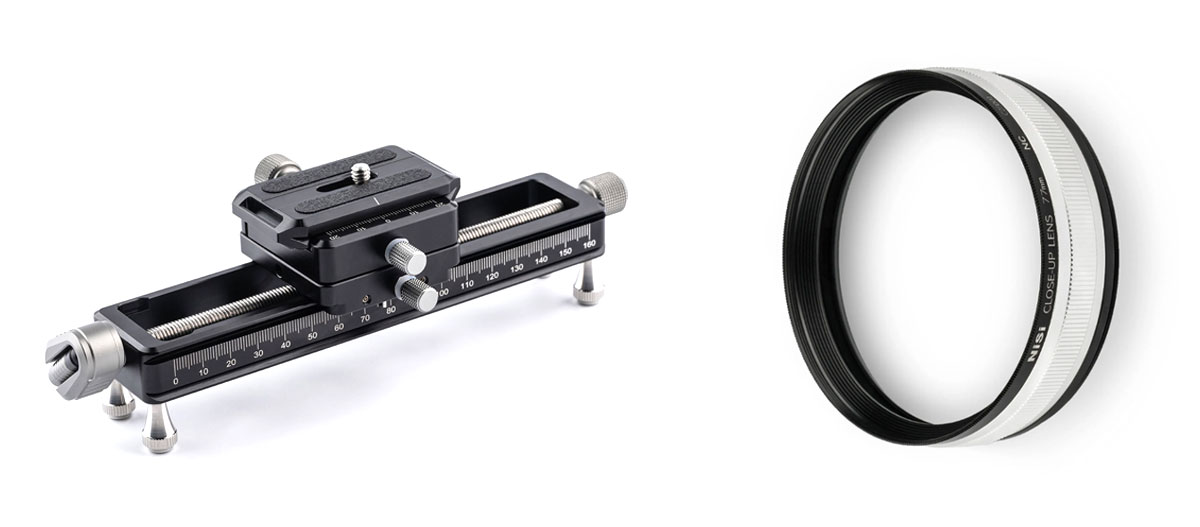
NISI MACRO RAIL
Incredibly well engineered the NiSi Macro Rail solves the problem of making minute adjustments in Macro photography. An Arca Swiss compatible rail with removable table top feet has a tripod plate which can be adjusted by a mechanical screw thread. Make minute adjustments with the rear thumb screw or for bigger adjustments pull the lever out to wind the mechanism faster. The top plate can also be rotated a full 360 degrees.
NISI CLOSE UP LENS
The Nisi Close Up Lens does exactly as the name suggests, giving a closer focus distance to longer lenses which do not focus very close and can provide up to almost 1:1 magnification. Designed for longer lenses such as 70-200mm (Full Frame) it is suitable for the Olympus 12-100 at around 50mm and over, and lenses longer than this. With a 77mm rear thread a 67 and 72mm step ring are also included and other threads can be accommodated with a suitable step up ring.
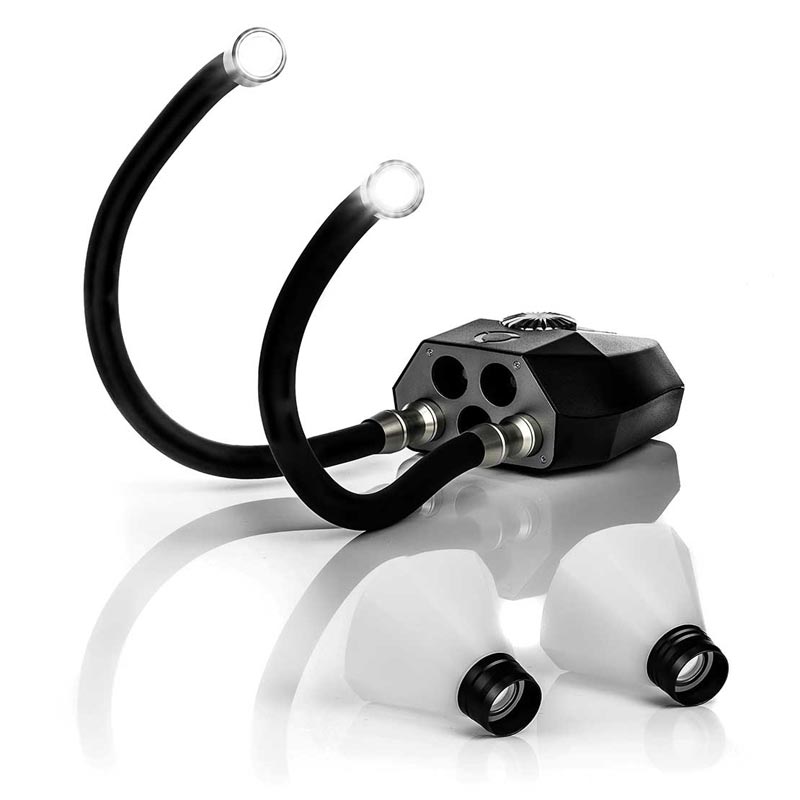
ADAPTALUX MACRO LIGHTS
What on earth, you are probably thinking. A friend recommended these to me and they are genius for lighting Macro Images. Instead of being behind the camera trying to run focus bracketing and stretching trying to hand hold a torch (see ‘Focus Bracketing’) or using a clamp, these bendy LED arms are powered by a control unit and can accept up to 5 arms. The whole set is controlled by a phone app which juts uses Bluetooth so doesn’t rely on a mobile signal.
They are not cheap at around £300 for a kit with two lights, but they are worth the investment. A tripod bush on the base allows it to be tripod mounted or used on a GorillaPod.
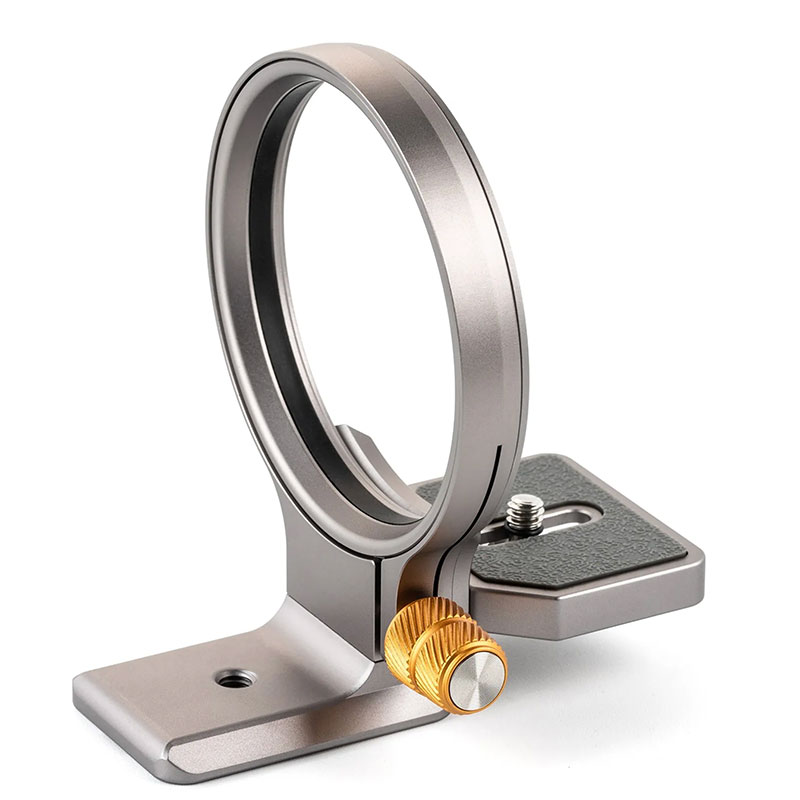
NISI WIZARD ROTATING BRACKET
Released in 2023, the Wizard is an L Bracket that rotates. Once fitted to the camera and then fitted to a tripod it can be rotated by releasing the knob. It is a little too cumbersome I find to replace an L Bracket and have it on all the time, but where it really wins is for getting close to the ground for Macro. Instead of reversing a column and having the camera upside down you can rotate it to the right way up! Genius. I’ve found it very useful. At around £70 it isn’t cheap but it will not break the bank either. There are a number available now, including Leofoto and Ulanzi, so search online.
BRACKETS
I’ve included these simply because it’s surprising how many people ask what I use when they see me posting Behind The Scenes images on Social Media.
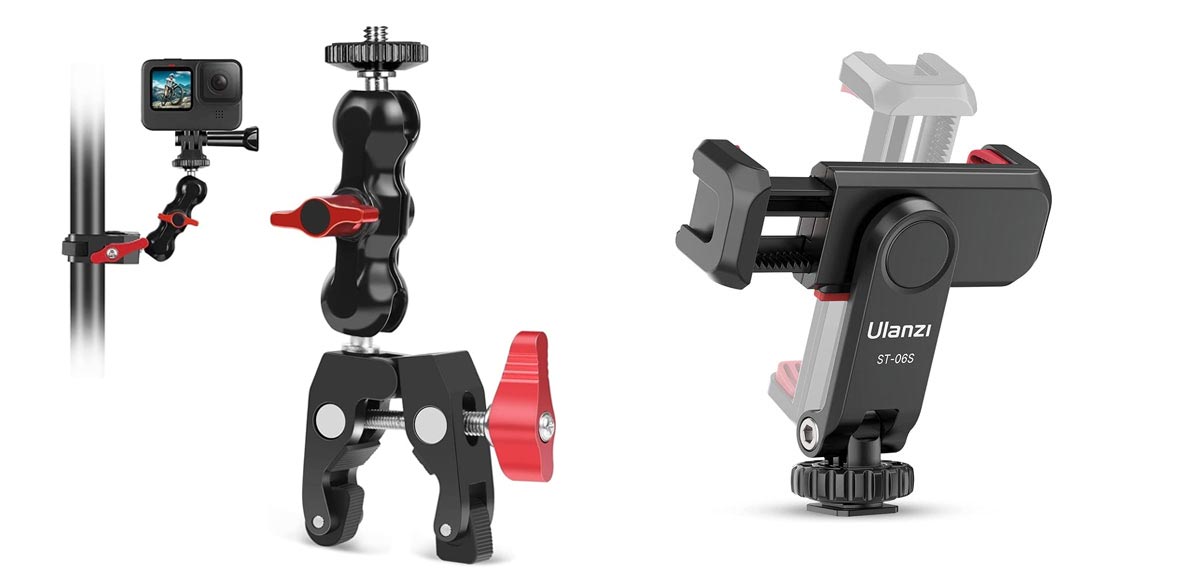
PULUZ ARTICULATED BRACKET
It’s amazing just how useful these are. With a 1/4 thread at the top anything that has a tripod bush on the base can be mounted to it and then clamped to anything. I used it for mounting a Go-Pro to the tripod leg for doing a time-lapse. I soon realised Go-Pros are not for me, for doing a Behind The Scenes or a time-lapse my phone does the job, so I just mount the phone bracket to it. As long as I’m steady I can carry on using the camera too because I’m not using the hot-shoe. It has also been useful to attach a manual light to a tripod leg too. The odd looking arm is actually a bonus because it will angle in just about any direction. It can be extended with longer arms too and for around £15 it really is a great accessory.
ULANZI PHONE BRACKET
Useful for hands free video or time-lapses from a mobile there are so many of these around now. I do like this one because it is light but strong, it rotates and the base is articulated so I can angle it. The base has a hot-shoe foot but also a 1/4 tripod bush so I can mount it to anything, the Puluz bracket or even a standard tripod plate.
ASTRO
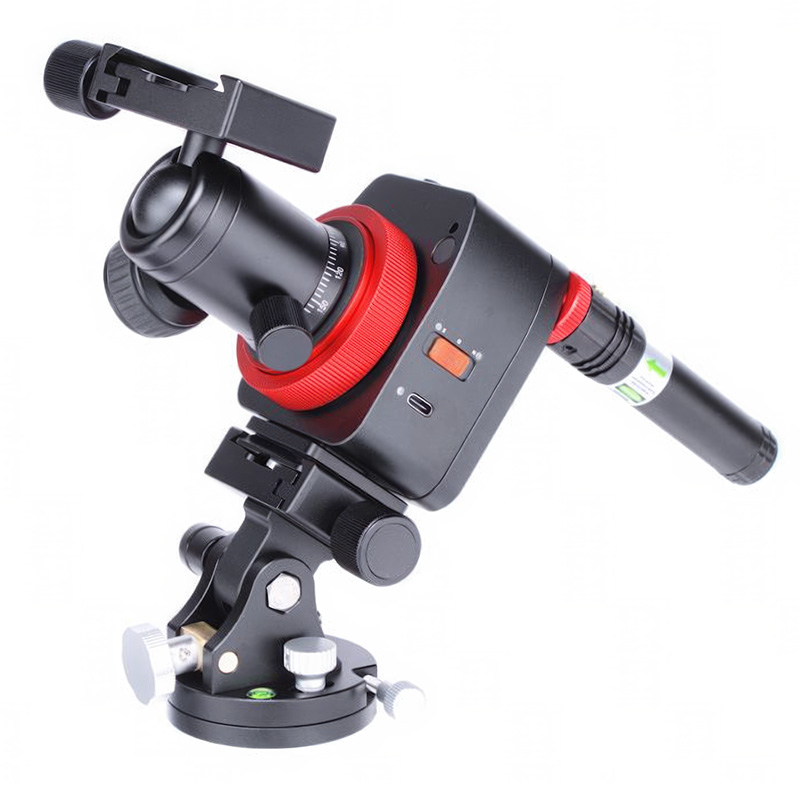
MOVE SHOOT MOVE NOMAD
New to me is the MSM Nomad Star Tracker which I recently purchased. After getting a Seestar S50 I got the bug and decided to get a tracker for my Olympus/OMS cameras. This tracker actually rotates with the earth, meaning Milky Way images can be shot for minutes, rather than seconds with no trailing. The main unit is extremely compact and weighs just over 400g, so it is ideal for being portable. I have a Sky-Watcher tracker and the MSM is tiny in comparison.
I have tested it although not had the change to do any Milky Way as yet. It was a doddle to set up and Polar Align with the laser light. A Polar Scope is also available if you cannot use a laser light. I had a spare ball-head so didn’t need to get one, what I would say is get the wedge (the bottom support shown) and also get the Z Plate which fits between the MSM and the ball-head, it is much easer to set the ball-head up. At around £300 (direct from MSM) it was not too expensive either.
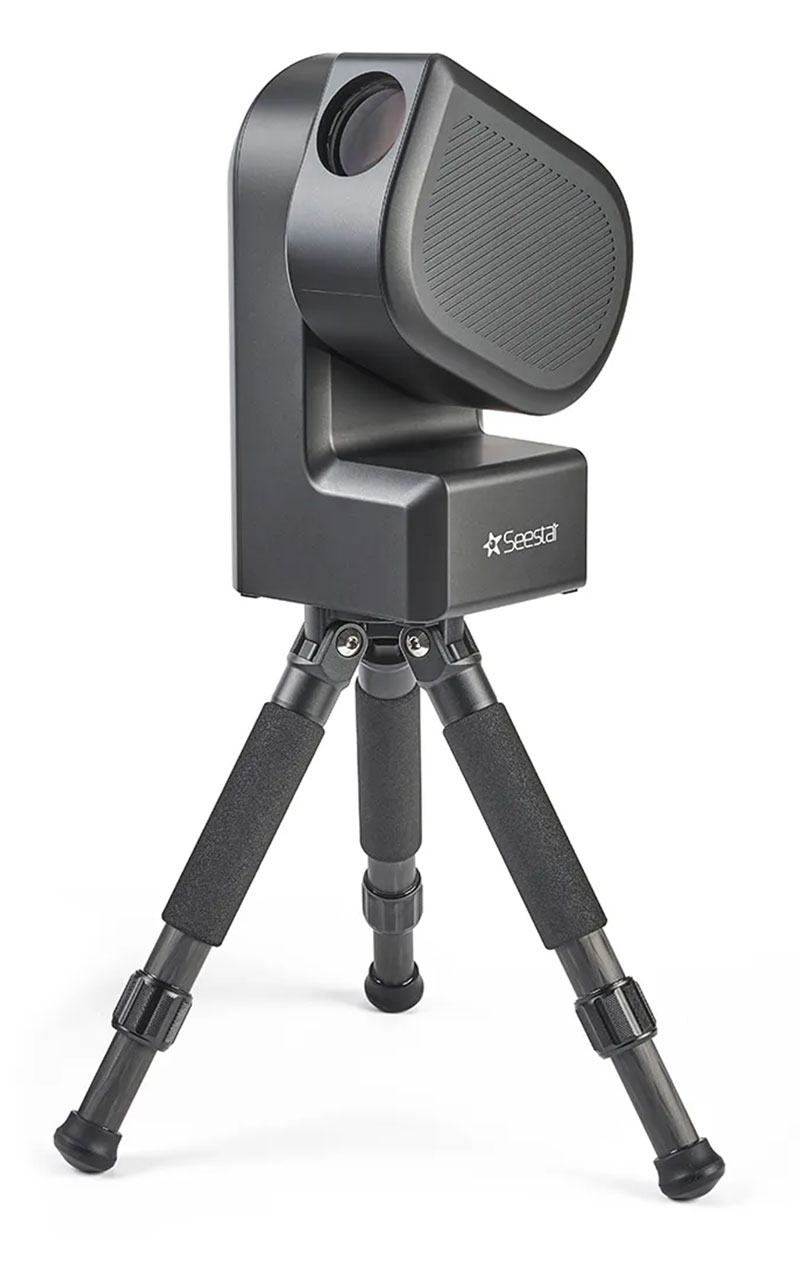
ZWO SEESTAR S50
Although nothing to do with Olympus/OM System, this little gadget is so much fun for capturing Deep Sky Astro images. Be warned, it is addictive because it is so simple. A tracker, long lens telescope and camera all in one!
The main benefits are it is all phone app driven with a very sophisticated but easy to use App. Select a target from the sky atlas, set up a schedule of targets to shoot all night in your back garden, then let the App stack the images for you.
It can be used to produce just a jpeg image which you can then process in any phone app like SnapSeed, or you can take all the Raw (Fit files) and process them in more advanced PC Apps like Siril (free) or Pixinsight (expensive).
There are many Youtube videos for using it, for processing, and tips and tricks too. In fact there is a huge community around these, with Facebook Groups too, and they frequently sell out. The S50 is around £530 and the S30 which is a wider field model and even smaller is now around £400. Check prices because they keep fluctuating thanks to US/China Tariffs.
If you live in a dark sky area you can literally leave it out all night, even in winter, shooting a schedule of different targets. I have to travel 20 minutes to get away from street lights so I have to baby-sit it, which is why I also got an S30 to have both running. An iPad with Netflix helps though.

CONCLUSION
I hope these have been useful. These are all items I actually use and whilst there are many more it would be hard to show everything. Please note that items with an Amazon link are affiliate links so if you wish to purchase anything I may just earn enough credit for a gift voucher and it is appreciated.