

SCENE MODE & ART FILTERS
Using the built-in Scene Modes and Art Filters
Scene Modes and Art Filters have been carried over from the OM5 with a huge range of options. Scene Modes are designed to allow for quick shots where the camera sets all the settings for you for a given scenario, much like a custom mode. They can be useful, especially when you just want a quick shot, but do note many of the applied setting have little or no adjustments.
Art Filters can be thought of as a creative filter that can be applied to an image with a huge range of styles possible, such as Dramatic Tone, Pop-Art and Soft Focus. They are Jpeg only and whilst there are some options available to change they are limited.
Firstly a note, remember that any of the features you apply are Jpeg only. Raw is Raw and is not altered by anything, the whole point of Raw is to give an unedited image with all of the information for you to process yourself. If Raw only is set in camera it will default to Raw+Jpeg. That being said, Art Filters can be applied to Raw in OM System Workspace and only OM Workspace. Other apps may have settings such as Camera Natural for Profiles but it is not the same, it is how Adobe perceive Natural should look. If you are wondering what is the point, when you only have a Jpeg, remember not everyone wants to process images and they are quite happy with images straight out of the camera.
SCENE MODES
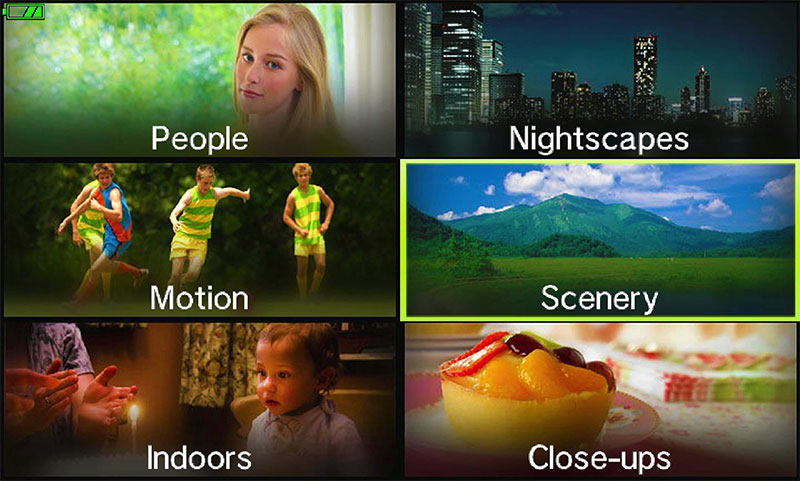
Scene Mode Main Interface
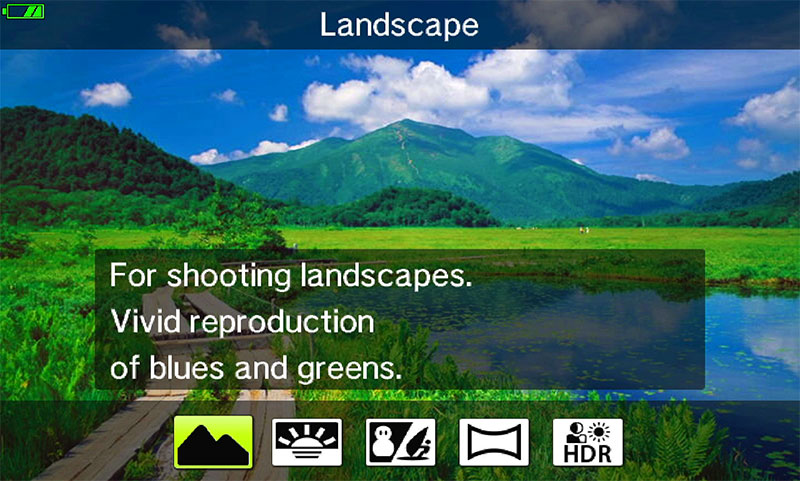
Scene Mode Options
Scene Modes have been designed to be simple to use making them quick and easy. Set the Mode Dial to SCN and select the main Subject Category of interest. The next screen will give 4 or 5 sub categories to choose from. Set the one you want and shoot, it is that simple. Pressing the OK button will reveal settings but remember just about all settings are fixed and cannot be changed.
You may find setting are not quite optimum and are fixed, in the Landscape mode for example Auto ISO is set and the Aperture is f4 which cannot be altered, so it is worth spending a little time getting familiar with the settings if you intend to use them. The Indoor Silent mode for example switches to Silent Shutter, AF confirmation beep and AF illuminated assist lamp are disabled which is quite handy. Notice a pop-up on each sub-category gives a brief description of the mode.
AVAILABLE SCENE MODES
The available modes and the subcategories. Explore each one and see if there are any you could find useful. There are a few that are quite handy such as the Nightscapes, Motion and Indoors. Notice that most of the People are repeated in other sections too.
| SCENE MODES | SUB-CATEGORIES |
|---|---|
| SCENERY | Landscapes, Portrait+Landscape, Sunset, Beach & Snow, Panorama, Backlight HDR |
| CLOSE-UPS | Nature Macro, Macro, Muti Focus Shot, Documents |
| PEOPLE | Portrait+Landscape, Portrait, e-Portrait, Portrait+Nightscape, Children |
| NIGHTSCAPES | Light Trails, Nightscape, Portrait+Nightscape, Handheld Starlight, Fireworks |
| MOTION | Sport, Children, Panning |
| INDOORS | Candlelight, Silent, Portrait, e-Portrait, Children, Backlight HDR |
ART FILTERS
Art Filters are a collection of filters and do exactly what they say, apply a filter to your image, giving the opportunity to get creative with your shots. Set the Mode Dial to Art and scroll through the options to select the effect you want.
Some filters also have additional options which can be applied such as vignettes, blur, colour and frame effects. These are context sensitive, as you scroll through filter types the vertical menu will update to show which options can be applied.
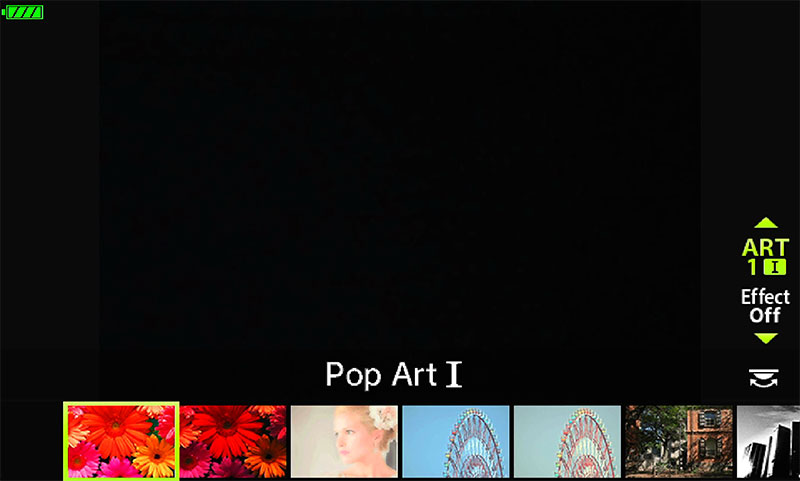
Selecting Art Filters on screen.
| ART FILTERS | EFFECTS AVAILABLE | |
|---|---|---|
| Art 1-Pop Art I/II | Art 9-Gentle Sepia | Soft Focus |
| Art 2-Soft Focus | Art 10-Dramatic Tone I/II | Pin Hole Effect (Vignette) |
| Art 3-Pale/Light Colour I/II | Art 11-Key Line I/II | White Edge Effect (Vignette) |
| Art 4-Light Tone | Art 12-Watercolour I/II | Blur Effect (Left/Right) |
| Art 5-Grainy Film I/II | Art 13-Vintage I/II/III | Colour Filter – Mono Colour |
| Art 6-Pin Hole I/II/III | Art 14-Partial Colour I/II/III | Frame Effect |
| Art 7-Diorama I/II | Art 15-Bleach Bypass I/II | Star Light Effect |
| Art 8-Cross Process I/II | Art 16-Instant Film | Shade Effect |
Effects allow further changes to be made to an Art Filter, note that they are option sensitive and change depending on the filter selected.
Art Filters are Jpeg only, if Raw is enabled it is not changed and will not have any settings applied. The settings can still be applied to Raw if you wish, see below.
JPEG ONLY
Remember these are Jpeg only despite what options you have set. If you have only Raw set, Raw+Jpeg will automatically be set and the image saved as Jpeg. No filter settings are applied to the Raw, however they can be applied in post by OM Workspace, see below.
PICTURE MODE SETTINGS
One issue is that there are so many Art Filters and Picture Modes (see below for Picture Modes) you may not feel the need to have all of them. You can actually rationalise the number of filters you have available.
Settings in Menu 1>2.Picture Mode Settings allow options to be enabled or disabled. If you do use the Art Filters, spend some time going through each one. Any that you absolutely do not want to use can be disabled and removed from the list of Filters, meaning you can create a set of your own favourite filters. Remember any you remove will not be available unless you re-enable them.
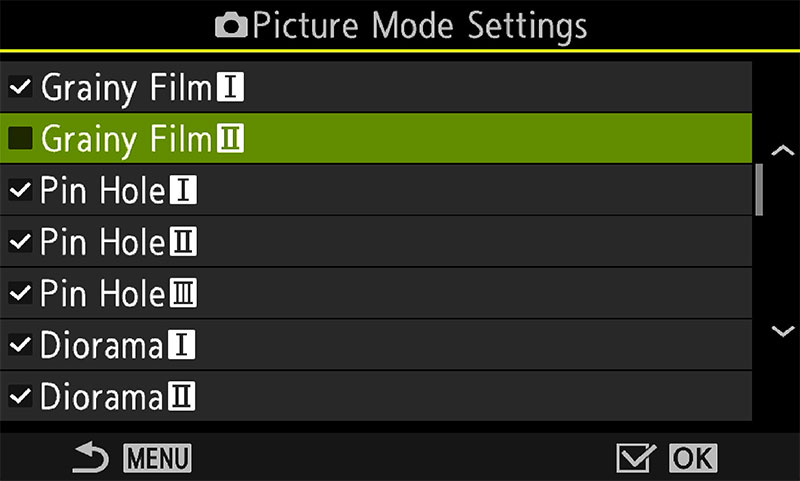
Menu1>2 Picture Mode/WB>Picture Mode Settings
APPLYING FILTERS TO RAW
Using creative filters such as Art Filters will only apply to Jpeg images and on the whole you are probably happy to just use those. But what if you are using Raw too and want to apply settings to those? I tend to use Jpg+ Raws so I have options and I can decide later what I want to do. Keep the Jpeg, discard the Raw, or perhaps apply the settings to the Raw and edit them more if I think it is a worth image.
We can use OM Workspace for this. Remember Raw images are Raw with no editing; Picture Modes will be applied but no Art Filters, and because it is a Raw you can change the Picture Style to any you want.

Workspace Interface with Jpeg and Raw shown (original Raw inset). Note ‘Properties’ for the Jpeg.
OM WORKSPACE
→ TIP When importing Raw and Jpeg images Workspace allows the Raw or the Jpeg to be displayed. In the top Menu Bar ‘Photos > Display Raw and Jpeg Together’ make sure ‘Do Not Display Together’ is unticked. It is much more convenient to see both. In the Menu Bar above the thumbnails select ‘Compare Multiple Images’ if you want to see them side by side.
Select the Jpeg image and in the right-hand side panel select the Info button. Look down and you will see all the information of the filters and styles that were applied to the image in-camera; Art Filter type and the Effect that was applied, and in the case of Picture Modes even the edits made to it such as Saturation, Sharpness etc. Only Workspace will give this information. In this example I used the Grainy Film Filter and a Pin Hole Effect. I don’t particularly like the Pin Hole, but with Raw I can just disable it.
With the Raw image selected go to the Basic icon and select any Picture Style, or in the case of Art Filters go to the Effect icon (artists pallet) and select the Art Filter and Effect. Using these you can make the Raw look the same as the Jpeg, and you also have the opportunity to make further higher quality changes such as shadows, highlights, and noise if you wish.
PICTURE MODES / PROFILES
Rather confusingly we also have Picture Modes available as a separate set of options. It is important to understand the difference between Picture Modes and Art Filters.
Art Filters as we have seen are a filter applied to the Jpeg, with few adjustments other than frames, vignettes etc. They are intended to be a collection of my stylised settings to manipulate images for artistic expression.
Picture Modes are in a way more subtle and their main purpose is to affect the overall contast and colour of an image. There are also more ways to edit the profile in more image-centric ways, such as sharpness, contrast, colour, highlights/shadows etc. Profiles can be set easily from the Super Control Panel, with the editing options available in the vertical menu.
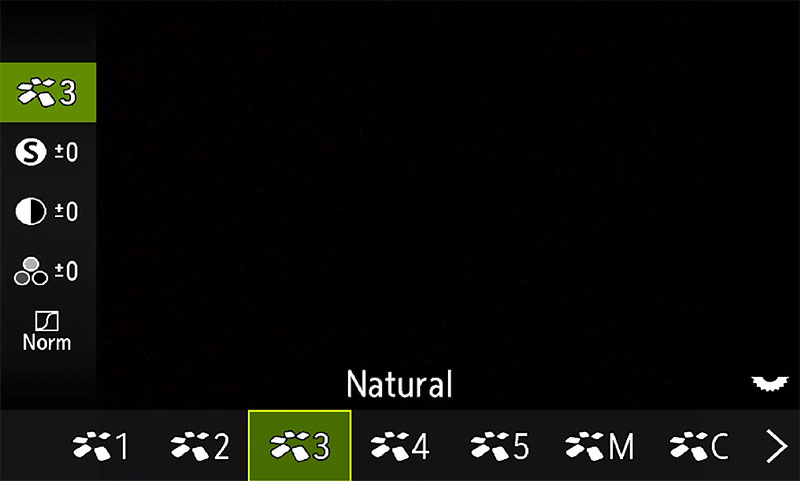
Picture Modes & Edit Options from the SCP.
Just as with Art Filters Picture Modes are only applied to the Jpeg and not the Raw. If only Raw is enabled on your camera the preview you see on your screen is a Jpeg embedded into the Raw, but when it is imported into a Raw processor such as Lightroom it will not have the profile embedded. Instead LR and other apps have profiles that try to match the profiles which you can select. The issue is they are not the same, camera manufacturers keep their ‘secret sauce’ secret, so software developers have to make their best guess at matching profiles.
However, just as with Art Filters, Picture Modes can be applied in OM Workspace (see above) and they will be exactly the same as OM System intended. Any detail settings you change in camera can also be applied in Workspace. The catch is OM Workspace is slow and clunky. I always use Raw and I prefer to use LR and my own processing workflow so I have Natural set as the Picture Mode with no changes made so my preview is affected as little as possible.
The bottom line is if you shoot Raw most of the time there is little point editing Picture Modes. If you want to use Jpeg, go ahead and change settings. Once exception is shooting Black and White images, as shown below.
AVAILABLE PICTURE MODES / PROFILES
Picture Modes and Colour/Mono Profiles are more flexible and have more detail settings that can be changed.
| PICTURE MODE | DETAIL SETTINGS (AVAILABLE OPTIONS) | |
|---|---|---|
| 1- i Enhance | Enhances colour and contrast | Sharpness, Contrast, Saturation |
| 2- Vivid | Creates vivid colour | Graduation (shadows and tone) |
| 3- Natural | Natural colour and tone | Effect (For iEnhance Low/Med/High) |
| 4- Muted | Muted tones and colour | Filter (For Mono, Ye/Or, R, Green filters) |
| 5- Portrait | Enhances skin tones | Effect (Colour Contrast-Low/Med/High) |
| 6- Monochrome | B+W. Apply colour effects and tint | Filter (For Mono, Ye/Or, R, Green filters) |
| 7- Custom | Apply own modes and effects | Colour (For Mono, add colour tint) |
| 8-e-Portrait | Enhance skin to make brighter & smoother | Custom (Create custom profile) |
| 9-Underwater | Boost underwater colours | *Colour Creator |
| 10-Colour Creator | Adjust colour/hue to your liking | Effect (Add effect to Art Filter) |
*Colour Creator is in addition to the Colour Creator profile and is used to edit the colour of the profile it is available in.
PICTURE MODE SETTINGS
Just as with Art Filters you have the ability, if needed, to limit the number of Picture Mode settings that are available. Deselect the items you want to remove. Personally I leave them all as default.
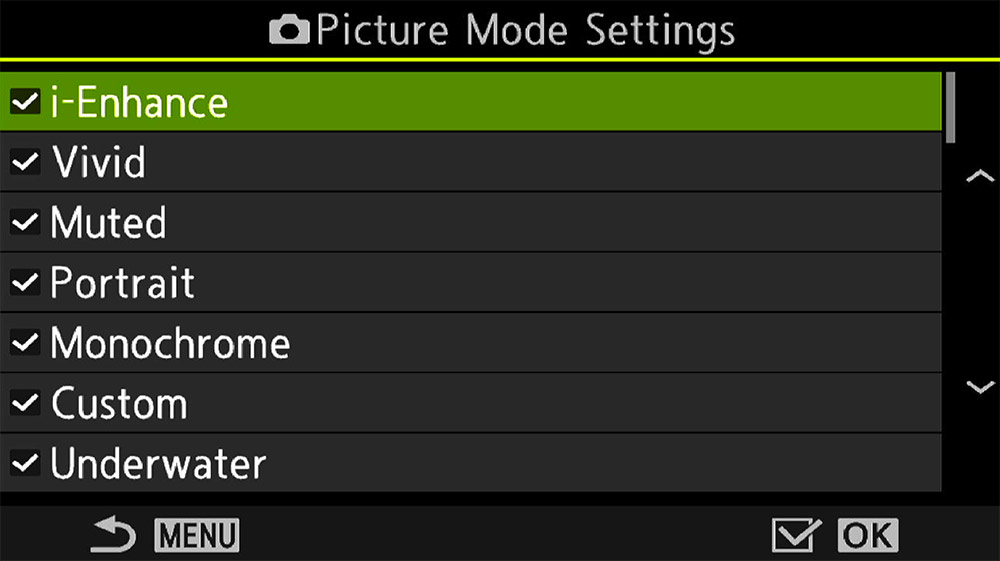
Menu1>2 Picture Mode/WB>Picture Mode Settings
EXAMPLES
I shoot in black and white quite a lot, especially for landscape images and architecture. The ability to change the screen and EVF to mono is not just specific to Olympus/OM System, many cameras have that ability. What is very useful is being able to see the shot in mono and have a first person impression of the tones, light and shade, while shooting. Whilst changing the Picture Mode to Mono we can also change contrast and change the colour filter which will affect tones, and also change the aspect ratio, 4:3, 1:1 etc. These help to show what your vision is, and they can be then replicated in Lightroom on a Raw, or applied directly to match the Jpeg in Workspace.
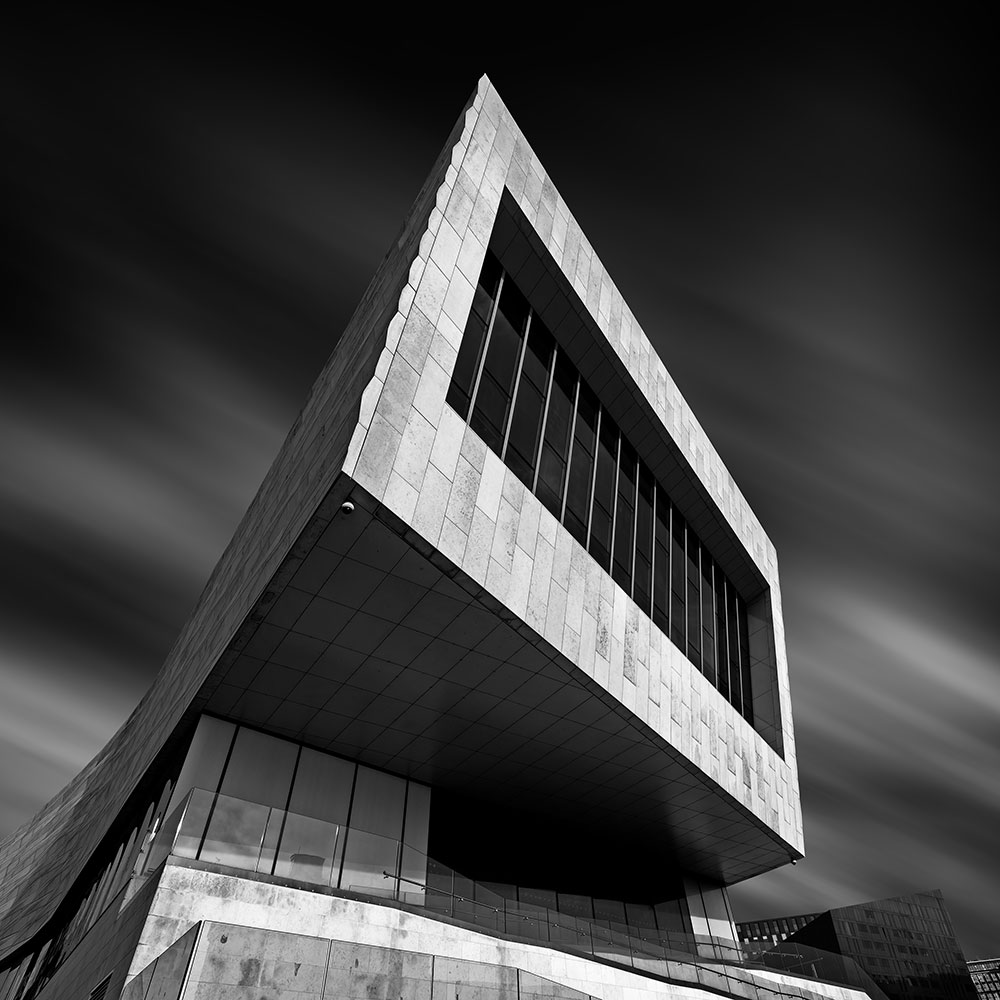
Mono Picture Mode and 1:1. Live Time and external ND.
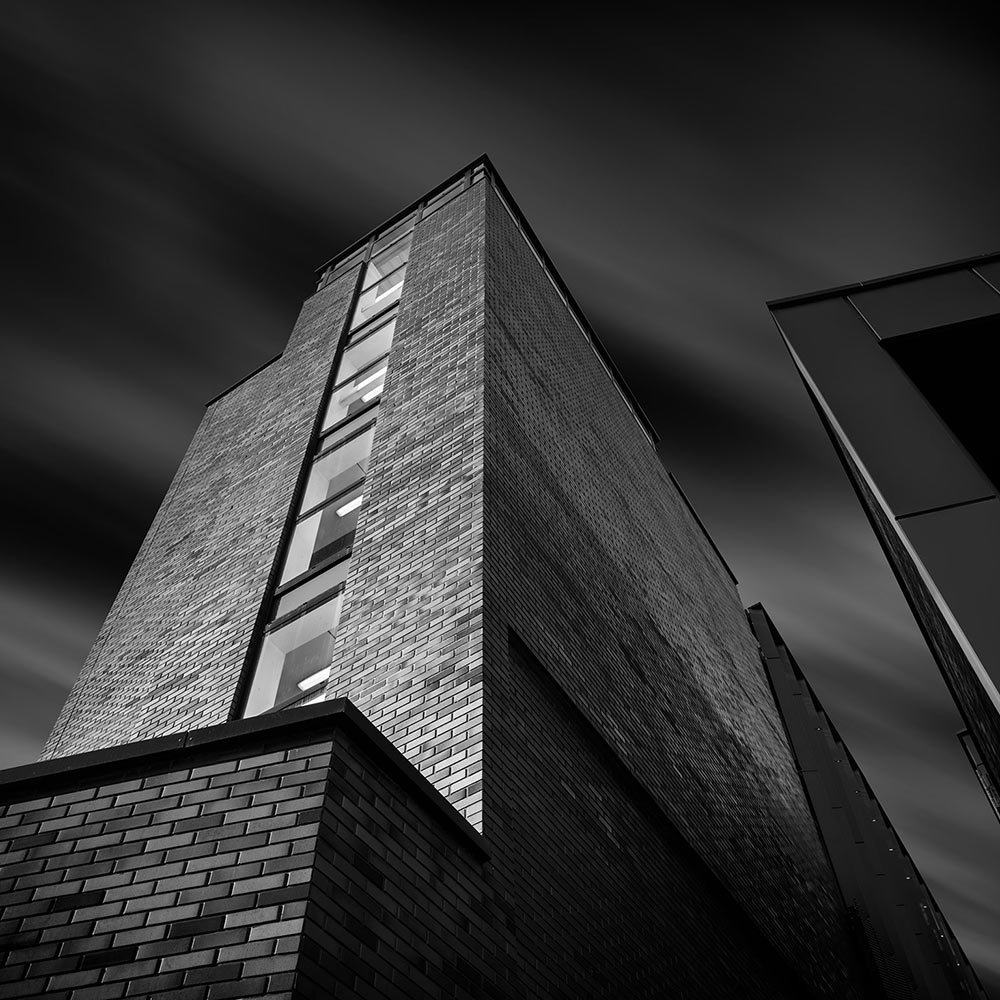
Mono Picture Mode and 1:1. Live Time and external ND.
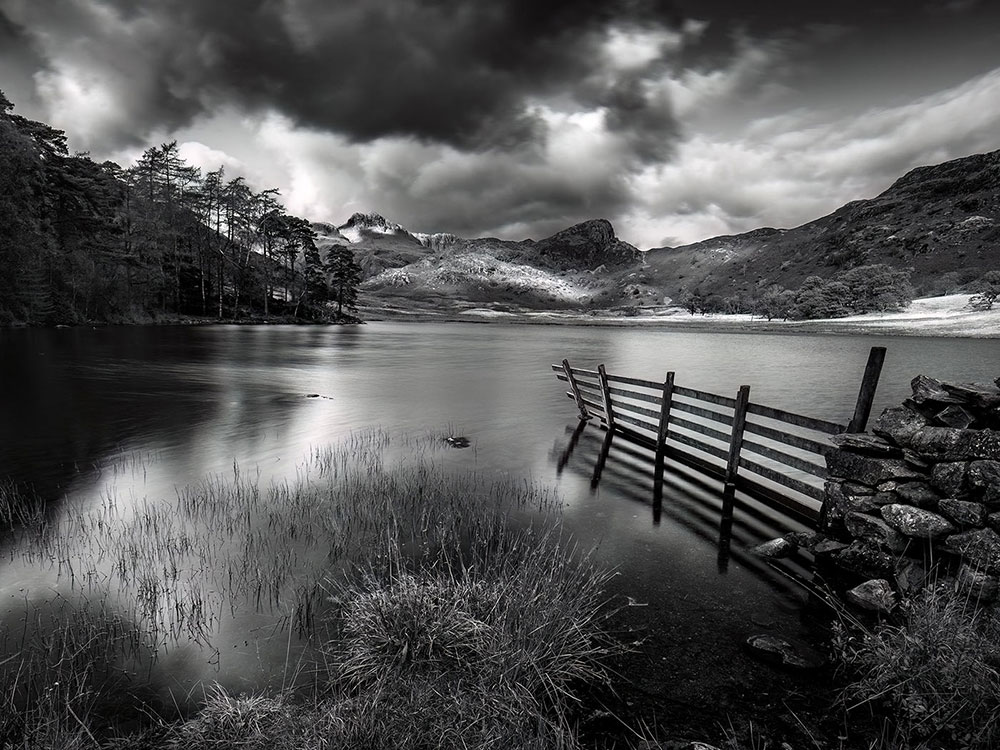
Mono Picture Mode and 4:3 Live-ND.
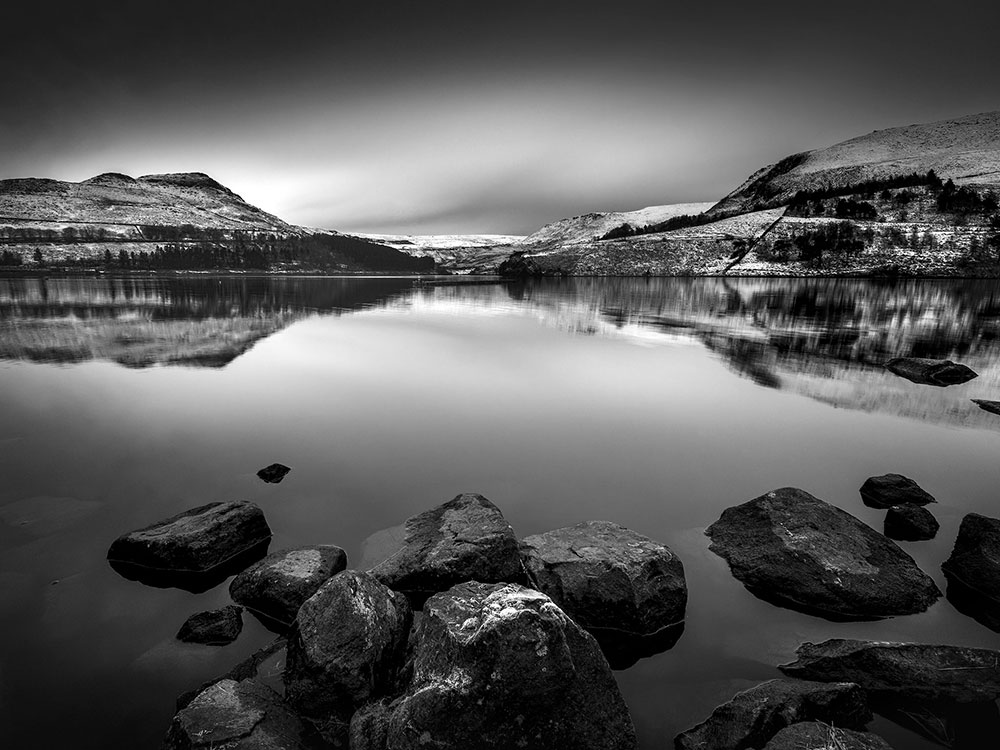
Mono Picture Mode and 4:3 Live-ND.
STREET AND JPEG
Where the creative modes really come into their own is in street/urban photography, selecting a Picture Profile or an Art Filter and then making changes on the fly, changing colour contrast, adding grain for a grungy look or softening colours. Applying them to a Jpeg image means less editing, immediate access to sharing online and more freedom. Where with other genres I will want the Raw image to process, when just having a wander around the Jpeg straight out of camera is sometimes all I need and want.
Use the OM Share App and you can easily transfer files from the camera to you mobile device and make edits on the go too. SnapSeed is one of the best.

Colour Creator blues enhanced and custom WB.

Colour1 Natural with warm tones boosted.
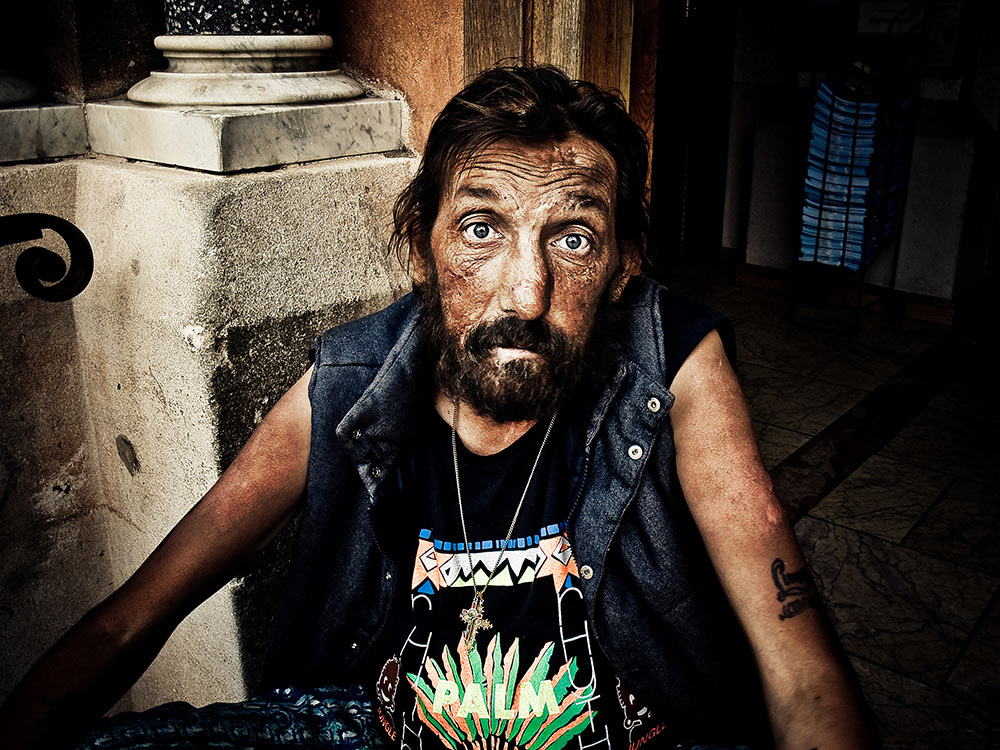
Dramatic Tone with Vignette Filter.

Pop Art filter.

Mono with high contrast.
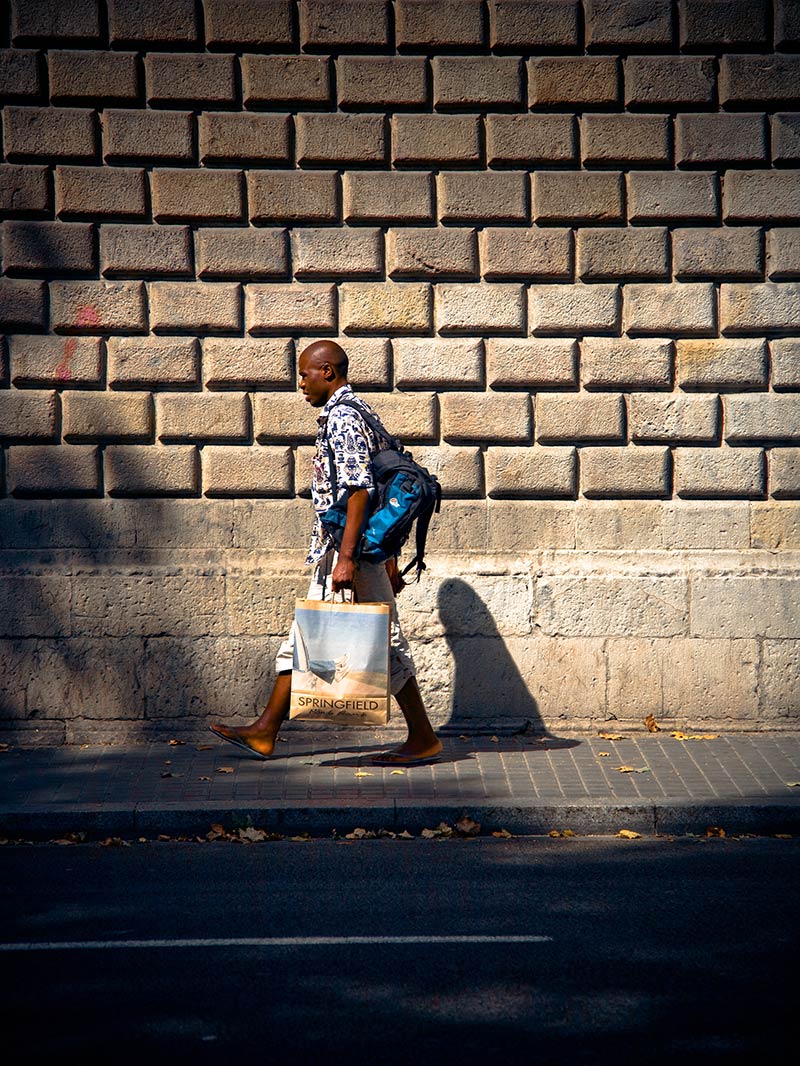
Vivid High Saturation & Contrast.
Experiment with different Profiles and Art Filters, they can create really interesting and fun effects.
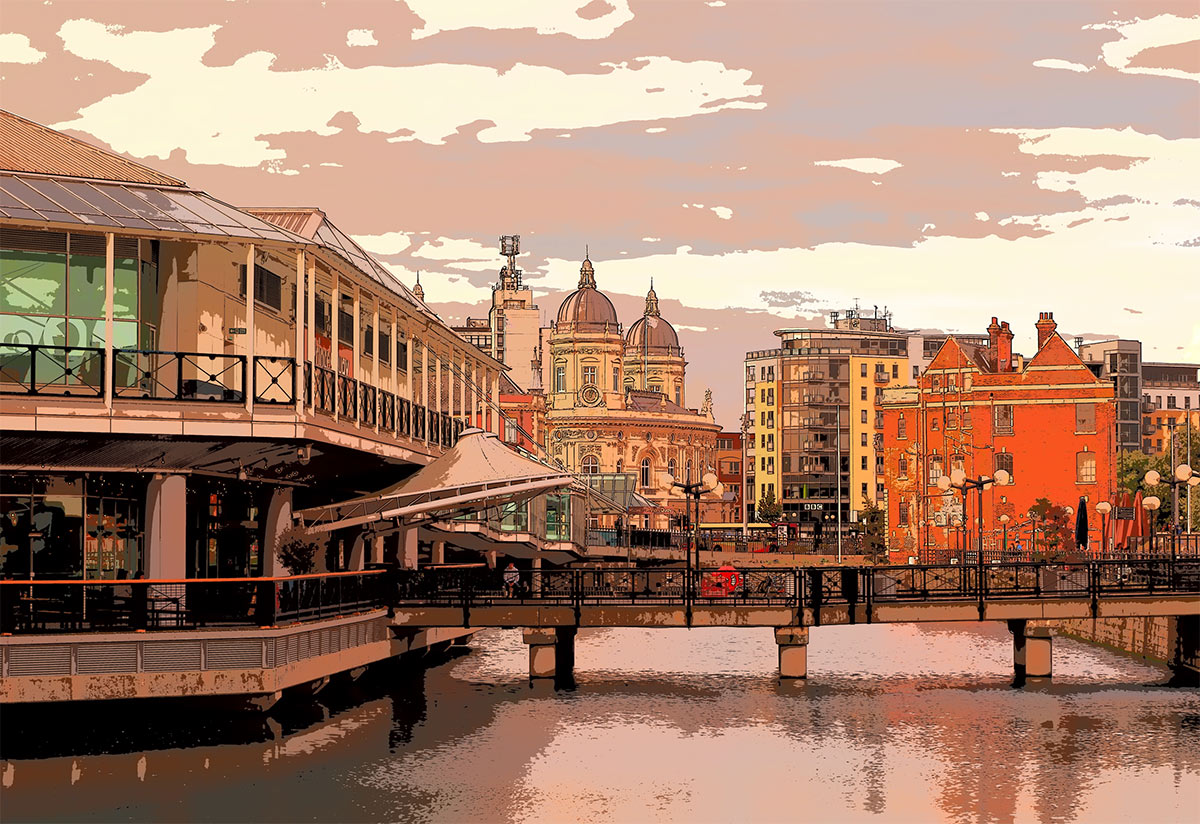
Keyline Art Filter.
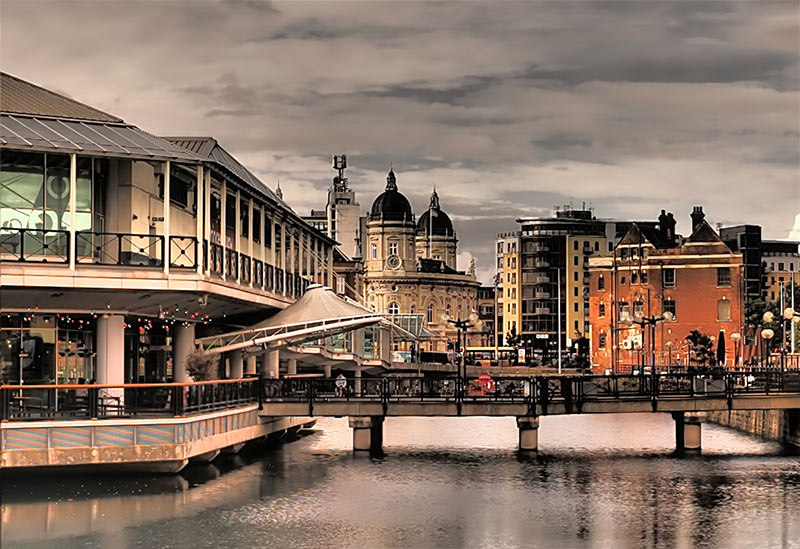
Dramatic Tone II Art Filter.

Bleach Bypass Art Filter.
VINTAGE LENSES
Whilst we are in a creative mood you could also consider vintage lenses. My favourite is the Helios 44-2, an old 58mm Russian lens. It is manual only with an aperture ring and it is renowned for the background bokeh that can be achieved.
Don’t expect great sharpness, it is a lottery if you get one that is reasonable or soft, however it is all about having some creative fun. This can be picked up cheaply on eBay, I paid £30. Just an adapter is needed, in this case 4/3 to M4/3. Focus peaking can be used and if you register it in menu Settings/2 Lens Info Settings you can also use image stablisation.
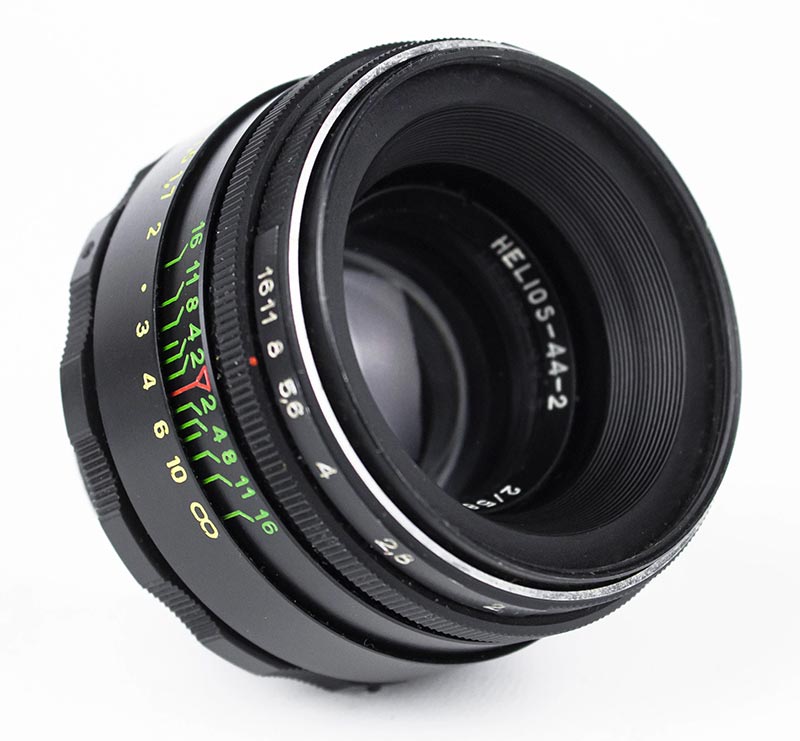
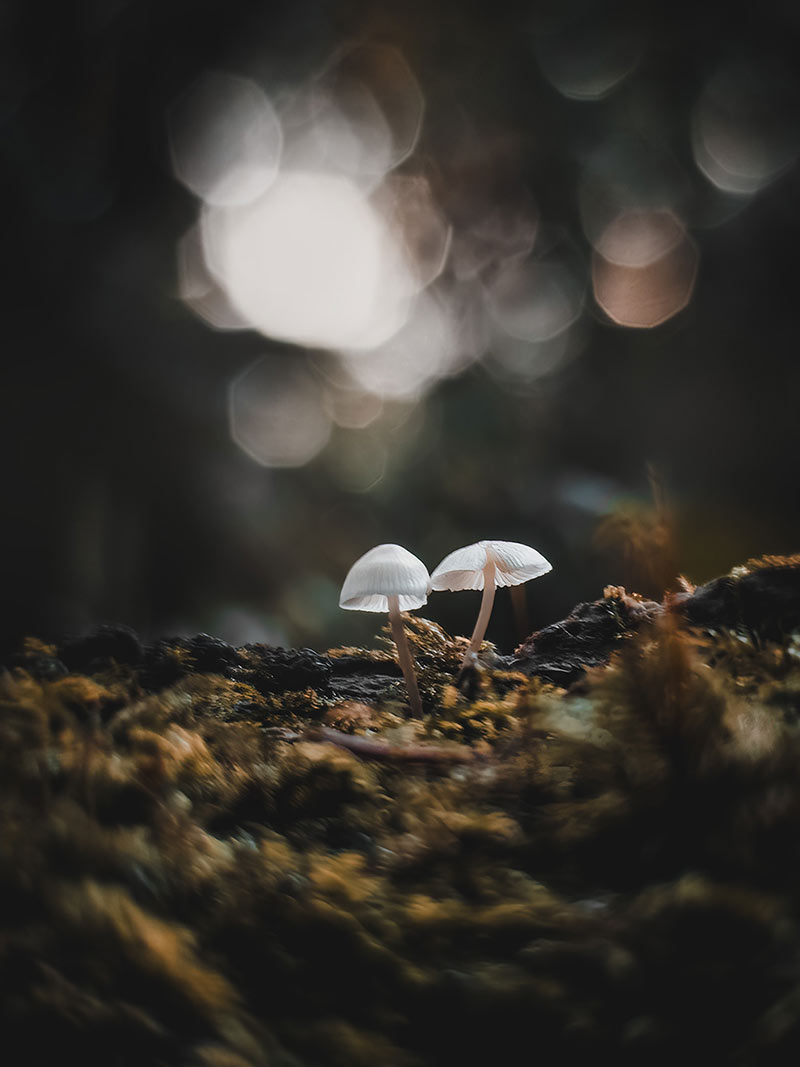
Helios 44-2
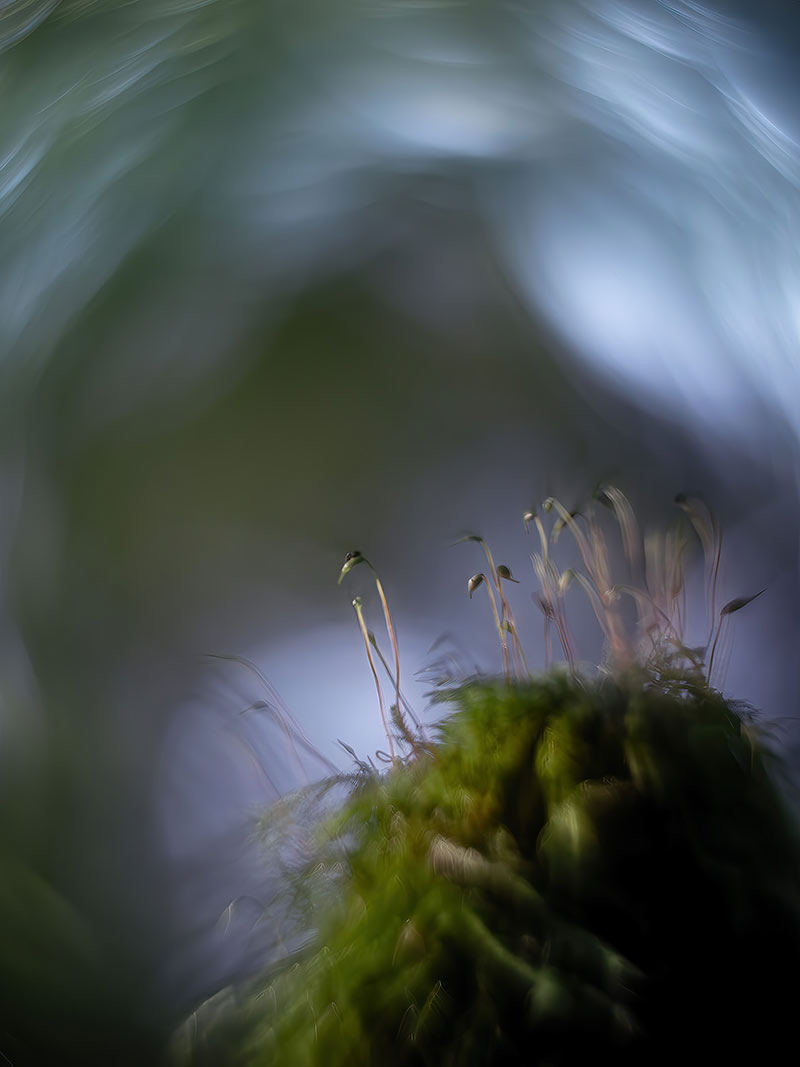
Helios 44-2
COMPLETED
You should have a good understanding of the Scene Modes, Art Filters and Picture Modes now. They are there to have some fun with and get creative!