

ILLUMINATING SHROOMS
There are a number of ways of illuminating shrooms depending on the effect you want to achieve. In this section we will explore lighting techniques in this section before moving on to the shooting technique.
When creating ‘Glowing Shrooms’ we are usually setting a mood and creating an image that appears to have a shroom glowing as if it has an internal light source which can be challenging. We need to hold the light, get the right angle and take the images, ensuring it looks natural whilst not moving the camera at all. We also need to consider the species of shroom too, some are very delicate and will transmit light easily such as most species of Bonnets, whilst others are very dense and will not transmit even the highest power of light, in which case they will need to be illuminated from below.
Delicate shrooms are quite easy to do, usually just holding the torch above it and varying the intensity of the light will give a good result.
AMBIENT LIGHT
You may not necessarily want to illuminate every image with a glow effect, sometimes just adding a little ambient light creates a wonderful result.
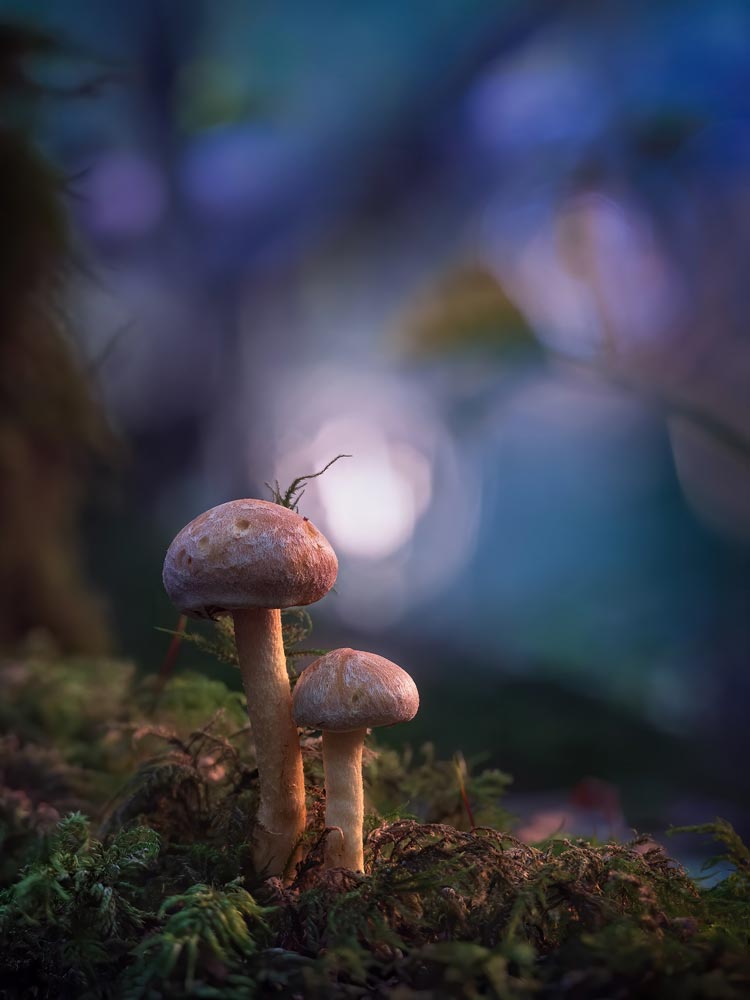
Final image.
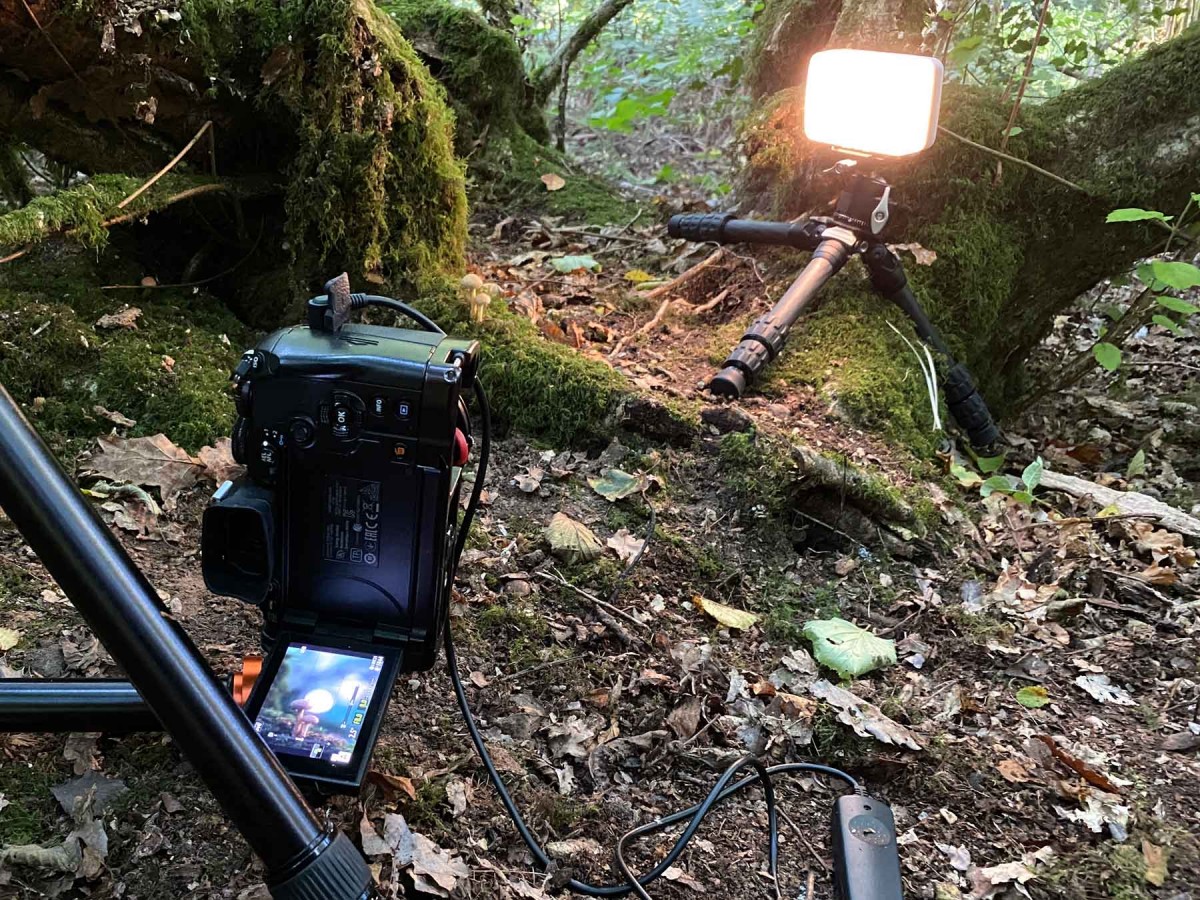
Using an LED panel light on a separate mini tripod.
An LED panel light on a separate tripod was positioned to the side and to the rear of the subjects with the light set to give a warm glow, ensuring that the light did not shine into the lens and create any lens flare.
The intensity of the light can be set as desired whilst also using the camera controls to get the exposure as I wanted. Note the out of focus background created by using f2.8 and focus bracketing.
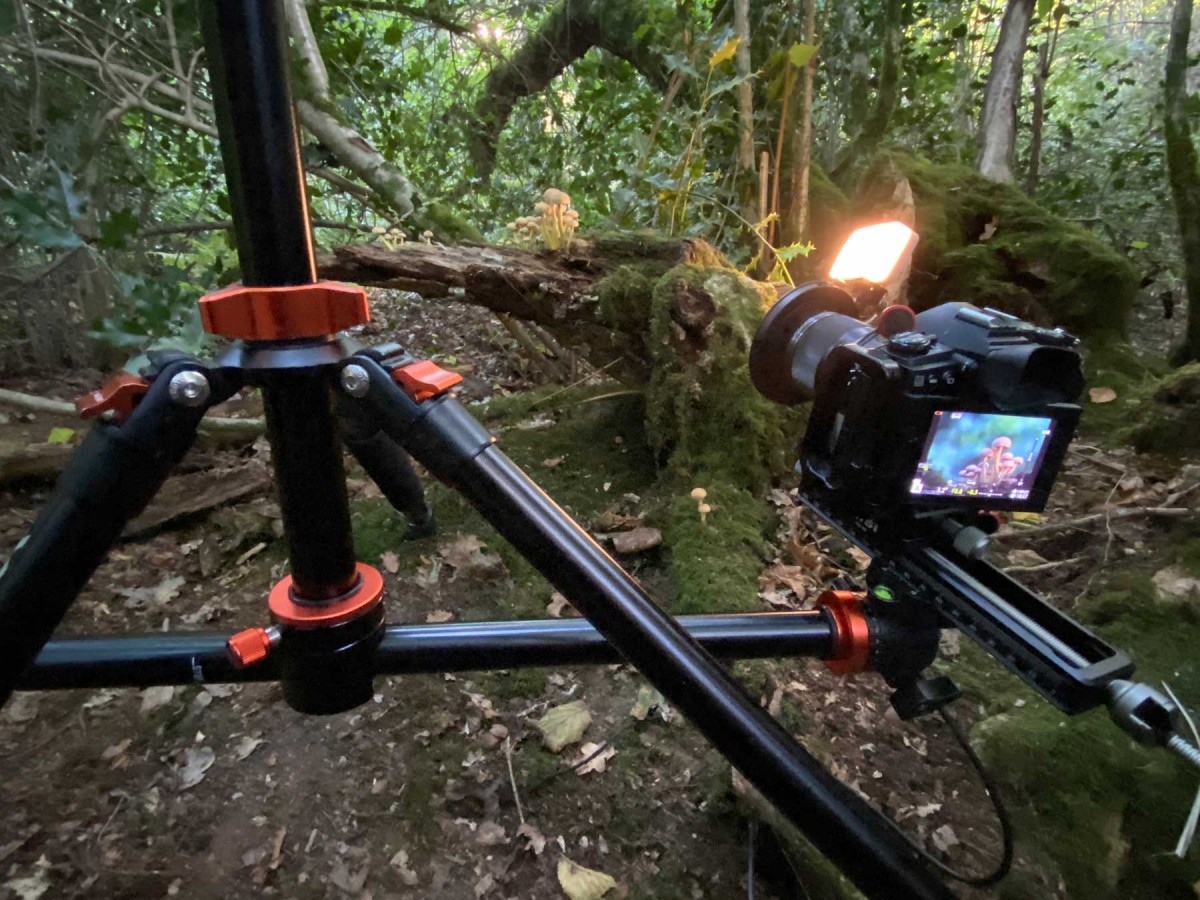
The setup, tripod set at low angle with LED panel light.

Final image.
Of course you can mix additional ambient light with additional ‘glow’ lights. This image again used an external LED panel light to add a little side light set to a warm tone just to open the shadows slightly for the first set of images. An additional set of images were taken with just one of the shrooms illuminated from above with a hand held torch and the two sets of images once stacked are then blended together to create one image.
Note the K and F tripod with the centre column reversed to get low. An L bracket on the camera means I can get the camera right down to ground level when needed with good support. The slider is a Nisi Macro Slider which can also be useful although I admit I do not often find the need to use it.
ILLUMINATING FROM ABOVE
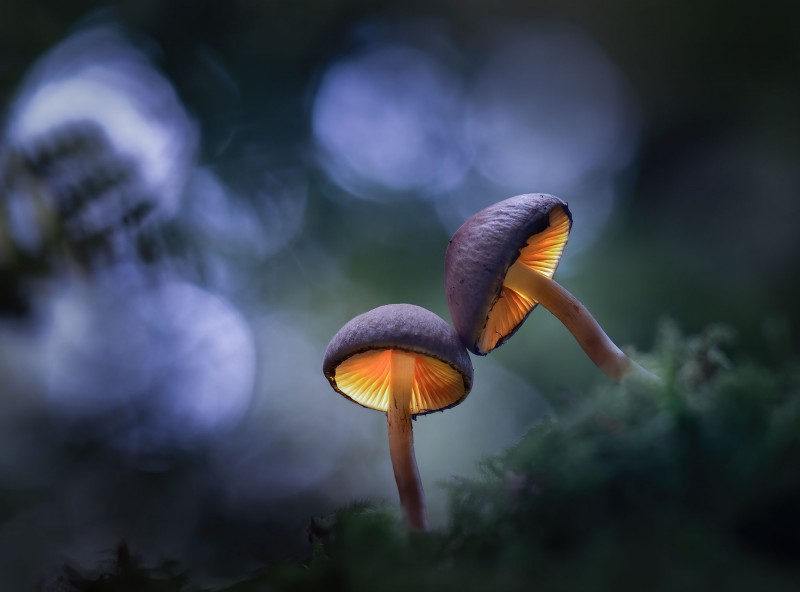
Illuminating from above is I feel the best way to create the effect of ‘glowing’ shrooms. For this image I used the Adaptalux lighting set with two arms mounted onto a Gorillapod. Each arm is positioned to get the glow effect through the top of the shrooms, leaving my hands free to concentrate on gathering the sets of images.
Of course you could also do the same just using one torch, hand holding or by using one of the clamps shown in the gear section. In this case you would need to illuminate one, take a set of images, then illuminate the other and take an additional set of images. It is more work but it is entirely possible to do. I produced two images for this session, a portrait and a landscape and then felt the landscape was preferable.

Back of camera.
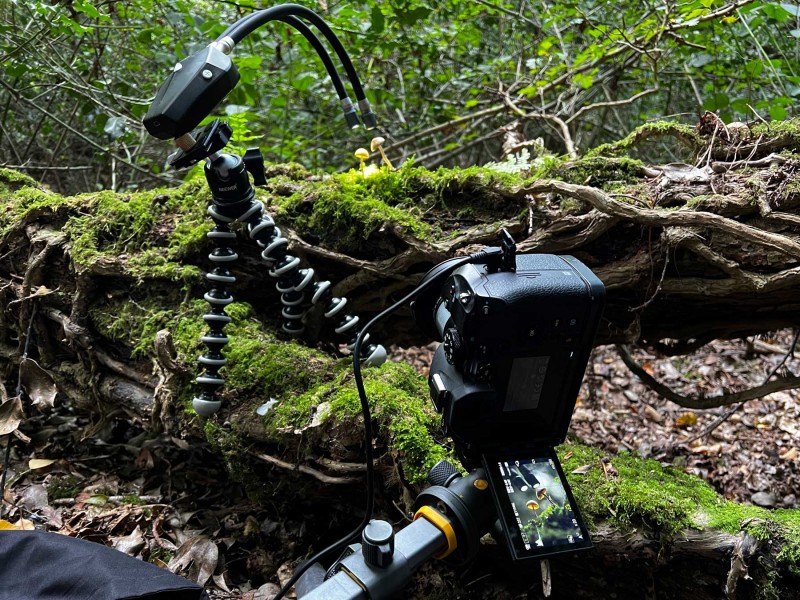
Adaptalux lights mounted to Gorillapod.
Illuminating more than one shroom in an image is best done one at a time if you only have one light source. There may be times when you can illuminate both at the same time with just one torch but in this case the shroom on the left overlaps the shroom on the right so there would have been a shadow. It does result in more images and more processing but if the images are not right the end result will not be right. I find it works best to angle the torch away from the camera to avoid flare, and to make sure some of the front of the stem is illuminated.
The Adaptalux lights are not cheap, there are similar lights on arms on Amazon, and another option is two mini tripods and two torches.
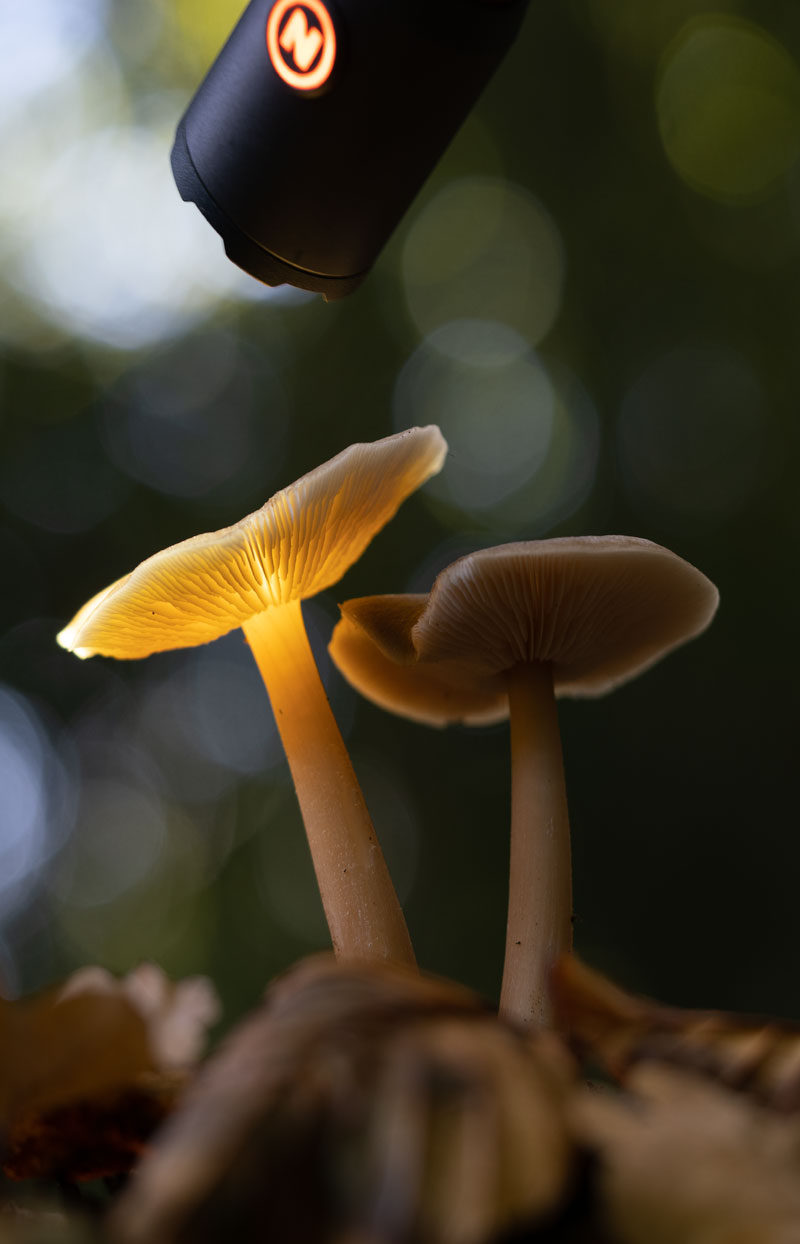
Illuminating one shroom…
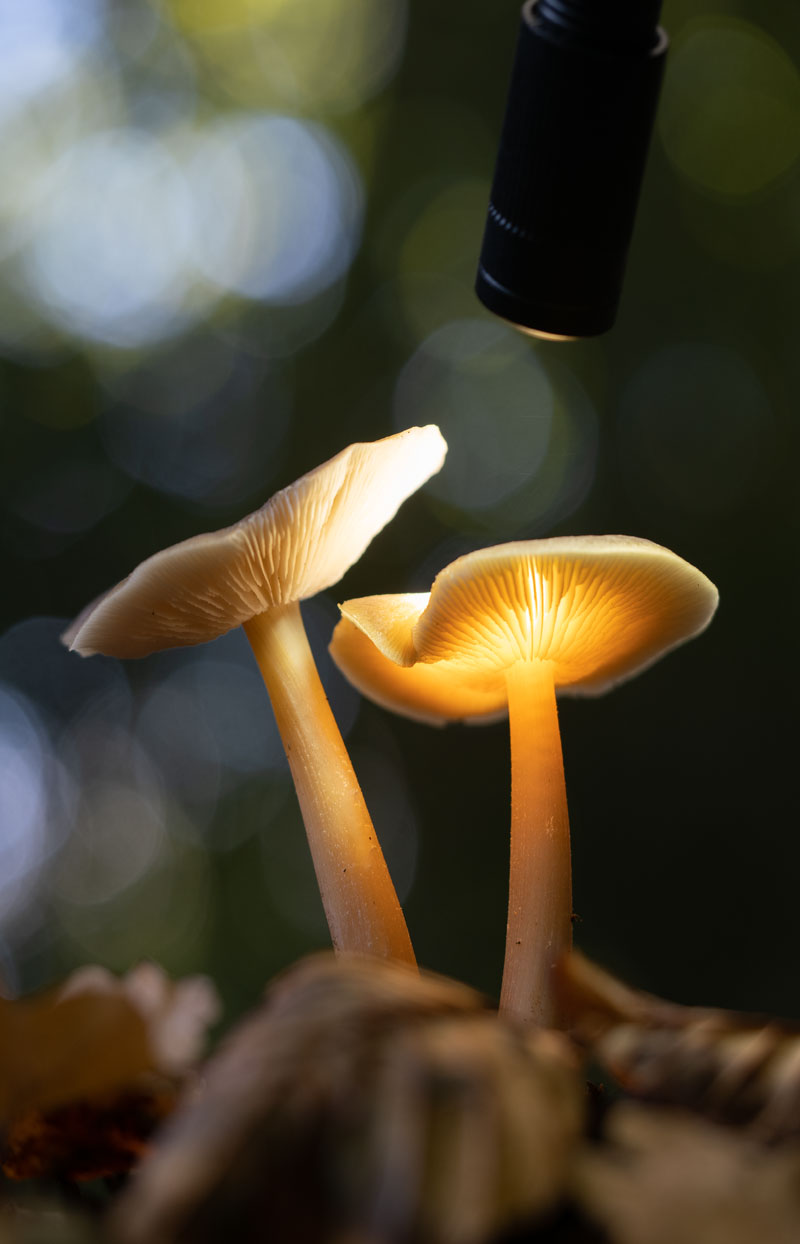
And then the other.
→ TIP Note that the top of the shrooms are often blown out or over exposed which doesn’t matter, it is just the underside of the shrooms we need when illuminating them because they will be blended together. Also the ground will be illuminated by light spilling over which again you can ignore, in post when combining images you can easily remove it, or sometimes gently blend in a little to give the effect of light hitting the ground from the shrooms themselves.
ILLUMINATING DENSE SHROOMS
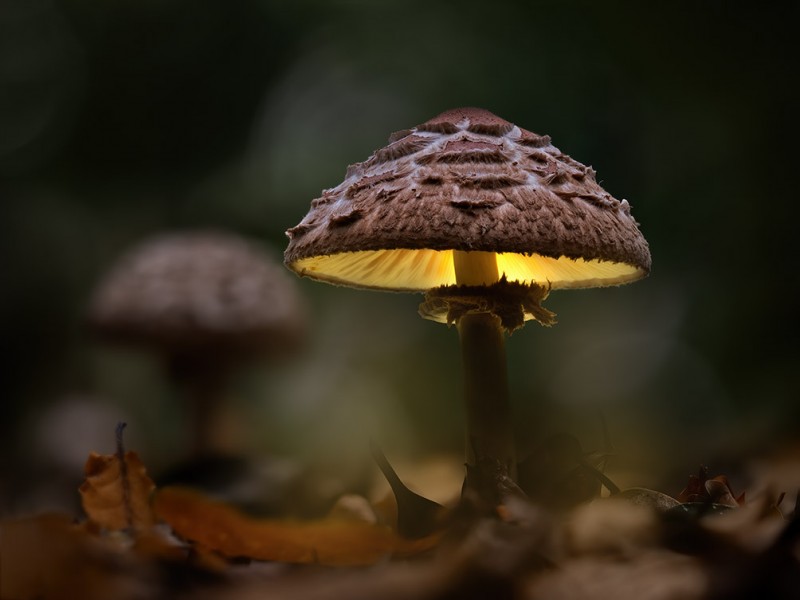
An Autumnal Shaggy Parasol glowing in a dark wood.
Some shrooms especially larger species like these Olive Shaggy Parasols are quite dense and are harder to illuminate from above because they don’t transmit light quite as well. Light transmits better when they are full of moisture but in dry conditions the flesh is quite dense and it becomes harder. The two images below show how the light did pass through and the final image had the torch positioned centrally so light transmitted evenly.
If it is too dense the second image shows an alternative method by bouncing light up into the underside. Shining a light directly into the shroom can work if you are very careful, use lower power and avoid hot spots, and also avoid shadows. A shadow of the stem casting onto the opposite side from the light source is a dead giveaway and looks terrible so try to keep the light fairly even, for this reason a panel light never works, it’s better to use a softer narrower beam light.
Also moving the light and taking two or three images to make the light more even, and then blending them together can work. If you take a number of images moving the light source you will find it easier narrowing the aperture for depth of field from front to back and shooting it as one image instead of focus bracketing, then merging them to make the light more consistent. When processing I usually try to make the light a little brighter in the centre by using masks and levels adjustments.
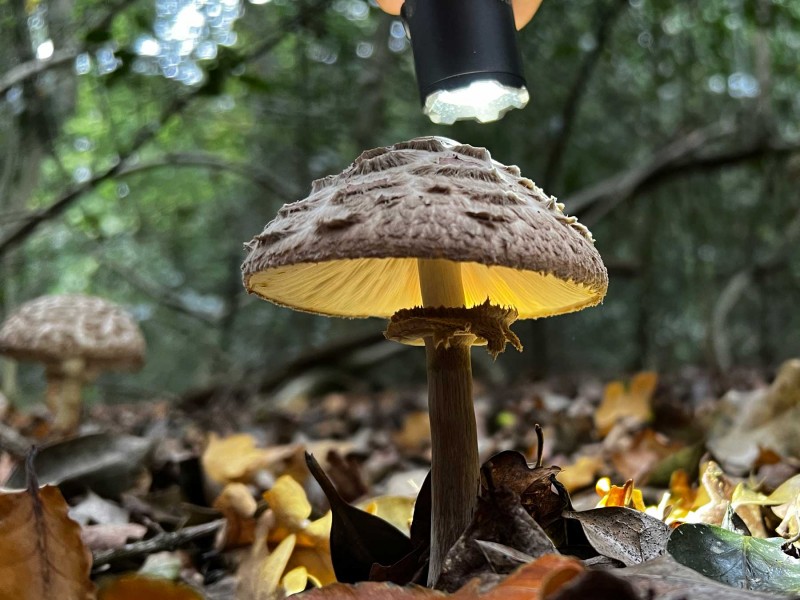
Illuminating a larger dense shroom from above
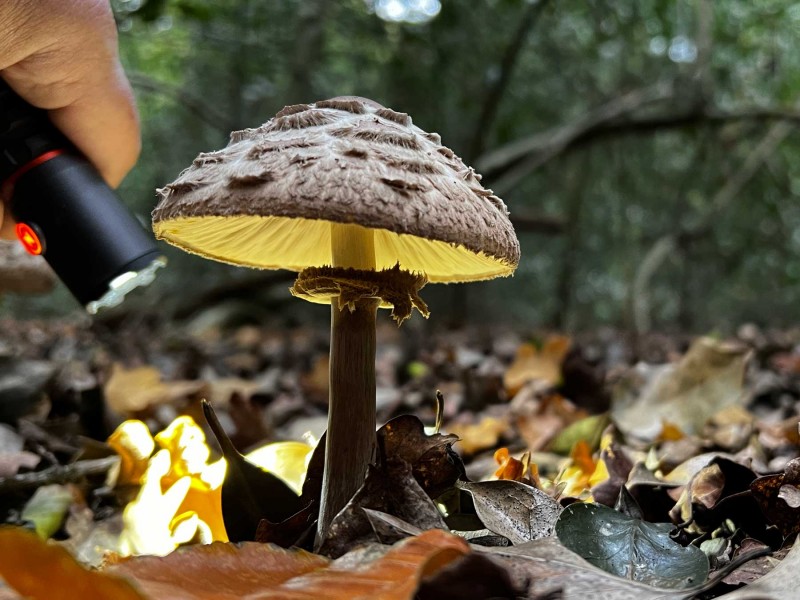
Bouncing light into a a shroom from below.
CONCLUSION
Illuminating shrooms does take some patience and practice but do take the time to experiment. Next we will explore the actual process of shooting the sets of images needed to combine into a final image.