

SHROOMS GEAR
Tips and insights on the gear and accessories I use and recommend.
Using the right gear is obviously essential and whilst things like bags are very personal I can at least give a few pointers in what to look for, you may get a few tips or see something you haven’t considered. There are tips for tripods, macro lights and a few accessories you may find useful too. These are all items I own and use so I feel qualified being able to recommend them.
CAMERA
It does seem pretty foolish listing a camera as essential gear, but yes you’ll need a camera. Without being specific about brand or requirements there are a few prerequisites that are needed.
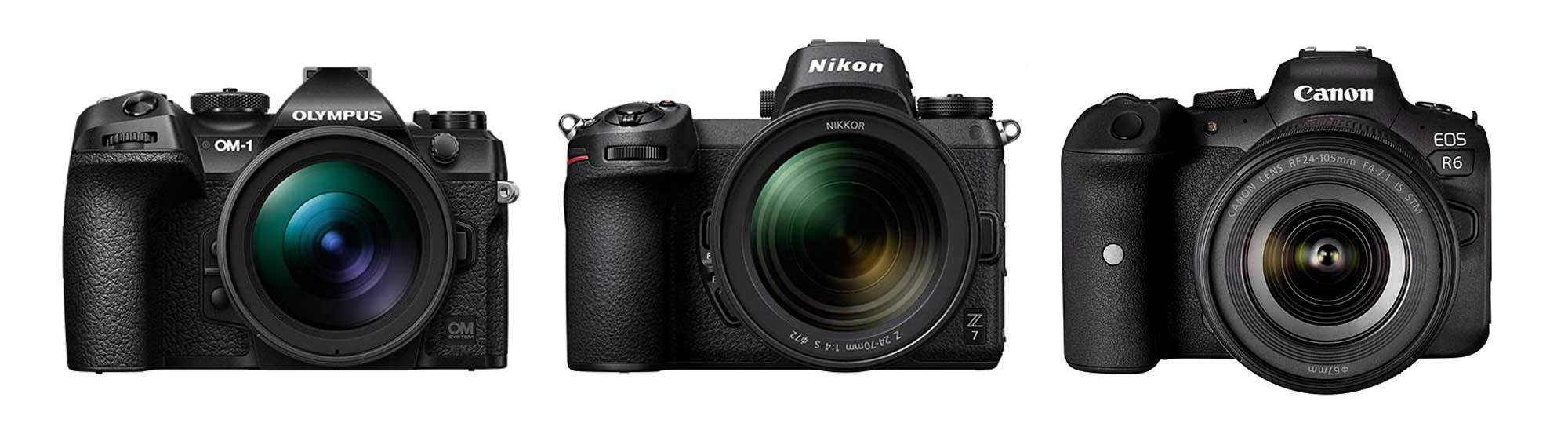
1) Focus Bracketing
It will need the ability to focus bracket, where the camera will shift the focus over a number of frames you program in. Whilst it is pretty standard these days that are some that do not have the ability so please check. Normally Focus Bracketing is enabled and a number of frames can be set from 3-999, with steps (or distance) set between each frame from 1-10. Frames should be saved as RAW as opposed to Jpeg for processing and stacking later. Some cameras have in camera Focus Stacking which will produce a Jpeg image, but we will stick to using RAW for more flexibility.
2) Articulated Screen
You really do need an articulated screen, that is a screen that will flip out. As most images are going to be taken at low Leven the ability to flip the screen out when the viewfinder is very hard to access is a must. If your screen only flips out in landscape as with the Nikon Z7 at least you will be able to produce landscape format images.
3) External Shutter Release Port
You will also need an external shutter release port so do check. It is important not to touch the camera to avoid camera shake and the best way is to use a cable release. If you don’t have a port perhaps you can use a wireless trigger such as the Pluto Trigger. It is worth checking. In many instances you will not be able to use the Self Timer because Focus Bracketing will disable the option to use it.
MACRO LENS
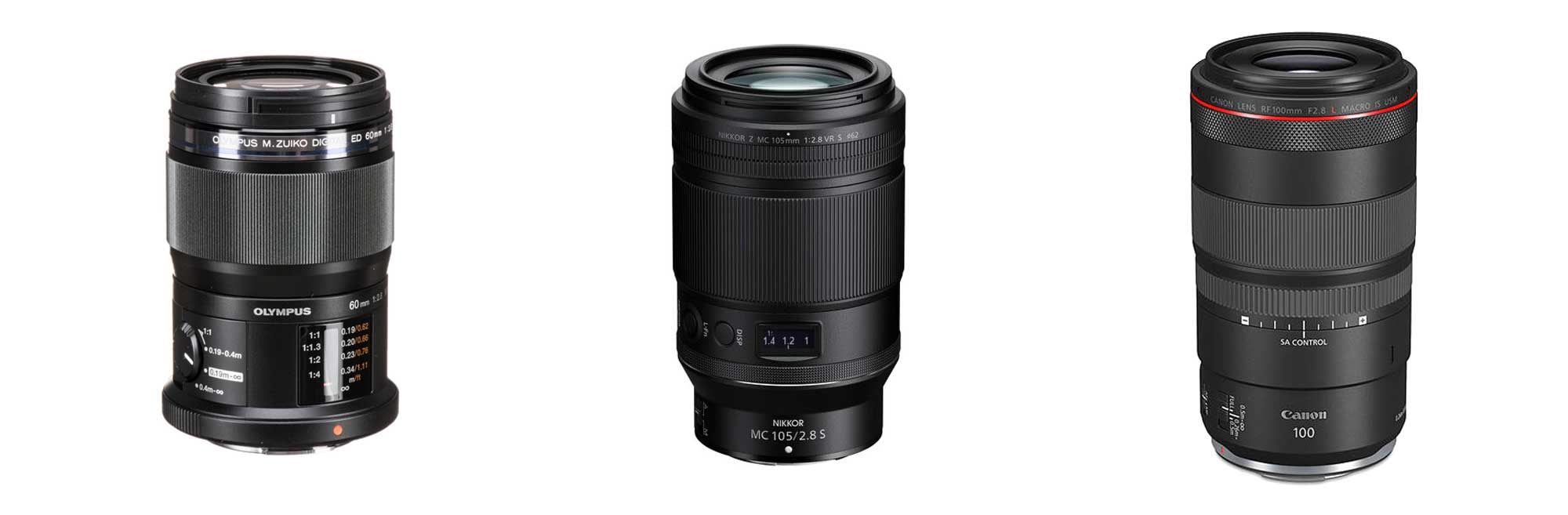
Macro For Bokeh
Another essential and very important piece of equipment is a good Macro lens. For really small Shrooms it’s important to be able to get close with a close focus distance and sometimes 1:1 magnification. What really matters is a fast aperture of f2.8 which will create beautiful background bokeh, those soft round out of focus highlights, and creamy soft out of focus areas which you can use creatively.
I would tend to go with around 100mm focal length as an ideal. It isn’t too long, meaning you can still view the screen and hold a flashlight over the subject when needed if you have a larger shroom in the frame. The Olympus has a closest focus of 19cm whilst the Nikon is 29cm and Canon 26cm.
If you don’t have a macro lens you can still try although you do need to be able to focus quite close and have a fast aperture to be able to throw the background completely out of focus; good separation between the subject and background really is key. Extension tubes that reduce the closest focus distance may be an option worth a try, as are close focus lenses. Extension tubes are primarily for shorter lenses and range in quality (Kenko and Fotodiox being amongst the best third party) and they are available with electronic contacts to maintain Auto Focus. Manual extension tubes for our purposes are really not worth trying. For longer lenses close focus lenses such as the NiSi Macro Lens or Raynox Macro Lens are add on glass elements. If you don’t want to invest in a macro lens just yet an extension tube or add-on macro lens may be suitable, but check how close you can focus and check the extension tube will still allow focus stacking with your camera.
RELEASES & TRIGGERS
You need a cable release, you really do, no two ways about it. Check your camera has a port that will allow a cable to be plugged in, most do these days.
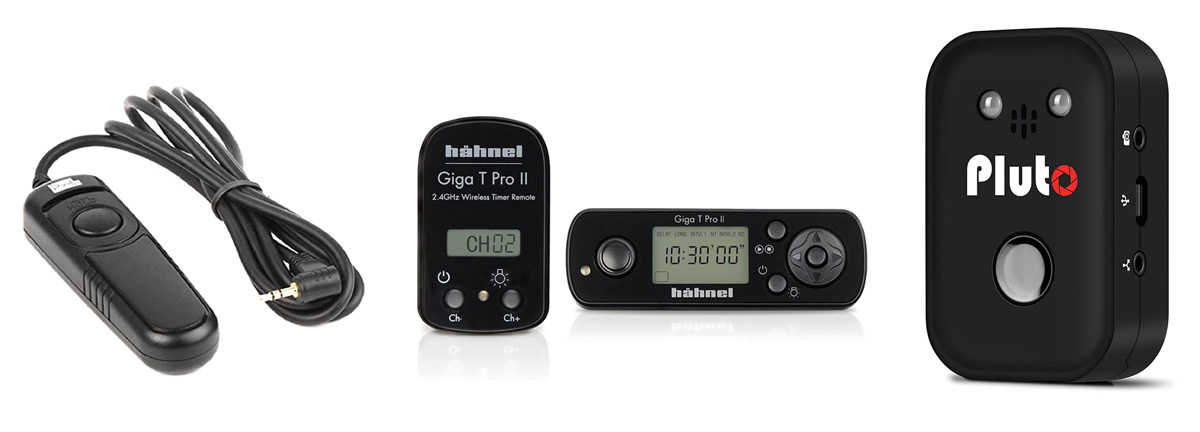
WIRED CABLE RELEASES
My preferred option, the image is a Pixel remote from Amazon costing £8. For my Olympus camera an E3 jack which is the same as Canon is all I need. Cheap and cheerful, I have a habit of losing them or sending them swimming when they dangle under the camera. There are plenty available, just get the right connector for your camera. I prefer these because they are nothing but a button on the end of a cable with an electrical contact and have no batteries, so one less thing to have to charge before a trip out.
HANNEL GIGA T PRO II
The Giga T Pro has been around a long time now and is half the price it used to be, around £30. Although the built in intervalometer is a little redundant now because so many cameras have it built in, it is a very reliable and easy to set up wireless trigger with a long range too of 100m. The transmitter fits to the hot-shoe and connects to the camera a cable, which can be connected direct to the trigger to use as a standard wired release. Other cables are available for different cameras too. I have one of these but prefer the Pluto because only one battery is needed. Remember to switch the receiver off.
PLUTO WIRELESS TRIGGER
The king of wireless triggers, and compatible with a huge range of cameras via suitable cables. The transmitter unit is rechargeable which is very convenient. Operated by a phone App there is little this little thing cannot do which makes it ideal to use for multiple cameras. This device will trigger a shot when it sees lightning, it can exposure bracket up to 19 shots, shoot star trails, trigger a shot by sound, or by the included laser beam, run time-lapses and a host of other features, too many to mention. What it cannot do is Focus Bracket because the settings are in camera, but it can be used to start the sequence off. It isn’t cheap at around £120, but it may be worth considering if the other features are appealing.
TRIPODS
As someone who has owned and still owns too many tripods I’m pretty well qualified to advise. With the amount of image stabilisation in camera bodies these days tripods seem less important, but they are. By all means enjoy the freedom of shooting hand held, I do more and more. But a tripod is still needed for Long Exposures, Bracketing (although it can easily be done hand held too) Panoramic images, and Macro. The main point of a tripod which is overlooked is to slow you down. Consider the scene and your composition, take your time, make adjustments and wait for the light.
There are hundreds to choose from, and an old addage still remains true today, tripods can be cheap, sturdy or light; pick two because you can’t have all three.
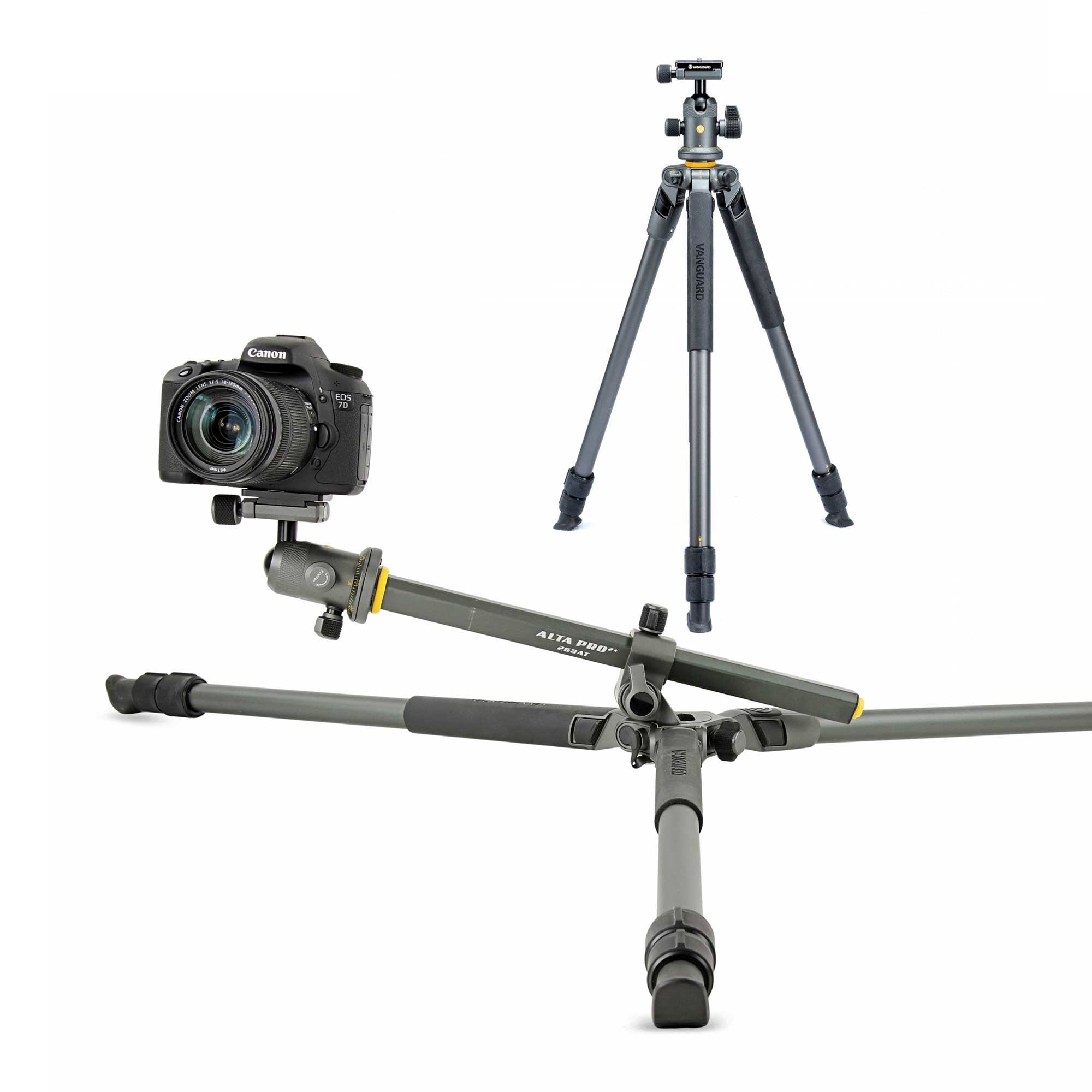
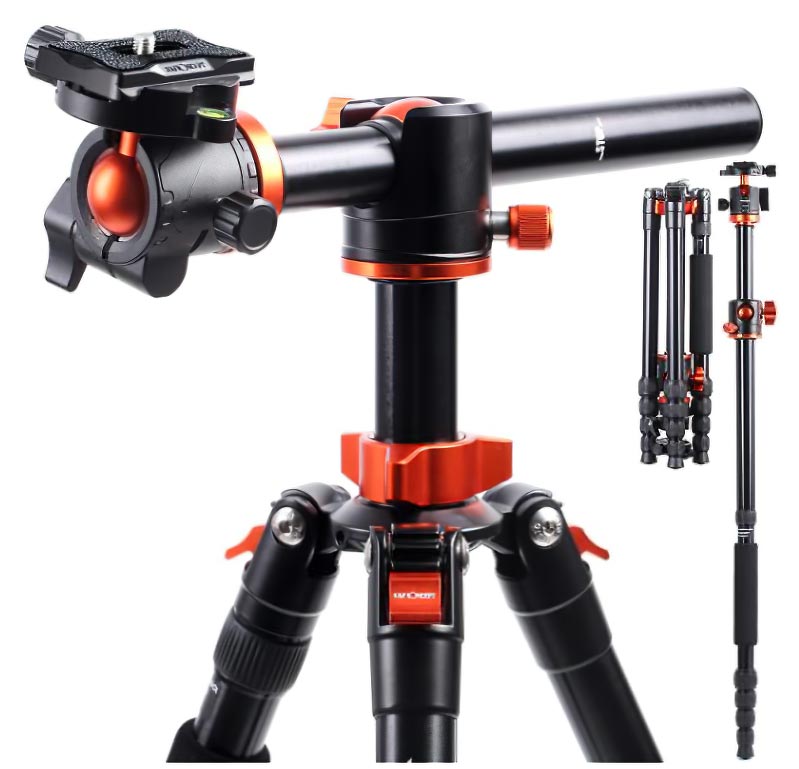
The main points to look for in a tripod are height, weight and sturdiness. For the purposes of this guide we need to factor in another consideration, close distance to ground. We need to get really low. Below are the main characteristics of a general tripod, and a couple of examples I use for macro. For a general tripod I would highly recommend Benro Mach3 which is what I use for my day to day tripod.
HEIGHT – Select a tripod with the greatest height excluding the centre column which should only be used as a last resort, it will introduce the most vibration. The higher the better without the centre column. It will also be more convenient when spanning across gaps.
WEIGHT – The least weight is obviously better but selecting a tripod based just on this is false economy, it probably will not be sturdy enough and a tripod a few hundred grams more really isn’t a big deal yet will be stronger. Carbon Fibre is lighter but at a cost. More leg sections means a tripod is more compact but is also heavier, not a great deal more but it will add to it. Travel Tripods are usually exclusively just for that, travelling. I would not rely on a travel tripod as my every-day tripod unless it is of significant quality and quality comes at a price. Better I think to have a main tripod and get a cheap travel tripod on Amazon that will do the job of a long exposure in St Marks Square and last quite a while because it gets little use.
STRENGTH – If is isn’t sturdy it isn’t fit for purpose and a waste of money. This really should be priority. Overall weight it will hold isn’t a good indicator either, a tripod that can hold 20kg may vibrate with just a breath of wind. Wind and running water are the enemy and legs that are not stiff will vibrate with the slightest movement transferring through to the camera. Number of leg sections also make it weaker, so less is better though it impacts the minimum length. When travelling ball heads and columns can be removed so the length never bothers me too much. Also the more leg sections the thinner the last leg section will be. I would avoid any tripod with leg sections less than 15mm diameter, they will vibrate like a guitar string.
ARCA SWISS COMPATIBLE – The top plate should be Arca Swiss type, a wedge shape, which opens up availability of tripod plates and brackets. Some brands like Manfrotto make the plates generic to their accessories, so if you want an L Bracket you have to pay for one of theirs, and you do pay though the nose.
1) VANGUARD ALTA PRO 2
This is not a bad tripod at all and is very useful for macro. It has a centre column which can be flipped over to use as a boom arm which is handy for getting low and extending reach. One thing to be aware of with tripods such as this is the centre column needs to be level (ish) horizontally or you will not be able to maintain a level horizon because of restrictions in movement of the ball head. A level horizon sometimes doesn’t matter if there isn’t a horizon, but it’s best to be aware. I get around this by swivelling the centre column 180 degrees so it is upside down and using an L bracket. This way I can achieve full control of positioning, I can get right down to the forest floor so it is almost resting on it but with solid support, and I can have the camera the right way up. You could do the same with a standard tripod if the centre column will reverse.
The Alta Pro at around £200 isn’t bad value. There is an older version with the same features, the Alta Pro, at around £50 less, and a newer version at around £250, the Alta 3. The new version has an additional bracket which can be clamped onto the centre column for attaching additional accessories such as lights, or another ball head. I am very happy with the Alta Pro 2, it suits all my needs but do check out the options, there will be one to suit you.
2) K AND F TRIPODS
For more budget friendly tripods including aluminium and carbon fibre you really cannot beat K&F. I use this model the KF09 aluminium 170cm. Very similar to the Vanguard it has a centre column which will flip over like a boom arm, but be aware annoyingly this arm is an additional column housed inside the centre column, in other words extend the arm and the centre column is still in place which restricts how low you can get. But the column can reverse and extend so it still has considerable flexibility. It is more of a faff to reverse the column, but with different sizes and options from around £100 including the ball head they are very good value and worth checking out.
GORILLAPOD
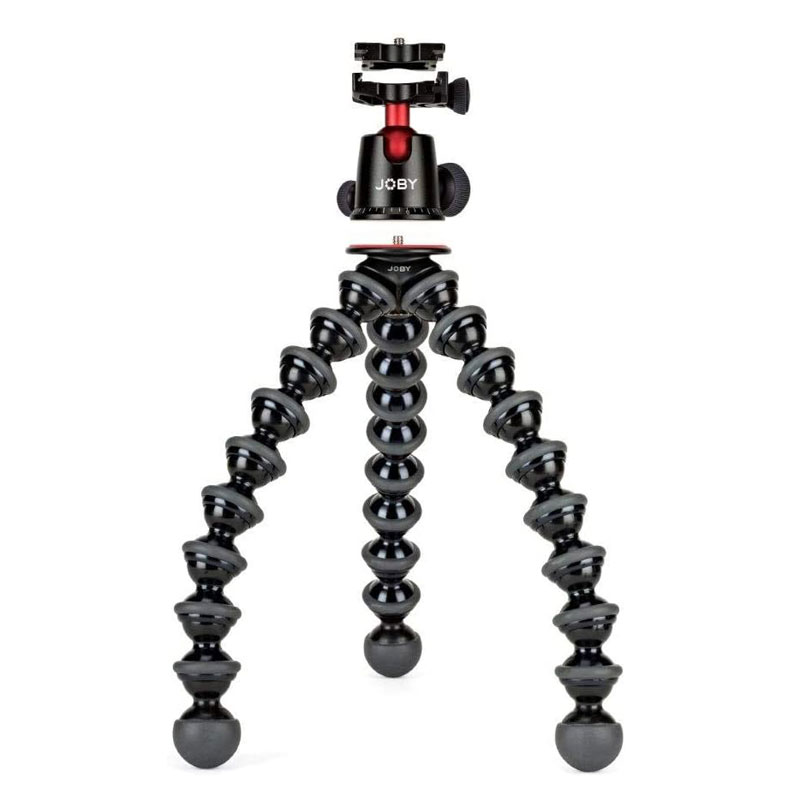
There are quite a few bendy tripods available these days but the Joby is still the original and best. Useful because they are so small and light and easily fit into a backpack side pocket, and they are great for getting really low or for wrapping around tree trunks, walls and fences etc. With the bendy legs you can get very low, and it’s useful to support other accessories too such as a torch using an additional clamp or Macro lights like the Adaptalux below.
The 1K is around £30, the 3K £60 but it is worth going for the 5K because the ball-head is far better and it is Arca Swiss so a standard tripod plate will fit as will an L Bracket. I had the 3K but ended up buying the ball-head separately for the Arca compatibility. Prices of these lately seem to have gone through the roof, so shop around, and alternatively get the legs and a third party ball head, Smallrig produce small ball heads that are very good for around £20.
L BRACKET
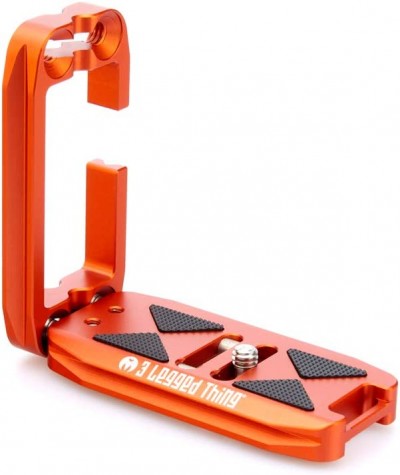
An L Bracket is one of the most useful accessories you can have and I always use one no matter what I am doing. And as I said above if you need to reverse your tripod centre column using an L bracket will allow to angle the ball head and shoot at ground level in landscape mode without the camera being upside down.
The 3 Legged Thing Ellie is one of the most popular but there are so many, make sure you use one that fits your camera and if your screen is articulated it has a cut out to allow the screen to be angled up. There’s also a wide range of prices too so shop around and get one to suit your needs.
CAPTURE CARD
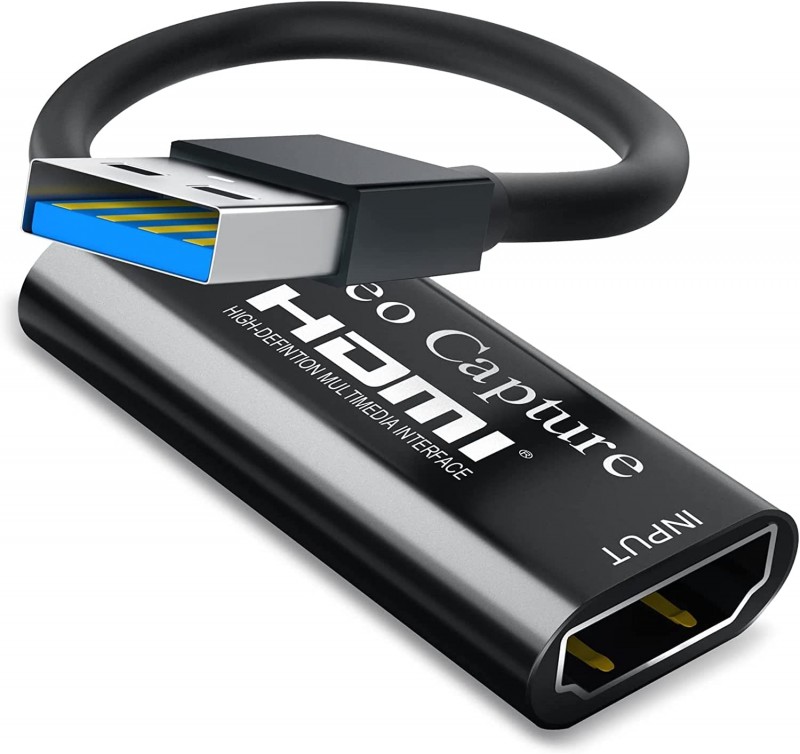
Using a capture card allows you to turn a mobile phone (Android only) into an external screen, useful if your screen isn’t fully articulated and when you have problems viewing the screen and setting up lights. This one was £17 on Amazon.
Your camera needs a video-out port which most have these days, and you’ll need an HDMI cable. Check you camera to see what connection you need on the other end.
It will only work with Android because iPhones block video in settings. You’ll also need a phone app called USB Camera Pro. The screen won’t allow settings to be change but it is still useful to use purely as a viewing monitor. See the Shooting page for more information.
INIU POWER BANK
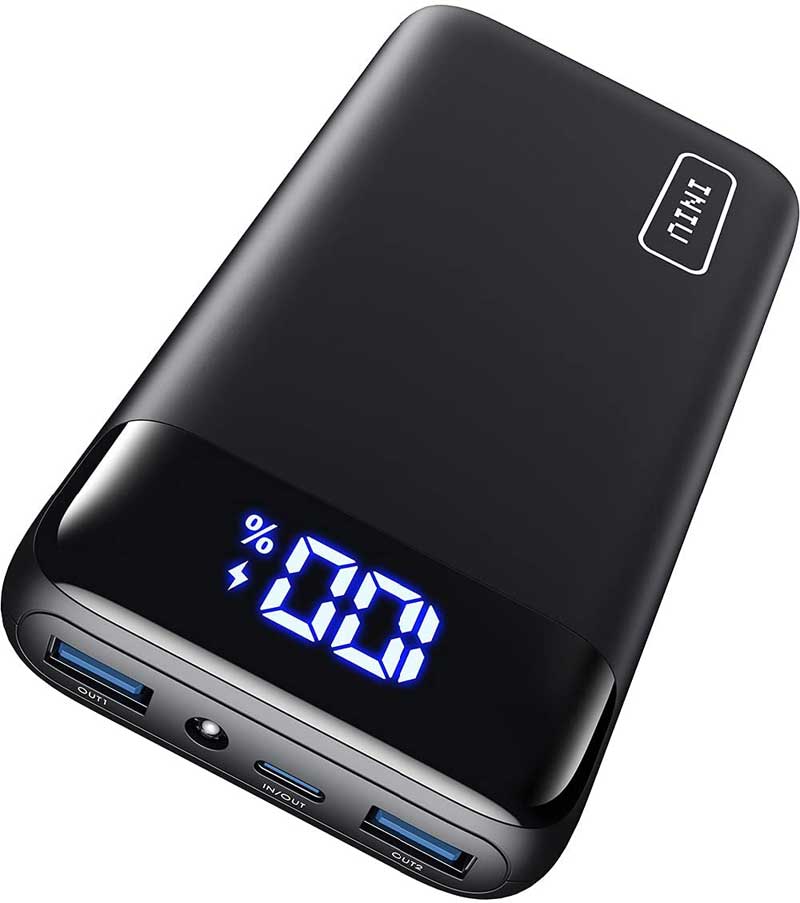
A power bank is useful if you intend being out for quite some time feel you may need power on the go. The INIU is compact, 20,000mAh and 22.5w meaning it has plenty of capacity with x2 USB 3 and 1 USB C ports. It was also reasonably priced at £26. The USB C port is in/out so it can be charged and also charge from the same port. An LCD screen shows power and it also has a torch too.
Many cameras can be charged on the go too as long as the power bank is PD rated which this one is.
ILLUMINATION
It goes without saying a critical part of the Glowing Shrooms image gathering process is illumination. I have used quite a few different techniques and flashlights, some which work well, some not so well. Below are the the items I find most useful. I will nearly always try to illuminate from above when the ‘glow’ looks more realistic, so a few different lights are useful. Sometimes shrooms are just too dense so a softer light from underneath can work with some care.
NEBO TORCHY 2K
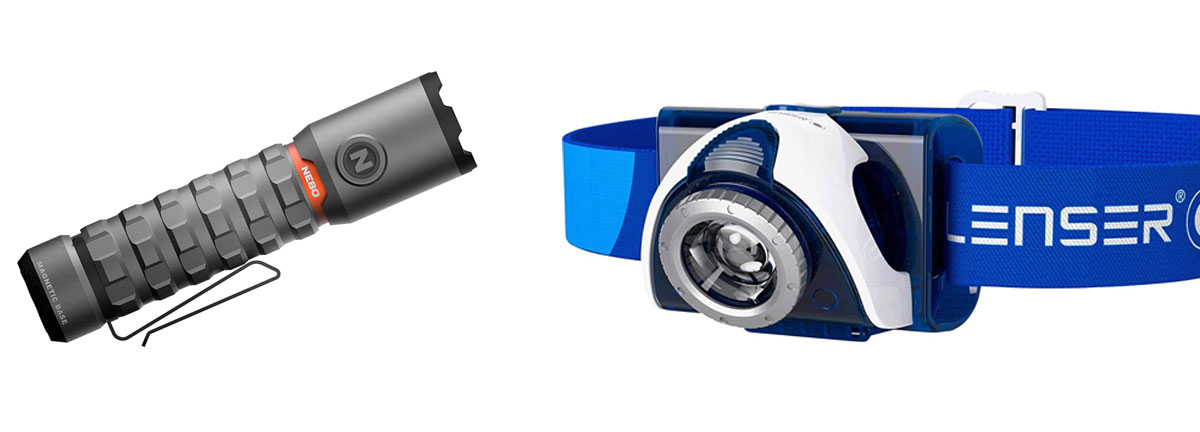
My favourite LED torch because its so small at only 10cm long, and it packs power at 2000 lumens. Brightness is adjustable but it doesn’t have adjustable beam which for me doesn’t matter, being so small works better. It is rechargeable via a usb magnetic cap which clips on the end. My main criticism of this is on full power it will last for 10-20 seconds before dimming to the next power level down to conserve battery, but it’s long enough and it will last a full session, so I guess it’s actually a good thing. There are times when low power is enough but also times when the density of a shroom will not transmit any light so a high power blast is needed. It is very good and I love how small it is. At around £30 it isn’t the cheapest but I’ve learned to avoid cheap, they are usually poor quality.
LED LENSER HEAD TORCH
LED and rechargeable, handy when you have a battery pack, it will last quite a few uses between charges and my experience is it has never lost charge when not in use. At 220 lumens it’s very bright for a head torch, light weight and has an adjustable beam width, adjustable angle and also adjustable brightness levels. A head torch is probably something you already have and they are handy if you want some soft lighting from below.
NEBO INSPECTOR RC
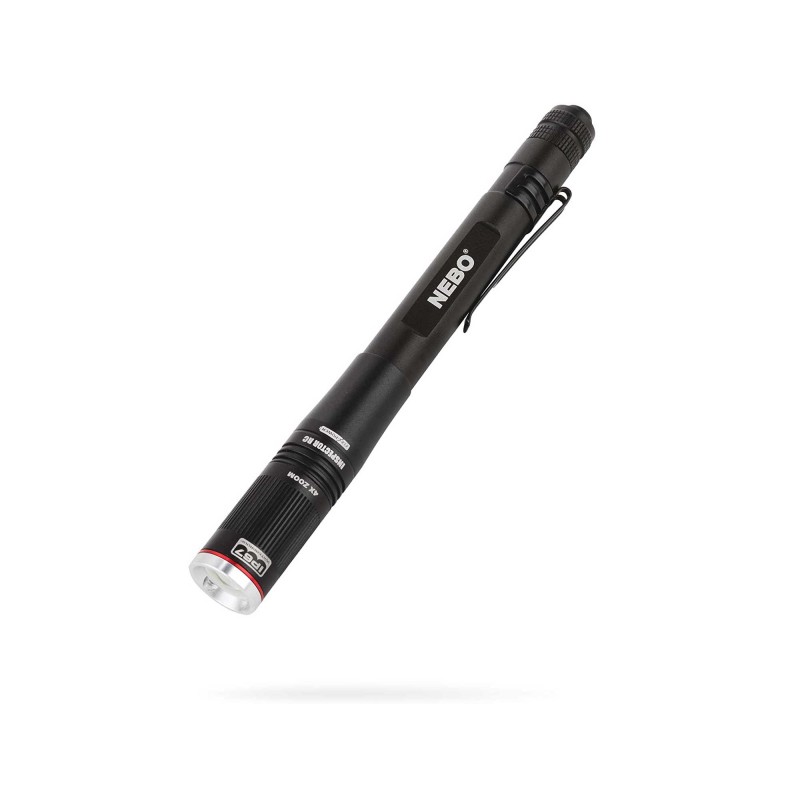
This is a handy little torch, because the head is only 10mm diameter it’s useful for smaller shrooms and the head also has a screw zoom feature so the beam can be controlled. Rechargeable but also accepting AAA batteries just in case, it has different power levels up to 350 lumens so it is ideal.
PIXEL LED PANEL LIGHT
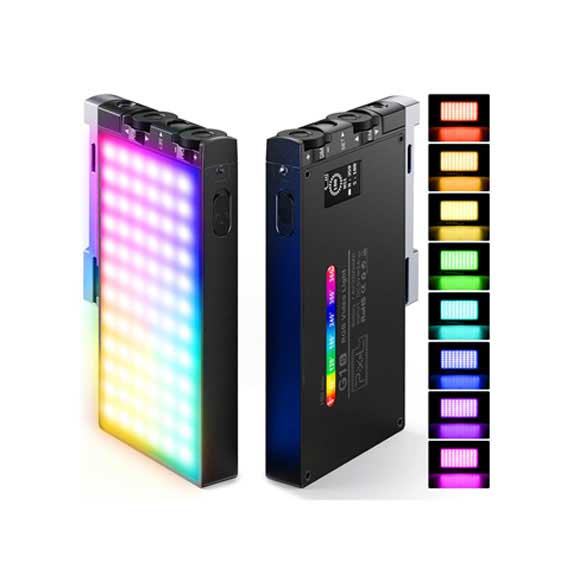
Small LED panels lights are useful for adding a little glow under larger shrooms, or adding a little background glow. You don’t need a large one, just a small 12cm one like the Pixel is enough. There are so many to choose from, I like the Pixel because it has brightness control from 0 to 1500 lux and a full range of colours too.
It’s also very robust with an aluminium body, easy to use controls, an arm which swivels out and includes hot and cold shoe adapters.
ADAPTALUX MACRO LIGHTS
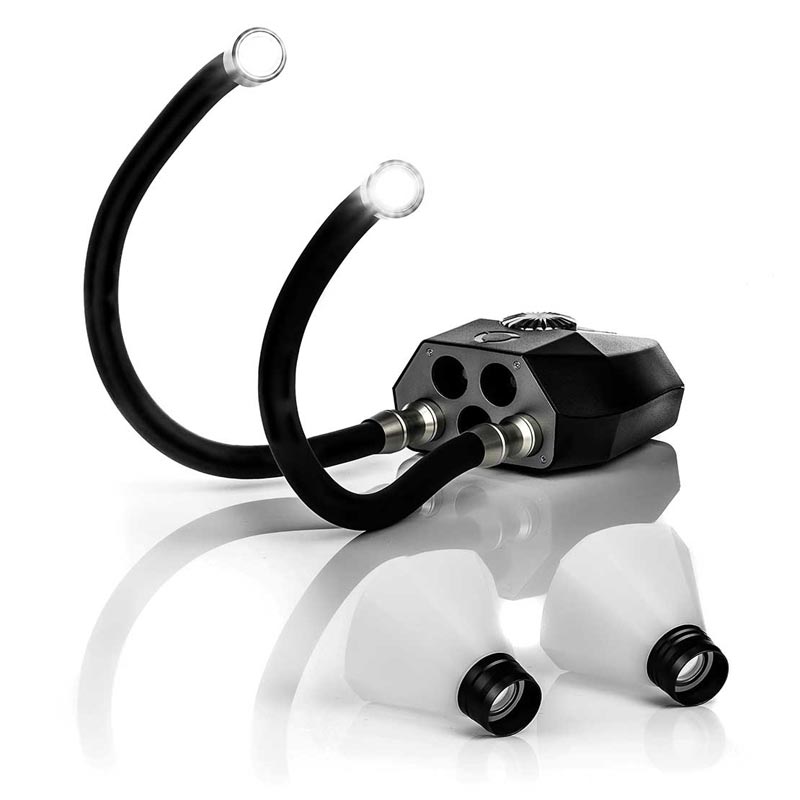
What on earth, you are probably thinking. A friend recommended these to me and they are genius for lighting Macro Images. Instead of being behind the camera trying to run focus bracketing and stretching trying to hand hold a torch (see ‘Focus Bracketing’) or using a clamp, these bendy LED arms are powered by a control unit and can accept up to 5 arms. The whole set is controlled by a phone app which just uses Bluetooth so doesn’t rely on a mobile signal, or with manual control. Light intensity can be controlled as can the beam angle.
They are not cheap at around £300 for a kit with two lights, but they are worth the investment. A tripod bush on the base allows it to be tripod mounted or used on a GorillaPod.
CLAMPS
It’s surprising just how useful these are for an extra pair of hands holding a torch in position or even a fern leaf in a background when your arms are not long enough. Sometimes you will need to move a torch around a little taking a few shots to blend, other times especially when you have a group of shrooms and you want to illuminate them precisely one at a time being able to hold a torch in position leaving you hands free can be a bonus.
PULUZ ARTICULATED CLAMP
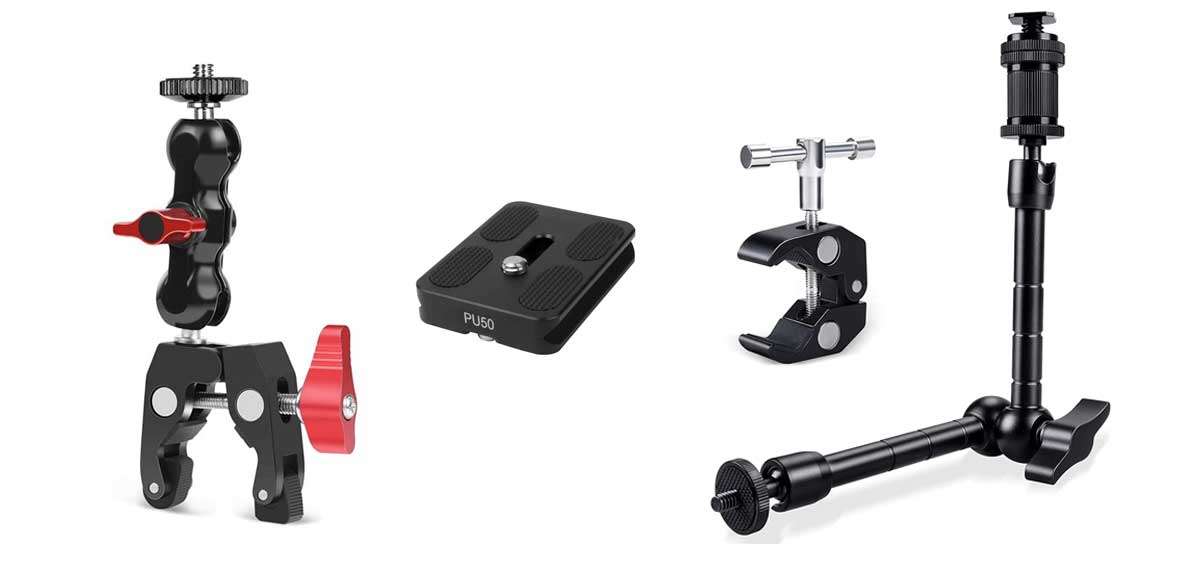
A short arm clamp, the Puluz arm is fully articulated. With one of these you’ll realise just how useful they are, for example clamp it onto a tripod leg, mount a phone holder to it and then film a video or time lapse leaving your tripod head free for your camera.
SINVITRON MAGIC MONITOR ARM
This arm extends by 11″ with a fully articulated arm and a clamp which can be screwed onto either end. This particular item includes an extender with a cold shoe mount (the square piece at the top). Unscrew it and a tripod plate can be fitted to mount onto your Gorillapod or other tripod.
TRIPOD PLATE
The tripod plate is shown just as a reminder that an extra one is needed if you don’t have a spare so that the arm can be fitted to a tripod ball head. Most tripod plates have a treaded section in the slot to allow the bolt to be screwed in, so the arm can simply be screwed into that. If not just use the extender on the arm which is female threaded on both ends.
Search on Amazon for these, there are many and they are inexpensive. The short Puluz was £8 when I bought one and the Sinvitron £15.
KNEE MAT
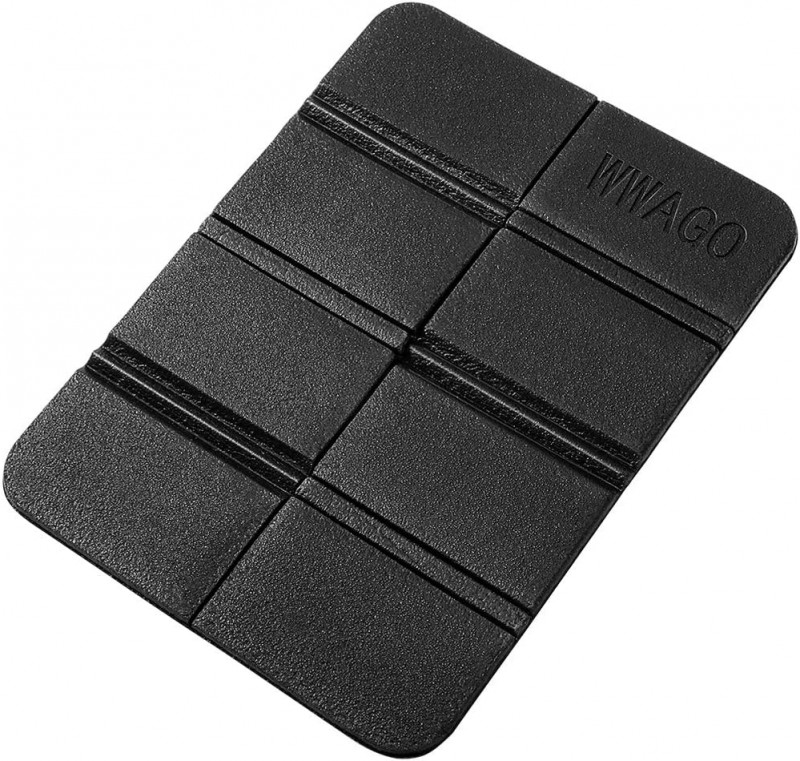
A folding mat for your knees really is a good idea. This one was £7 on amazon and it really has saved my poor old knees from unnecessary pain and getting soaking wet. It’s approx only A3 size and folds up to fit in a camera bag.
A FEW BITS
Finally, a few bits you may not have thought of which are useful and very easy to obtain just about anywhere. You may already have these at home.
CAMERA AIR BLOWER
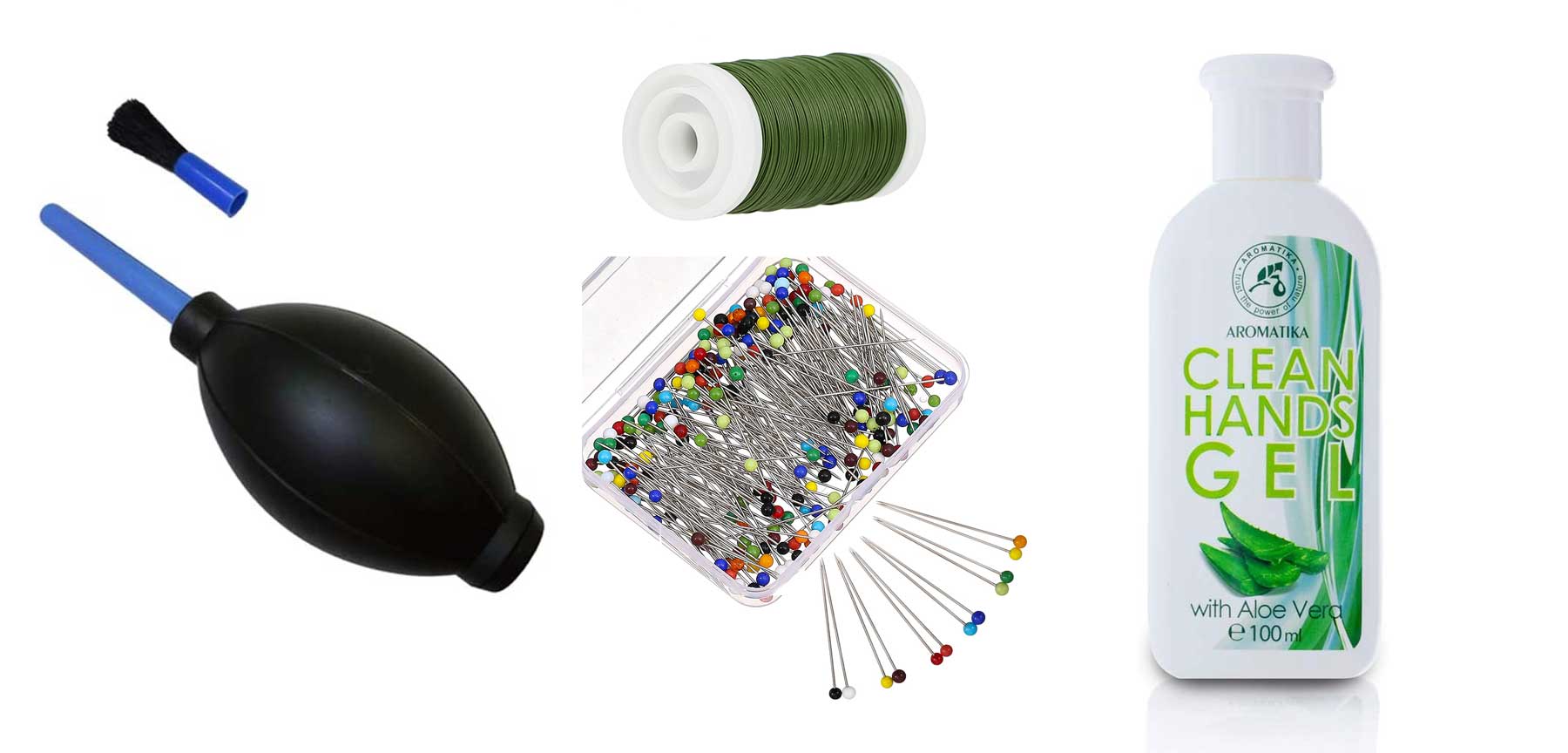
Those shrooms can get very dirty so an air blower is useful to remove debris. Just a small inexpensive one will do, I also got some small brushes too, but struggled to find them until I realised searching on Amazon for Keyboard Cleaning Brushes did the trick. Just be careful, some really delicate shrooms are easy to damage so you may just have to put up with some of the smaller specks of dirt.
FLORIST WIRE – GLASS HEAD PINS
Really useful when you’ve tried to reposition a shroom and find it is just on the wrong angle, a few pins and a bit of wire can do the trick. I have a small bag in my backpack for bits and pieces where I keep bits like this. Remember to cut a few pieces of wire first, you’re unlikely to find any scissors in the forest.
HAND SANITIZER
Essential, considering you don’t know which shrooms are safe and which are not. Most in the UK are safe and some poisonous if ingested, with the Death Cap being the most deadly. The Death Cap is white and quite common, so after handling any shrooms it’s best to sanitize your hands afterwards. A travel size water free bottle is all you need, but make sure you have one with you.
CONCLUSION
I hope these have been useful. These are all items I actually use and whilst there are many more it would be hard to show everything. Please not that items with an Amazon link are affiliate links so if you wish to purchase anything I may just earn enough credit for a gift voucher and it is appreciated.